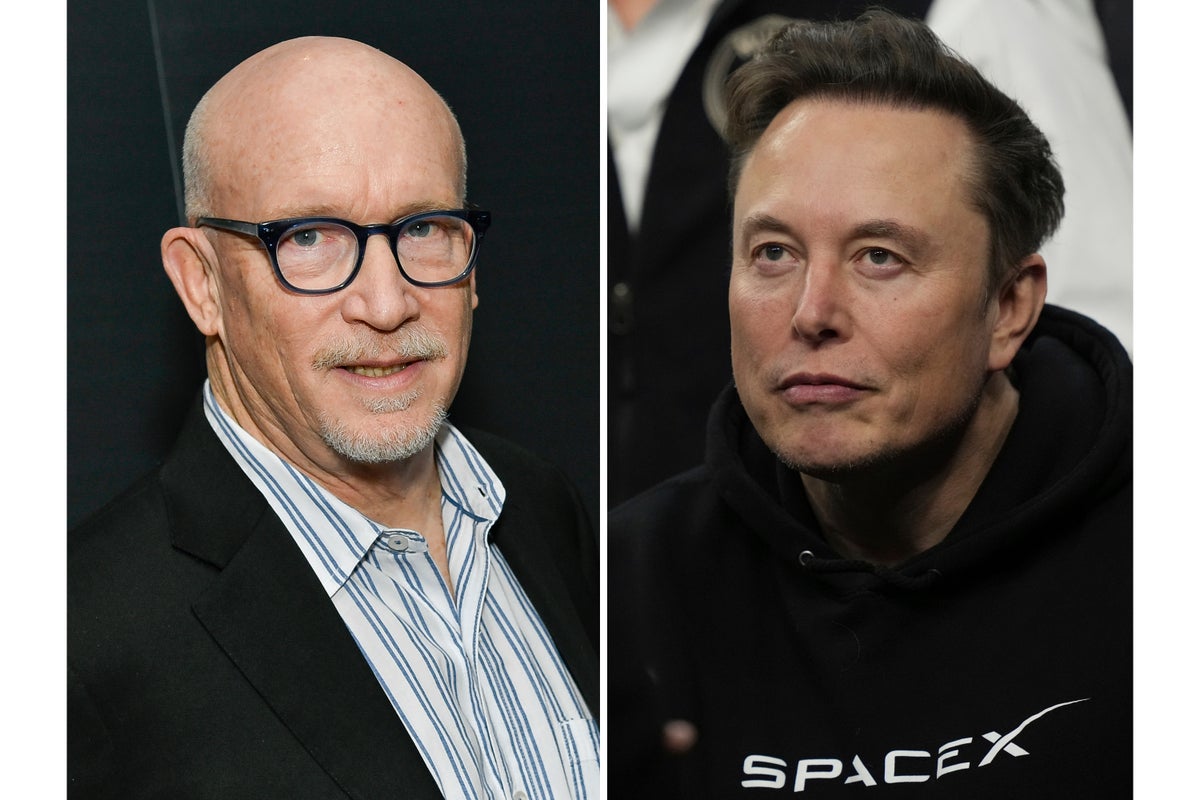
Every six months, some mainstream publication drags out the tired hit piece accusing Elon Musk of being nothing more than a hype merchant, a modern-day carny barking outside a tent filled with empty promises. The latest iteration leans heavily on filmmaker critiques and Twitter archives, painting SpaceX and Tesla as elaborate shell games designed to pump stock prices and siphon subsidies.
It is a comforting narrative for people who have never built anything heavier than a slide deck. It allows critics to dismiss radical industrial shifts as mere marketing tricks.
The lazy consensus is that Musk is a fraud because his timelines are perpetually unhinged and his public persona is erratic. But this critique commits a fundamental error. It confuses a bad project manager with a revolutionary manufacturing architect. I have spent two decades watching companies burn venture capital trying to iterate safely inside incumbent supply chains, and I can tell you that treating Musk as a mere stock pumper completely misunderstands how capital-intensive hardware monopolies are forged.
The Fallacy of the Deadline and the Reality of Physics
Critics love to wave around old clips of Musk promising fully autonomous cross-country drives by next year or a million robotaxis by last Tuesday. They treat these missed targets as proof of deceit.
This argument relies on a naive view of how R and D functions in physical reality. Software can be patched continuously on a rolling sprint schedule. Molten aluminum, orbital-class stainless steel welding, and lithium-ion cell chemistry do not care about your agile sprint retrospective.
When Tesla or SpaceX misses a target, the lazy observer calls it a lie. The operator knows it is a friction point in a brutal manufacturing ramp. Musk operates by setting deadlines that are physically impossible under current constraints precisely to force engineering teams to break through those constraints. It is an exhausting, tyrannical management style, and it leaves emotional wreckage in its wake. But do not mistake a brutal compression of the timeline for a financial scam.
If you look at the actual output, the metrics destroy the stock pumper thesis. You cannot pump a stock to a trillion-dollar valuation purely on vaporware for two decades while simultaneously delivering millions of fully functional electric vehicles and dominating global orbital launch cadence. At some point, the rockets have to leave the pad and the cars have to roll off the line. They do.
The Subsidies Myth and the Cost of Incumbency
Another favorite weapon of the anti-Musk commentariat is the government subsidy argument. The claim goes that Tesla and SpaceX only exist because of federal handouts, carbon credits, and NASA contracts.
Let us look at the actual math. Every legacy automaker in Detroit, Stuttgart, and Tokyo has had access to the exact same regulatory frameworks, the same government loans, and decades of institutional lobbying power. Many of them received massive bailouts during financial crises. Yet while General Motors and Ford were busy buying back stock and paying dividends, Tesla was sinking every available dollar into building unproven Gigafactories and rewriting the economics of battery supply chains.
NASA did not hand SpaceX billions of dollars out of charity. They held a competitive procurement process because legacy aerospace contractors like Boeing were charging astronomical sums for decades-old technology while missing deadlines by years. SpaceX underbid them by an order of magnitude and delivered a reusable orbital rocket that effectively broke the back of the Russian and European launch monopolies.
If subsidies were a magic wand that created innovative hardware companies, the post office would be launching payloads to Mars. The truth is that subsidies acted as a small tailwind for a company that was willing to take existential balance-sheet risks while incumbents protected their legacy profit margins on internal combustion engines.
The Danger of Dismissing the Operator
There is a dark side to this contrarian defense, and I will be the first to admit it. My stance has a glaring downside: it excuses horrific management culture and erratic executive behavior under the altar of output.
When you worship at the temple of extreme execution, you get a toxic workplace, burned-out engineers, and erratic public outbursts that crater brand equity. Musk’s recent descent into online cultural warfare is an operational liability. It alienates core buyers, invites regulatory scrutiny, and turns a disciplined manufacturing engine into a daily tabloid fixture.
Furthermore, treating anyone as an infallible industrial savior creates a fragile corporate structure. Tesla is deeply tied to one polarizing personality. If he steps away or collapses under the weight of his own distractions, the company faces an identity crisis that no amount of automation can easily fix.
Yet, acknowledging these real governance and cultural failures does not validate the populist hit pieces. You can despise the man's Twitter feed while recognizing that his structural playbook changed the global automotive and aerospace sectors permanently.
How to Actually Evaluate Industrial Disruptors
If you want to analyze companies like Tesla or SpaceX without falling for the media echo chamber, stop looking at press releases and executive tweets. Look at first-principles manufacturing economics.
Ask yourself three hard questions when evaluating any company accused of being a stock pump:
- What is their vertical integration depth? Companies that rely entirely on outsourced tier-one suppliers are beholden to legacy margins. Companies that build their own battery cells, wire harnesses, and flight computers control their own destiny, regardless of stock volatility.
- What is the velocity of physical iteration? How fast can the engineering team break a prototype, analyze the failure data, and weld a new one together? If that cycle takes four years, the company is dead. If it takes four days, ignore the stock price and watch the horizon.
- Are they shifting the marginal cost curve? If a competitor reduces the cost of putting a kilogram into orbit or manufacturing a kilowatt-hour of energy storage by fifty percent, they have won the war. The media noise is just static.
Musk is not a messiah, and he is certainly not a traditional engineer sitting at a CAD workstation drawing parts. He is something rarer in modern Western capitalism: an extreme capital allocator willing to bet entire enterprises on physical-world engineering challenges that incumbent executives deemed too risky to touch.
The critics waiting for the entire house of cards to collapse are misreading the blueprints. The foundation is made of steel, titanium, and millions of manufactured units currently operating on roads and in orbit. No amount of critical think pieces will make them vanish.