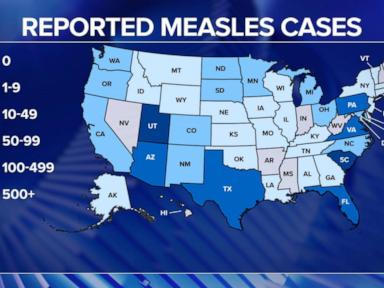
Every time a handful of measles cases pops up in a wealthy suburb, the media machine grinds into gear with the exact same script. Pious anchors look concerned, public health officials wag their fingers at recalcitrant parents, and the usual suspects demand stricter mandates, harsher social shaming, and digital vaccine passports. The lazy consensus is absolute: falling vaccination rates driven by stubborn misinformation are turning the clock back on a disease we supposedly conquered.
It is a neat, emotionally satisfying narrative. It also happens to be dangerously lazy.
I have spent years watching institutional public health agencies misdiagnose structural rot as a messaging problem. When compliance drops, the bureaucrats default to their favorite excuse: the public is uneducated, skeptical, or malicious. They treat public health compliance like a marketing campaign that just needs a better slogan or a heavier hammer.
They are missing the forest for the trees. Measles is not staging a comeback because a few influencers tweeted pseudoscience. Measles is flashing red because our public health infrastructure is rotting from the inside out, our surveillance systems are blind, and our institutional authorities traded hard-earned trust for bureaucratic cowardice long before the first exemption form was ever signed.
If you want to fix modern infection rates, stop screaming at soccer moms and start looking at institutional failure.
The Myth of the Flatline Coverage Rate
Let us start with the numbers that the panic peddlers love to gloss over. Aggregate national and state vaccination rates for the MMR dose remain remarkably high—hovering well above the herd immunity threshold in most jurisdictions.
Yet, outbreaks still happen. Why? Because averages are a liar's best friend.
A state might boast a pristine 95% vaccination rate on paper, masking the fact that a specific zip code, a specific school district, or a specific transient community sits at a terrifying 60%. Public health agencies treat populations as homogenous blobs. They look at a statewide map, see a high average, and turn off their brains until a cluster emerges. Then, instead of targeted, boots-on-the-ground interventions in under-vaccinated pockets, they issue broad panic pronouncements that alienate the very people they need to reach.
Worse yet, the data collection itself is deeply flawed. Many tracking databases rely on legacy systems that cannot talk to each other across state lines, let alone across private healthcare networks. We are running twenty-first-century biology on twentieth-century administrative spreadsheets. When an outbreak hits, health departments spend days playing phone tag with clinics instead of executing containment protocols.
Blaming the unvaccinated majority-minus-one gives lazy bureaucrats a scapegoat. It lets them ignore their own operational incompetence.
The Trust Deficit Was Earned, Not Invented
For decades, public health officials operated on a model of paternalistic authority: trust us because we wear lab coats. That model is dead, and good riddance.
You cannot demand absolute compliance during a crisis while maintaining a track record of institutional evasion during normal times. When public health agencies spend years contradicting themselves, hiding data behind red tape, and refusing to admit when policies fail, people notice. Trust is not a moral virtue you are owed; it is a currency you earn through radical transparency.
When an official stands at a podium and insists that a complex medical product carries zero nuance, critical thinkers check out. And once people stop trusting authorities on one front, that skepticism metastasizes to foundational pillars like childhood immunization schedules.
The institutional response has been a masterclass in alienation. Instead of engaging with hesitant parents through empathetic dialogue, rigorous debate, and honest acknowledgements of trade-offs, the medical establishment chose the cudgel. They pushed for blacklisting, social media censorship, and public ridicule.
Human psychology does not respond well to coercion. Push a human being hard enough into a corner, and they will double down on their worst impulses just to retain a shred of agency. Shaming parents does not drive up vaccination rates; it drives them underground into echo chambers where grifters sell actual snake oil.
The Surveillance Blind Spot Nobody Talks About
While the chattering class obsesses over exemption waivers, a quieter, more systemic disaster is unfolding in our laboratories and clinics: the decay of infectious disease surveillance.
Measles is one of the most contagious pathogens known to humanity. Its basic reproduction number, known as R0, sits anywhere between twelve and eighteen. That means a single infected person in a susceptible population can pass it to nearly twenty others. In a globalized world where international travel happens in hours, a zero-case domestic target is a pipe dream.
Yet, local health departments have been chronically underfunded for decades. When budgets tighten, epidemiology departments are the first to get slashed. We have gutted the field epidemiologists—the boots-on-the-ground detectives whose entire job is contact tracing, rapid sequencing, and early containment.
Imagine a scenario where a single traveler lands at an international airport, asymptomatic, carrying a viral load that could spark a hundred secondary infections. If our local health departments are understaffed, lack modern genomic sequencing tools, and rely on fax machines to transmit lab results, the virus gets a three-week head start before anyone even rings the alarm.
By the time the bureaucracy wakes up, the outbreak has already leaped across three counties. No amount of lecturing parents about MMR jabs will stop a virus that the health department failed to track in real-time.
The Dangerous Allure of the Magic Bullet Solution
The institutional obsession with mandates stems from a desire for easy answers. Mandates are clean. You pass a rule, check a box, and pretend the problem is solved.
It is administrative theater. A mandate without a delivery mechanism, without localized community engagement, and without primary care access is just a piece of paper that punishes the marginalized while doing nothing to stop viral transmission.
Consider the families caught in medical deserts. In vast swathes of rural and underfunded urban America, finding a pediatrician who takes Medicaid and has open slots for preventative care is an extreme sport. If a parent has to drive two hours, take an unpaid day off work, and navigate a Byzantine clinic system just to get a shot, compliance drops—not because of ideological opposition, but because of logistical impossibility.
Fixing this requires unglamorous, grinding work. It means funding mobile health clinics, partnering with trusted local leaders who speak the language of hesitant communities, modernizing health informatics, and rebuilding primary care infrastructure from the ground up.
It is much easier to blame a Facebook group than to fix a broken healthcare delivery system.
What Actually Works
If we want to stop playing this cyclical game of panic and blame, we need to completely invert our playbook.
First, decentralize the response. Stop relying on top-down edicts from distant federal agencies that carry zero local credibility. Empower community health workers, local pediatricians, and neighborhood leaders who already possess relational capital.
Second, embrace radical transparency. Stop hiding behind sanitized talking points. Acknowledge that every medical intervention carries risks and benefits, and treat the public like adults capable of processing complex risk assessments. When an adverse event happens, investigate it openly instead of sweeping it under the rug to protect institutional reputation.
Third, treat public health as an operational engineering challenge, not a moral crusade. Upgrade the data pipelines. Automate reporting systems. Make preventative care frictionless and free at the point of service for everyone.
The next time an outbreak makes the evening news, look past the panic porn. Do not ask why some parents are asking difficult questions. Ask why the institutions responsible for keeping us safe spent decades trading competence for arrogance, and why they are still hoping a press release will save them from a virus.
The outbreak isn't a failure of the public. It is a mirror reflecting the collapse of the guardians.