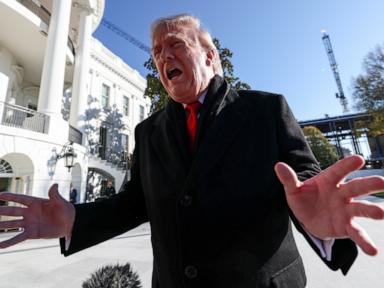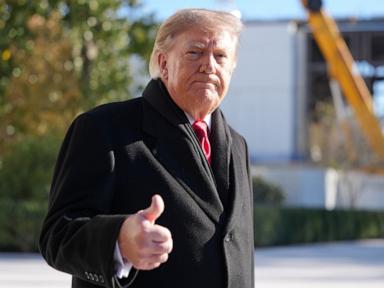
The press corps loves a calendar excuse. When Donald Trump wrapped up his November 2026 Asia tour in Shenzhen without sitting down with Kim Jong Un, the mainstream coverage immediately reached for the safest, laziest narrative in foreign policy journalism: "logistical hurdles."
Too many meetings. North Korea isn't a member of the Asia-Pacific Economic Cooperation (APEC). Tight security perimeters. Packed schedules.
That explanation is complete fiction.
In high-stakes statecraft, "logistics" is the diplomatic equivalent of saying "I have to wash my hair." When two nuclear-armed leaders actually want to be in the same room, protocol teams move mountains in forty-eight hours. We saw it at Panmunjom in June 2019, when a single tweet turned the Korean Demilitarized Zone into an impromptu broadcast studio overnight. Logistics never stop a summit. Geopolitical leverage does.
The real story of the November 2026 APEC trip isn't that the Secret Service couldn't clear a hallway in southern China. It's that Pyongyang looked at Washington's offer, weighed it against its new status as a heavily armed supplier to Moscow, and decided Trump wasn't worth the trip.
The Myth of the "Packed Schedule"
Let’s dismantle the surface-level reporting first. During his trip to China, Trump openly floated the idea of a reunion with Kim, only to tell reporters before boarding Air Force One that "there was too many meetings" and "it wouldn't have worked out." Cable news panels dutifully nodded along, pointing out that North Korea has never attended an APEC summit and that squeezing a bilateral detour into an 80-minute trilateral session with Xi Jinping and Vladimir Putin was a scheduling nightmare.
Look closer at what actually happened behind closed doors.
Reporting from the Wall Street Journal and South Korean outlets revealed that the White House wasn't casually hoping to bump into Kim in a hotel lobby. Washington actively sought a summit beforehand. U.S. officials floated serious concessions: an end-of-war declaration, the opening of liaison offices, and a framework that would ask Pyongyang to merely cap nuclear and missile testing rather than dismantle its existing arsenal.
Pyongyang didn't struggle with flight plans. Pyongyang rejected the terms. In fact, according to diplomatic accounts, a North Korean representative in New York literally threw an unopened letter from Trump down in front of an American official at the United Nations.
You don't throw an envelope on the floor because of a scheduling conflict. You throw it on the floor because you hold the cards and you want the other side to know it.
Why "Logistics" Is a Crutch for Lazy Analysis
I have watched foreign policy analysts make this exact mistake for decades. Whenever a diplomatic theater production fails to materialize, pundits obsess over the stagehands instead of the script. They measure motorcade routes, scrutinize guest lists, and debate air-defense clearances while completely ignoring the balance of power on the ground.
Here is the blunt truth about diplomatic mechanics:
- Protocol is reactive, not predictive. Advance teams do not decide whether presidents meet; they solve the math after the political deal is struck. If Kim Jong Un had wanted to walk across the border or fly an Air Koryo Ilyushin into Shenzhen, Beijing and Washington would have cleared the airspace before the press pool finished its morning coffee.
- Multilateral summits are built for side deals. Claiming an APEC schedule is "too full" misunderstands why world leaders attend APEC in the first place. Nobody flies across the Pacific for plenary speeches on regional trade facilitation. They go specifically for the unscheduled bilateral pull-asides. Trump found time for an unprecedented three-way sit-down with Xi and Putin at Kylin Villa. He had the time. He didn't have a dance partner.
- Non-membership is irrelevant. North Korea isn't in APEC, nor was it a member of ASEAN when Trump and Kim met in Singapore in 2018 or Hanoi in 2019. Host nations issue special diplomatic exemptions constantly when a major superpower asks for one.
By framing the non-meeting around logistical friction, commentators sanitize a massive strategic shift. They make a deliberate diplomatic rebuff look like a calendar mishap.
The 2019 Trap vs. The 2026 Reality
To understand why Kim stayed home in November 2026, you have to stop treating him like the isolated, cash-strapped dictator of 2018. Most Western coverage is still running on seven-year-old software.
In 2018 and 2019, Kim Jong Un needed Donald Trump. North Korea was suffocating under maximum-pressure sanctions, Beijing was enforcing trade restrictions to keep Washington happy, and Pyongyang needed a direct channel to the Oval Office to buy breathing room. Kim traveled by armored train for sixty hours to Hanoi because he had no alternative buyers for his strategic value.
Fast forward to late 2026. The entire geopolitical board has flipped.
- The Moscow Lifeline: By supplying munitions, missiles, and troops to support Russia's war effort in Ukraine, Pyongyang broke out of its economic quarantine. Russia provides fuel, food, hard currency, and military technology transfers that make U.S. sanctions relief look like pocket change.
- Constitutional Permanence: North Korea has enshrined its nuclear status directly into its constitution, declaring its arsenal irreversible. When Kim Yo Jong stated earlier in November that Washington abandoning its denuclearization demand was the baseline premise for any conversation, she wasn't posturing. She was stating settled domestic law.
- The Beijing-Moscow Axis: While Trump was sitting in Shenzhen with Xi and Putin, Kim was touring domestic industrial sites and sending top aides like Jo Yong Won to Moscow. Kim didn't need to beg for a photo-op with an American president to prove his relevance; his closest allies were already in the room representing his interests.
Imagine a scenario where Kim actually flew to China in November 2026. What would he have gained? A handshake, a Truth Social post, and a vague promise of a liaison office—all while risking the optics of looking eager for American validation in front of Vladimir Putin. By staying away and lecturing state media on "multipolar sovereignty-based diplomacy," Kim extracted maximum prestige without conceding a single warhead.
Dismantling the Wrong Questions
When readers search for news on this summit, they are fed the wrong questions by pundits who haven't updated their mental models. Let’s look at the actual answers to what people are asking.
Why didn't China force Kim to attend APEC?
This assumes Beijing still holds a leash on Pyongyang. That assumption died the moment Russia and North Korea signed their mutual defense pact and deepened wartime supply chains. China prefers stability on the Korean Peninsula, and Xi Jinping certainly wants to manage nuclear risks with Washington. However, Beijing will not burn its remaining influence over Kim just to hand Donald Trump a splashy television moment on Chinese soil. China's foreign ministry claimed it had "no information" about a Trump-Kim meeting for a simple reason: Xi wasn't going to act as Trump's event planner.
Does a missed meeting mean diplomacy is dead?
Hardly. It means personalist theater is dead. For years, analysts argued that top-down leader-to-leader chemistry was the only way to crack the North Korean deadlock because Pyongyang's bureaucracy couldn't make decisions on its own. That theory failed in Hanoi when the personal chemistry couldn't survive actual technical disagreements over Yongbyon. What we are seeing now isn't the death of diplomacy; it is the return of hard-nosed transactional bargaining. Kim won't show up for "love letters" anymore. He will only show up after working-level negotiators have already signed off on sanctions relief and implicit nuclear acceptance.
Could Trump still meet Kim later?
Yes, Trump has repeatedly said they will meet "at some point." Analysts at institutions like Kyungnam University and the Korea Herald have noted that if backchannels reopen, a bilateral summit remains on the table. But it will not happen on the margins of a trade conference, and it will not happen on Washington's timetable.
The Contrarian Playbook for Reading Korean Peninsula News
If you want to actually understand what happens next between Washington and Pyongyang—without getting distracted by breathless "live updates" about motorcades and hotel bookings—change how you filter the news.
- Ignore presidential travel rumors; track working-level envoy movements. A summit is the final signature on a contract, never the negotiation itself. Until you see U.S. special representatives spending weeks in quiet European capitals like Stockholm or Geneva with North Korean vice ministers, any talk of an "imminent" Trump-Kim meeting is pure noise.
- Watch Moscow, not Washington. Pyongyang's appetite for talks with the United States is inversely proportional to its utility to the Kremlin. As long as Russia needs North Korean artillery shells and manpower, Kim has zero incentive to offer Washington a freeze on missile tests. The moment the conflict in Ukraine freezes or Russian demand dries up, Kim will suddenly rediscover his fondness for Trump.
- Stop using the word "denuclearization." Every time an official or commentator uses that word to describe a realistic outcome, close the tab. Even the White House's reported November 2026 overtures quietly dropped immediate dismantlement in favor of "limiting" tests. The real negotiation is no longer about getting rid of North Korea's bombs; it is about arms control and crisis management with a permanent nuclear state.
The Risk of Over-Correcting
To be fair, dismissing logistics entirely has its own blind spot. Even when the political stars align, moving the North Korean leader across international borders is genuinely hazardous for his regime. Kim Jong Un governs through absolute, centralized presence; leaving Pyongyang for days creates internal security anxieties and requires complex diplomatic choreography with host nations to guarantee his physical safety and sovereign immunity. In 2018, Singapore had to foot the bill for his hotel and borrow an Air China Boeing 747 just to get him there safely.
So yes, physical security matters. Friction is real.
But friction is a speed bump, not a brick wall. In November 2026, Kim Jong Un didn't hit a speed bump on the way to Shenzhen. He never even got in the car—because Washington couldn't afford the price of gas.