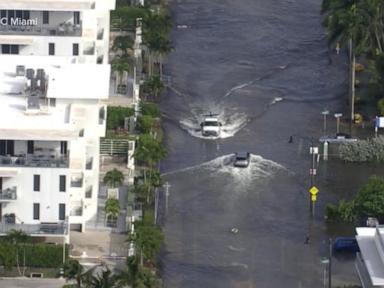
Every autumn, local news crews put on their yellow rain slickers, wade ankle-deep into a flooded intersection in Miami Beach or Newport Beach, and point cameras at salt water bubbling out of a storm drain. The headline writes itself. King tides are swamping coastal homes. Nature is attacking.
That narrative is lazy, scientifically backwards, and financially dangerous.
King tides—technically known as perigean spring tides—are not freak events, nor are they sudden assaults from the ocean. They are entirely predictable astronomical alignments that occur when the moon is at perigee (its closest point to Earth) during a new or full moon. The gravitational pull increases slightly, pushing water levels a foot or two higher than average. Astronomers can calculate these exact water heights decades in advance down to the millimeter.
When water floods a multimillion-dollar living room in South Florida or Southern California during a king tide, the ocean did not ambuscade the neighborhood. The neighborhood was engineered to fail.
The Lie of the "Sunny Day" Flood
Mainstream coverage treats coastal nuisance flooding as a passive tragedy happening to helpless homeowners. Watch any three-minute broadcast clip on coastal inundation, and you will hear the exact same beat: shocked residents staring at ruined drywall, reporters blaming rising seas, and city officials promising another feasibility study.
Here is the reality nobody on the evening news wants to say out loud: A storm drain is just a pipe with two open ends.
For the past eighty years, coastal municipalities in the United States built gravity-fed stormwater drainage systems. The engineering logic was simple. Rain falls on asphalt, runs into a catch basin, travels through a concrete pipe sloped slightly downward, and empties into the bay or ocean. This works great when the ocean sits three feet below the bottom of that pipe.
Today, sea level rise—driven by thermal expansion and melting land ice—has lifted the baseline ocean height by roughly eight to twelve inches along the U.S. coastline over the last century, with the rate accelerating significantly since the 1990s. Because baseline sea level is higher, the seasonal push of a king tide now pushes the ocean surface above the elevation of those old gravity-fed outfall pipes.
The physics takes over immediately. Water seeks its own level. Instead of rainwater draining out to the sea, seawater rushes backward up the pipes, blasts past rusted-out flaps, and bubbles up through the grates in the middle of the street on a cloudless, 80-degree afternoon.
Calling this "king tide flooding" is like blaming gravity when a poorly built roof caves in. The tide is just doing what the moon has commanded it to do for four billion years. The failure belongs entirely to outdated civil infrastructure, porous limestone geology, and zoning boards that approved waterfront condos on drained mangrove swamps.
South Florida and California Are Not the Same Problem
Media outlets love lumping Miami and Malibu together under the umbrella of "coastal flooding." Doing so masks two completely different geological and engineering disasters. If you apply a California solution to a Florida street, you waste hundreds of millions of dollars.
The Florida Sponge
South Florida sits atop the Biscayne Aquifer, a massive slab of highly porous oolitic limestone. Think of it less like solid rock and more like a petrified kitchen sponge.
I have watched municipalities in Dade and Broward counties spend millions of dollars raising seawalls by three feet, patting themselves on the back, and then watching in horror as salt water still floods the streets behind the wall during the October king tides. Why? Because the water does not need to go over a seawall when it can simply travel under it.
As the king tide pushes water levels up in Biscayne Bay, hydrostatic pressure forces salt water directly through the porous limestone ground beneath the seawall, pushing the freshwater table upward until it breaches the asphalt from below. You cannot wall off the ocean when the ground beneath your feet is full of holes.
The California Bluffs and Lowlands
California has the opposite geological setup. Much of the Southern California coast consists of steep coastal bluffs, narrow sandy beaches, and low-lying back-bay estuaries like Balboa Island in Newport Beach or Sunset Beach in Huntington Beach.
In places like Balboa Island, the issue is aging bulkheads built in the 1920s and 1930s that were never designed for modern tidal baselines. During a winter king tide—especially when paired with a Pacific swell—waves overtop these low seawalls and overwhelm pump stations designed for a dry climate. Meanwhile, along the bluffs of Del Mar or Pacifica, king tides strip away protective sand buffers, allowing wave energy to slam directly into the base of fractured sedimentary cliffs.
When news anchors treat these two coastlines as identical victims of the same phenomenon, they absolve local planners of their specific engineering blunders.
The Financial Shell Game Propping Up Waterfront Real Estate
Why does the media stick to the "unpredictable king tide" script? Because telling the truth threatens the biggest revenue engine in coastal politics: property taxes.
Coastal cities live and die by their tax base. In South Florida, waterfront and near-waterfront properties generate a disproportionate share of municipal budgets. If city officials openly admit that specific neighborhoods are chronically uninhabitable without hundreds of millions of dollars in continuous pumping infrastructure, property values drop. When property values drop, tax revenues crater, and the city loses the money it needs to fund the very infrastructure required to keep the water out.
It is a municipal death spiral, so everyone agrees to pretend the flooding is an occasional weather anomaly.
Look at the insurance and lending mechanics behind this facade:
- The National Flood Insurance Program (NFIP): For decades, federally subsidized flood insurance masked the true actuarial risk of building in tidal floodplains. Even with the rollout of FEMA's Risk Rating 2.0—which finally attempts to price policies based on actual flood frequency and distance to water—taxpayers still backstop massive liabilities in high-risk zones.
- The 30-Year Mortgage Illusion: Banks routinely issue 30-year fixed-rate mortgages on coastal properties that will experience severe, chronic tidal inundation within 15 years. Lenders do not care because they immediately bundle and sell those mortgages to Fannie Mae and Freddie Mac, offloading the long-term climate and infrastructure risk onto the federal balance sheet.
- Band-Aid Engineering: Cities install one-way check valves (like duckbill valves) on outfall pipes to stop backflow. While these prevent seawater from coming up the pipes during a high tide, they also trap rainwater inside the streets when a storm hits at the exact same time as a king tide. Without massive, diesel-backed pump stations to force that rainwater over the tide line, check valves just turn streets into retention ponds.
Answering the Questions You Should Actually Be Asking
When homeowners search online after seeing footage of flooded coastal streets, they usually type the wrong questions into the search bar. Let's fix the premises.
"How can I waterproof my home against king tides?"
You cannot waterproof a house against hydrostatic groundwater pressure without rebuilding the foundation. You can buy modular aluminum flood barriers for your doorways, install backflow preventers on your sewer lines, and put your HVAC compressor on a four-foot concrete pedestal. Those measures will buy you time against shallow sheet flow. However, if you live on a slab-on-grade foundation over porous ground in Florida, rising groundwater will eventually push moisture through the concrete slab itself, ruining flooring and breeding black mold inside your walls. True flood-proofing requires elevating the entire living structure above the Base Flood Elevation—a retrofit that frequently costs more than the structure is worth.
"Are king tides getting worse every year?"
The astronomical pull of the moon is not getting stronger. The tides themselves follow a predictable 18.6-year lunar nodal cycle, which actually modulates the extremes up and down over nearly two decades. What is changing is the launchpad. Because baseline global sea level continues to rise—and regional land subsidence is causing parts of the East and Gulf Coasts to sink simultaneously—the exact same astronomical tide reaches higher onto land every single decade. The tide isn't changing; the coastline is shrinking.
"Why don't cities just build higher seawalls?"
Seawalls do not destroy wave energy; they deflect it. When you build a vertical concrete wall along a coast, incoming waves slam into it and shoot energy downward, scouring away the sand at the base of the wall until the structure undermines itself and collapses. Furthermore, a seawall cuts off the natural intertidal zone, wiping out coastal wetlands and oyster beds that actually absorb wave energy for free. And as noted earlier, in places with porous geology, a taller wall just creates a deeper swimming pool behind it when rain falls.
What Actually Works (And Why Politicians Hate It)
If coastal municipalities want to survive the next fifty years without going bankrupt, they have to abandon the fantasy that they can engineer their way out of every flooded intersection. Real adaptation requires brutal, politically unpopular triage.
1. Strategic Retreat and Buyouts
Not every neighborhood can or should be saved. Maintaining roads, sewer lines, fresh water mains, and electrical grids in neighborhoods that flood twenty times a year is a massive subsidy paid by inland taxpayers to waterfront property owners. Cities need aggressive, voluntary buyout programs that purchase chronically flooded properties, demolish the structures, and convert the land back into salt marshes, mangrove forests, or retention parks. These natural buffers absorb storm surge and store excess stormwater, protecting the higher-elevation neighborhoods behind them.
2. Aggressive Road Elevation (With a Catch)
Miami Beach has famously spent hundreds of millions of dollars elevating its streets by up to two feet and installing high-capacity pump stations. This keeps traffic moving and commerce flowing. The downside? When you raise the street, the houses built at the old street level suddenly sit at the bottom of a bowl. Water runs off the newly elevated asphalt straight onto private front lawns and into ground-floor garages. Road elevation works, but it is a violent transition that effectively forces private property owners to either tear down and rebuild higher or live in a sunken basement.
3. Living Shorelines Over Hard Armor
Instead of pouring more vertical concrete, smart coastal engineers—like those at the U.S. Army Corps of Engineers' Engineering With Nature initiative—are deploying living shorelines. By rebuilding oyster reefs, planting native marsh grasses, and constructing submerged stone sills offshore, cities can trip waves before they reach the coast. These biological systems actually grow vertically over time, accreting sediment and keeping pace with moderate sea level rise, unlike a static concrete wall that begins decaying the day it cures.
4. Brutal Disclosure Laws
Real estate markets cannot price risk when sellers are allowed to hide it. Many coastal states still have shockingly weak flood disclosure laws, allowing a seller to offload a chronically flooded home to an out-of-state buyer without handing over past insurance claims or flood history. Mandating strict, upfront disclosure of historical tidal flooding and projected 30-year inundation maps at the point of listing would immediately deflate speculative waterfront bubbles and stop people from buying ticking financial time bombs.
Stop Watching the Water and Start Watching the Zoning Board
The next time a news crew broadcasts live from a flooded coastal street during a king tide, ignore the dramatic footage of cars pushing wakes through saltwater puddles. Look at the background instead.
Look at the newly approved high-rise condos going up three blocks from the water. Look at the asphalt parking lots replacing permeable soil. Look at the local politicians standing at podiums calling a completely predictable lunar cycle an "unprecedented challenge."
The ocean is not breaking into coastal cities. Coastal cities built their living rooms in the ocean's driveway, ignored the tide charts for half a century, and are now acting shocked that the water wants its space back. Stop waiting for a technological miracle to hold back the Atlantic and the Pacific, and start checking the elevation map before you sign a thirty-year mortgage.