Every time a federal agency issues a warning about a Cyclospora outbreak, the media runs the same tired playbook.
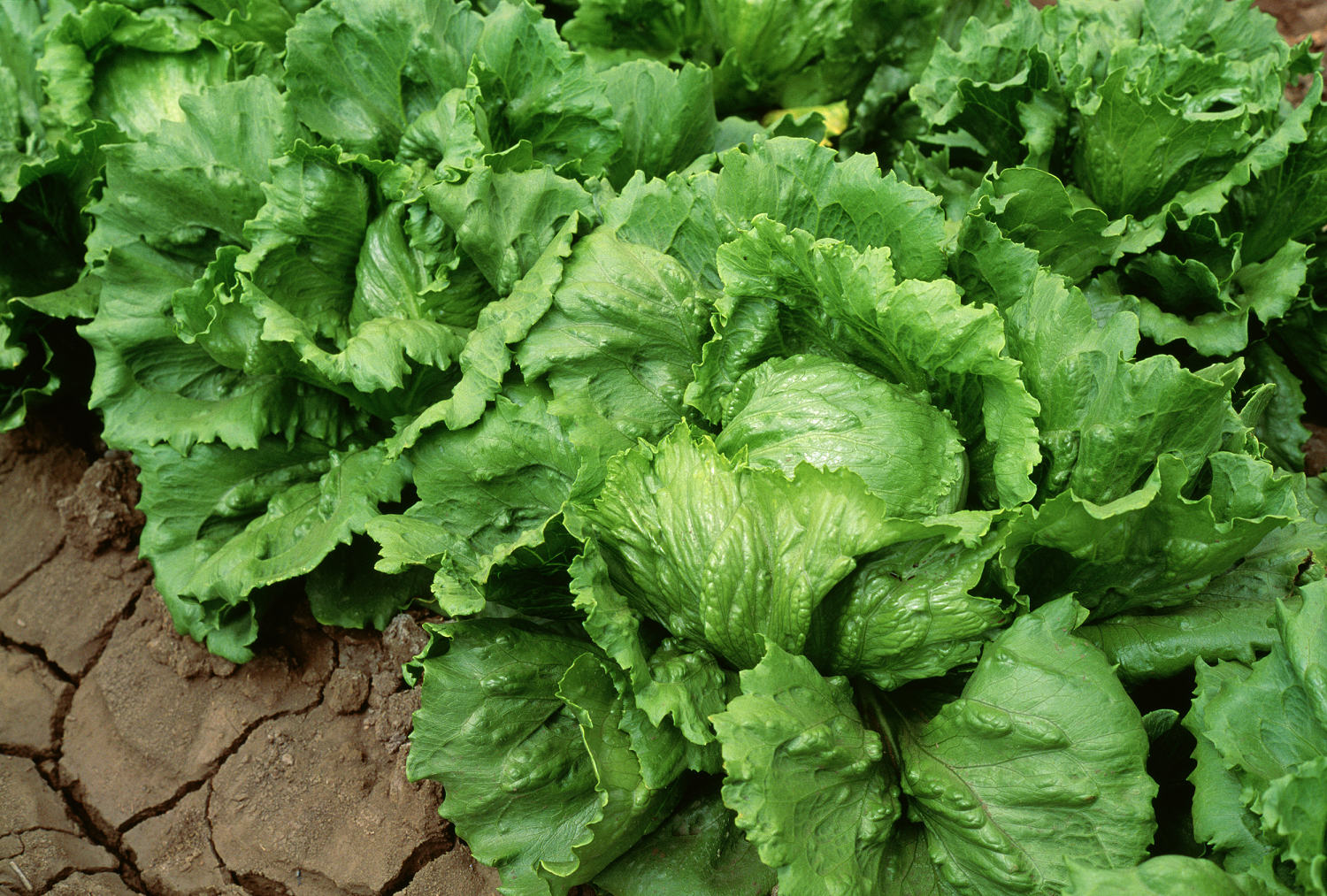
They locate a single supplier. They paste pictures of green, dew-kissed iceberg lettuce heads on the screen. They talk about "traceback investigations" as if federal agents are performing high-tech forensic miracles. Then, they advise you to wash your salad. Building on this theme, you can also read: The Atmospheric Transport of Wildfire Smoke and the Fallacy of Static Indoor Shelter Advisories.
It is all a comforting lie.
The supplier-focused blame game is a distraction from a much darker agricultural reality. The public is being fed a narrative that isolates these outbreaks as rare, bad-apple occurrences. In reality, the entire system of fresh produce sanitation is built on a foundation of scientific misunderstandings, PR cleanup campaigns, and a fundamental refusal to address how human waste interacts with our food supply. Observers at Psychology Today have shared their thoughts on this situation.
Investigating one supplier of iceberg lettuce does absolutely nothing to fix the systemic vulnerability of our salad bowls. If you think buying a different brand of bagged greens or washing your leaves in the kitchen sink protects you, you are falling for a dangerous illusion.
The Biological Reality the Industry Ignores
To understand why the current investigations are useless, you have to understand the biology of Cyclospora cayetanensis.
The media loves to lump all foodborne illnesses together. They treat Cyclospora as if it is just another flavor of E. coli or Salmonella. It is not.
E. coli and Salmonella are bacteria. They live in the guts of cattle, birds, and wild animals. If a wild pig runs through a spinach field, or if cattle manure runs off into an irrigation canal, you get a bacterial outbreak.
Cyclospora is a microscopic, single-celled parasite. More importantly, it is a coccidian parasite that is host-specific to humans.
Let that sink in.
Wild pigs do not carry Cyclospora. Cattle do not shed it in their manure. Birds do not drop it from the sky. The only way Cyclospora gets onto a head of iceberg lettuce is if human feces, containing the parasite, comes into direct contact with the crop or the water used to irrigate or spray it.
When federal agencies announce they are investigating an iceberg lettuce supplier for a Cyclospora outbreak, they are using polite, clinical language to dance around a deeply unsettling truth: human sewage contaminated the supply chain.
This happens in two ways:
- Contaminated Agricultural Water: Irrigation water sourced from canals or rivers that are impacted by untreated human sewage or failing septic systems.
- Inadequate Field Sanitation: A lack of accessible, clean restroom facilities for farmworkers, or poor hygiene practices in the fields during harvest.
By framing this as a "supplier issue" or a "lettuce issue," the industry avoids a national conversation about agricultural water infrastructure and farmworker working conditions. We would rather pretend a single farm had a freak accident than admit that our agricultural water ways are fundamentally compromised.
The Washing Myth and the Sticky Oocyst
The standard consumer advice during any leafy green scare is laughable. "Wash your produce thoroughly under running water."
This advice does not work for Cyclospora.
In my years working alongside food safety microbiologists and auditing supply chains, I have watched companies pour millions of dollars into triple-wash systems. They use chlorine, peracetic acid, and ozone. These systems are highly effective at reducing bacterial loads like E. coli.
Against Cyclospora oocysts, they are virtually useless.
Cyclospora travels in a highly resilient, environmentally stable form called an oocyst. This oocyst is wrapped in a robust, multi-layered wall that protects it from temperature extremes, dehydration, and chemical sanitizers.
The concentrations of chlorine required to actually penetrate and kill a Cyclospora oocyst would render the lettuce completely inedible—it would melt the leaves into a brown, toxic mush.
Furthermore, these oocysts are incredibly sticky. They possess surface proteins that allow them to cling to the microscopic crevices, stomata, and rough surfaces of leafy greens. Running cold tap water over a leaf of iceberg lettuce will not dislodge them.
When you buy triple-washed, bagged iceberg lettuce, you are paying for the illusion of safety. The washing process at the processing plant does not sterilize the lettuce; in fact, if the wash water's sanitizer levels dip even slightly for a moment, the industrial wash flume acts as a giant pathogen distributor, taking parasites from a few contaminated heads of lettuce and washing them over thousands of others.
The Shell Game of Traceback Investigations
The public believes that when the FDA or CDC investigates a supplier, they are actively stopping an active threat. This demonstrates a complete misunderstanding of the shelf life of leafy greens versus the timeline of parasitic infection.
Let's look at the cold, hard timeline of a typical Cyclospora outbreak:
- Day 1: A consumer eats contaminated iceberg lettuce.
- Days 7–14: The parasite undergoes its incubation period. The consumer does not feel sick immediately. It takes one to two weeks for the oocysts to mature, invade the small intestine, and cause symptoms like explosive, watery diarrhea.
- Days 14–21: The consumer finally goes to a doctor. Because parasitic infections mimic other stomach bugs, the doctor first prescribes standard antibiotics or tells them to rest.
- Days 21–28: A stool sample is finally ordered, sent to a lab, and tested using specific PCR panels. The positive result is reported to the local health department.
- Days 28–45: The CDC aggregates these reports, identifies a cluster, and begins interviewing patients about what they ate a month ago.
- Days 45–60: The FDA initiates a traceback investigation to find the common supplier.
Do you see the glaring flaw in this system?
Iceberg lettuce has a harvest-to-plate shelf life of roughly 14 to 21 days. By the time the FDA identifies the supplier, the contaminated crop has already been harvested, shipped, purchased, eaten, and excreted. The field it came from has likely already been plowed under, replanted, or left fallow.
The "investigation" is not a preventive shield. It is an autopsy.
Testing the soil or the water at the suspected farm two months after the contamination event is highly unlikely to yield a positive match. The water has moved on. The workers have changed. Yet, the industry goes through the motions of these investigations to signal to the market that they are "doing something." It is compliance theater of the highest order.
The Flawed Premise of "Clean" Produce
The "People Also Ask" sections of search engines are flooded with queries like, "How do I make sure my lettuce has no parasites?" or "Is organic lettuce safer from Cyclospora?"
These questions rest on a completely flawed premise. They assume that there is a tier of fresh, raw produce that is inherently safe if you pay enough money or buy the right label.
Organic lettuce is actually at a higher risk for certain types of contamination because organic farming relies heavily on animal manures and composts. While Cyclospora specifically requires human hosts, other pathogens thrive in organic fertilizer systems if the composting process fails to reach the thermal death points required to kill pathogens.
The hard truth nobody wants to admit is that eating raw leafy greens is a calculated gamble.
If you eat a raw, leafy green that grows close to the ground, is harvested by hand, and is irrigated with open-surface water, you are accepting a baseline level of biological risk. There is no technology currently deployed at scale that can guarantee a raw leaf of lettuce is sterile.
If we want to actually solve this, we have to talk about solutions that the agriculture lobby hates because they disrupt the low-margin, high-volume economics of modern farming.
The Solutions the Industry Fights
If we want to stop Cyclospora outbreaks, we have to stop trying to clean the lettuce after the fact. We have to prevent human pathogens from ever entering the agricultural environment.
This requires three brutal shifts in how we grow food:
1. Mandatory, Real-Time Water PCR Testing
Currently, the Food Safety Modernization Act (FSMA) Produce Safety Rule allows growers to use agricultural water that meets certain historical microbial quality profiles. They test the water occasionally.
This is useless for episodic contamination. A septic tank leaks on a Tuesday; the farm tests their water on Friday after the plume has passed.
We need to mandate continuous, automated PCR testing of all surface irrigation water sources. If the water tests positive for human mitochondrial DNA or specific human fecal indicators, the irrigation valves must automatically shut off.
The downside? This technology is incredibly expensive. Implementing it would force thousands of small and mid-sized family farms out of business, leaving only massive corporate conglomerates who can afford the capital expenditure. Food prices would spike.
2. Complete Separation of Workers and Crops
Human-hosted pathogens require human contact. The ultimate way to eliminate Cyclospora from leafy greens is to eliminate human hands from the harvesting and packaging process.
This means transitioning entirely to automated, mechanical harvesting and indoor, hydroponic CEA (Controlled Environment Agriculture) facilities. In an indoor vertical farm, water is filtered, air is scrubbed, and human contact is virtually zero.
The downside? The energy costs of vertical farming are astronomical. Moreover, the millions of field workers who rely on seasonal harvest jobs would be displaced. The industry is not ready for the socioeconomic fallout of fully automated harvesting.
3. Radical Transparency in Supply Chain Data
Right now, blockchain and traceability initiatives are used as marketing buzzwords. If a retailer gets a shipment of bad lettuce, it still takes weeks to trace it back because of fragmented, proprietary databases.
We need a federally mandated, open-access ledger where every single pallet of produce is logged from the exact GPS coordinates of the harvest block to the retail shelf in real-time. If an outbreak occurs, geofencing should instantly identify every leaf grown within a five-mile radius of the contamination point and trigger automatic register blocks at grocery stores.
The industry fights this because they do not want competitors—or class-action attorneys—having that level of granular visibility into their logistics and sourcing networks.
Stop Buying the Illusion
The next time you read about a supplier being investigated for an iceberg lettuce outbreak, do not look at it as an isolated incident of corporate negligence.
Look at it as the inevitable output of a system that prioritizes cheap, year-round raw greens over robust water infrastructure and worker sanitation.
Until we stop treating these outbreaks as freak occurrences and start treating them as predictable failures of an outdated agricultural model, the cycle will continue. You will keep eating contaminated greens, the government will keep performing autopsies on defunct food lots, and the industry will keep telling you to wash your salad.