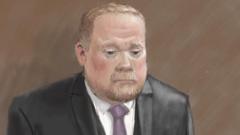
We love a cartoon villain. Robert Bush made it easy. When the owner of Legacy Independent Funeral Directors in Hull pled guilty to sixty-sept offences—including thirty counts of preventing lawful burials and handing grieving families random ashes while smiling—the media swallowed the lazy consensus whole.
The narrative is clean, comforting, and entirely useless. The story is packaged as a tale of individual monstrousness, a bad apple who poisoned the well of a sacred profession, a lone predator taking advantage of trusting souls during their darkest hour.
This framing is a comfortable fiction. It lets regulators, corporate consolidation advocates, and the public sleep at night. If the crisis is just about one rogue funeral director, then the fix is simple: lock him up, throw away the key for twenty years, and trust the rest of the market.
That perspective misses the entire structural failure of the death care industry.
I have watched companies burn millions on compliance theatre while ignoring systemic structural vulnerabilities. The Legacy scandal is not an anomaly of individual evil. It is the predictable outcome of an unregulated, opaque cottage industry colliding with zero mandatory oversight and a consumer base blinded by emotional vulnerability.
Focusing purely on Bush’s depravity protects the broken system that allowed him to operate unchecked for years.
The Myth of the Sacred Trust
The lazy consensus rests on the idea that the funeral sector is inherently sacred, built on personal trust and moral integrity. This is dangerous romanticism. Death care is a multi-billion-pound logistical service sector. Treating it like an ethical priesthood rather than a supply chain creates a blind spot wide enough to drive a fleet of hearses through.
When a consumer walks into an independent funeral home, they are operating under extreme cognitive load. Grief impairs decision-making. People do not comparison shop for coffins. They do not audit crematorium receipts. They hand over a body, pay thousands of pounds upfront, and retreat into private mourning.
Expecting self-regulation in an environment where the consumer cannot inspect the product is economic illiteracy.
Consider how the oversight framework actually functions. In the United Kingdom, independent funeral directors face virtually no mandatory statutory regulation prior to handling bodies. Anyone can set up shop, rent a warehouse, and call themselves a director. There is no centralized register of the deceased moving through private facilities, no random mandatory audits of refrigeration units, and no standardized chain-of-custody tracking for cremations.
When you leave a vacuum of mandatory state oversight and combine it with zero financial transparency, bad actors do not just slip through the cracks. They thrive. Robert Bush was not an innovative criminal mastermind; he was a failing businessman drowning in debt who realized that bodies do not complain when they are stacked on warehouse racks.
The Corporate Consolidation Trap
Predictably, the knee-jerk reaction from market analysts following the Hull sentencing has been a push toward consolidation. The argument goes that families should abandon independent local directors and funnel their business into massive, corporate-owned funeral chains.
This is the opposite of a solution. It is trading small-scale opacity for monopolistic exploitation.
Large corporate conglomerates operate with high overheads and aggressive profit margins. They monetize grief through hyper-inflated add-ons, proprietary casket lines, and hidden fees that rival the worst practices of the independent sector. Corporate chains do not solve the transparency problem; they simply institutionalize markup.
The fix is not corporate homogenization. The fix is mandatory institutional friction.
If we want to stop these atrocities, we must dismantle the self-regulation model entirely. We need mandatory digital tracking for every set of human remains from the moment of death to final disposition. We need unannounced, independent statutory inspections of every holding facility. If restaurants face unannounced hygiene inspections, facilities holding human remains should face rigorous compliance audits.
Stop buying the narrative that this was purely a failure of personal character. It was a failure of regulatory design. When the rules are non-existent, the worst people will always write their own.