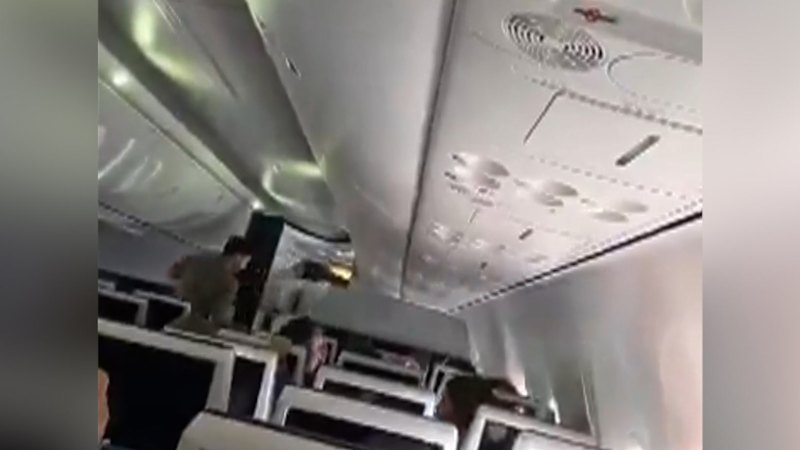
The headlines following the terrifying diversion of Flydubai Flight 1073 followed a predictable, lazy script. Commentators shrieked about a nightmare in the skies, panic at 37,000 feet, and glaring loopholes in aviation security. Bureaucrats scrambled to point fingers at delayed crew data transmissions and passenger name record compliance. They wanted you to believe this was a failure of intelligence sharing, a glitch in the vetting apparatus, or a momentary slip in regional screening protocols.
It is a comforting narrative for regulators because it implies that the system is basically sound, provided we just fill out a few more digital forms 48 hours earlier.
It is also complete nonsense.
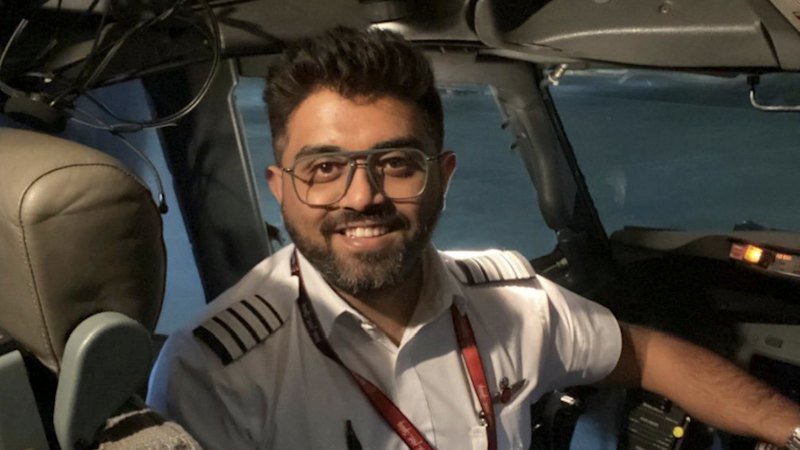
The attacker did not smuggle a weapon past security in a carry-on bag. He did not slip through a lax checkpoint wearing a fake boarding pass. He wore the epaulets, held the command license, and had full, unmitigated access to the controls. The threat was not lurking in row thirty-four among weary tourists and business travelers. The threat was sitting in the left seat behind a reinforced titanium door designed precisely to keep the rest of the world out.
When you treat aviation security as a perimeter defense problem against external intruders, you completely miss the existential vulnerability of modern flight: the isolated, two-person cockpit operating as an unaccountable psychological black box.
The Fortress Fallacy
Ever since the security paradigm shift of the early 2000s, global aviation has suffered from a collective myopia. Billions of dollars have been poured into hardening the steel door, locking down flight decks, and turning airports into clinical panopticons where passengers take off their shoes and surrender liquids like common criminals. The underlying philosophy was simple: keep the bad guys out.
In doing so, we turned the flight deck into an impenetrable bunker. We prioritized physical exclusion over internal behavioral reality. We built a system that assumes anyone who clears the initial credentialing hurdle is a stable, unshakeable automaton incapable of catastrophic psychological fracture mid-flight.
That assumption has always been a statistical roulette wheel.
When a pilot experiences a acute mental health crisis, a psychotic break, or a deliberate destructive impulse, that reinforced door stops being a protective shield and transforms into a trap. The passengers outside cannot reach in. The cabin crew cannot intervene quickly. The co-pilot is suddenly locked in hand-to-hand combat inside a confined space meant for flying an aircraft, not wrestling a colleague.
The media wants you to focus on the geopolitical tensions, the regional flight route suspensions, and the logistical nightmare of diverted landings in Saudi Arabia. Those are symptoms, not the disease. The disease is our stubborn refusal to acknowledge that human beings behind the controls are subject to sudden psychological degradation, and our current safety architecture is entirely blind to it until blood is spilled.
Why Bureaucratic Vetting Fails
Following the incident, investigators immediately pointed to paperwork discrepancies. Regulators noted that while crew data transmission laws exist, compliance in practice often happens too close to takeoff.
Imagine a scenario where every airline submits complete crew manifests seventy-two hours in advance instead of twenty-four. Does that stop a pilot from snapping? Does an extra forty-eight hours of data transit time detect an internal cognitive collapse? Of course not. It is administrative theater. It allows bureaucrats to stand before microphones and promise that a new spreadsheet column will prevent the next crisis.
Background checks, security clearances, and periodic medical renewals measure a pilot's past stability, not their present psychological state. Aviation medicine relies heavily on self-reporting. If a pilot is cracking under intense personal, professional, or geopolitical stress, the existing system offers them every incentive to hide it. Admitting mental distress means grounding, loss of livelihood, and social stigma. So they mask it. They push through until the pressure cooker explodes.
I have spent years watching corporate boards and regulatory agencies throw money at compliance tick-boxes while ignoring structural design flaws. When an enterprise relies entirely on the unmonitored good behavior of individuals locked behind closed doors, catastrophe is not a matter of if, but when.
The Sacred Cow of the Flight Deck
Let us address the raw nerve that aviation unions and traditionalists refuse to touch: the absolute sacredness of private pilot autonomy.
For a century, the cockpit has been treated as an untouchable domain of sovereign authority. The captain is king. The crew dynamic is hierarchical, rigid, and deliberately insulated from outside interference. Any suggestion of continuous real-time monitoring, remote biometric tracking, or automated behavioral analytics inside the flight deck is instantly met with fierce resistance. Pilots scream about privacy, overreach, and Big Brother invading the flight deck.
They have a point, but their defense is obsolete.
We monitor engine vibration, fuel burn rates, hydraulic pressures, and structural stress down to the millisecond. Flight data recorders track every twitch of the control yoke. Yet the most volatile, unpredictable variable in the entire aviation ecosystem—the human brain operating the machinery—remains entirely unmonitored until a pilot stops flying the plane and starts attacking their co-pilot.
We track the health of the turbine blades more rigorously than the cognitive stability of the human sitting twenty inches away from them. That is not safety engineering; that is willful negligence masked by tradition.
Redefining the Solution
If we actually want to dismantle this vulnerability instead of performing ritualistic public hand-wringing, we need to abandon the obsession with perimeter defense and confront internal cockpit architecture.
First, we must dismantle the punitive culture surrounding aviation mental health. As long as seeking psychological help equals career suicide, pilots will conceal their struggles. We need confidential, non-punitive intervention pathways where seeking help does not instantly strip an aviator of their wings.
Second, we need to rethink cockpit access and redundancy. The rigid two-person rule—which requires a flight attendant to step into the cockpit whenever one pilot leaves—was a clumsy regulatory band-aid introduced after previous disasters. It creates its own security risks and operational friction. Instead, modern aircraft require automated safety overrides and ground-monitored telemetry that can detect anomalous flight profiles or sudden cockpit struggles before a plane drops seventeen thousand feet in a matter of seconds.
Third, we must introduce passive behavioral and cognitive monitoring. We already possess sensor technology capable of tracking micro-expressions, vocal stress patterns, and physiological anomalies. Integrating non-intrusive monitoring systems into the flight deck environment would provide an early-warning radar for acute psychological distress, long before a crisis manifests in physical violence.
The Cost of Honesty
Let us be entirely transparent about the downside of this approach. Implementing continuous monitoring and dismantling the absolute privacy of the flight deck will trigger fierce opposition. Pilot unions will strike. Privacy advocates will raise alarms. Airlines will balk at the capital expenditure required to retrofit fleets with advanced cognitive telemetry and automated intervention safeguards.
Maintaining the status quo is cheap, quiet, and comfortable until a flight turns into a battlefield.
The passengers on that diverted flight lived through a living nightmare because our safety systems are designed for the threats of twenty years ago rather than the realities of today. Blaming security screeners or fine-tuning crew manifest deadlines is an evasion of responsibility.
The danger is not at the terminal gate. The danger is locked inside the cockpit, wrapped in tradition, and protected by our refusal to look at the human element with the same rigorous scrutiny we apply to the engines.
Stop waiting for the next disaster to prove that the door is locked from the wrong side.