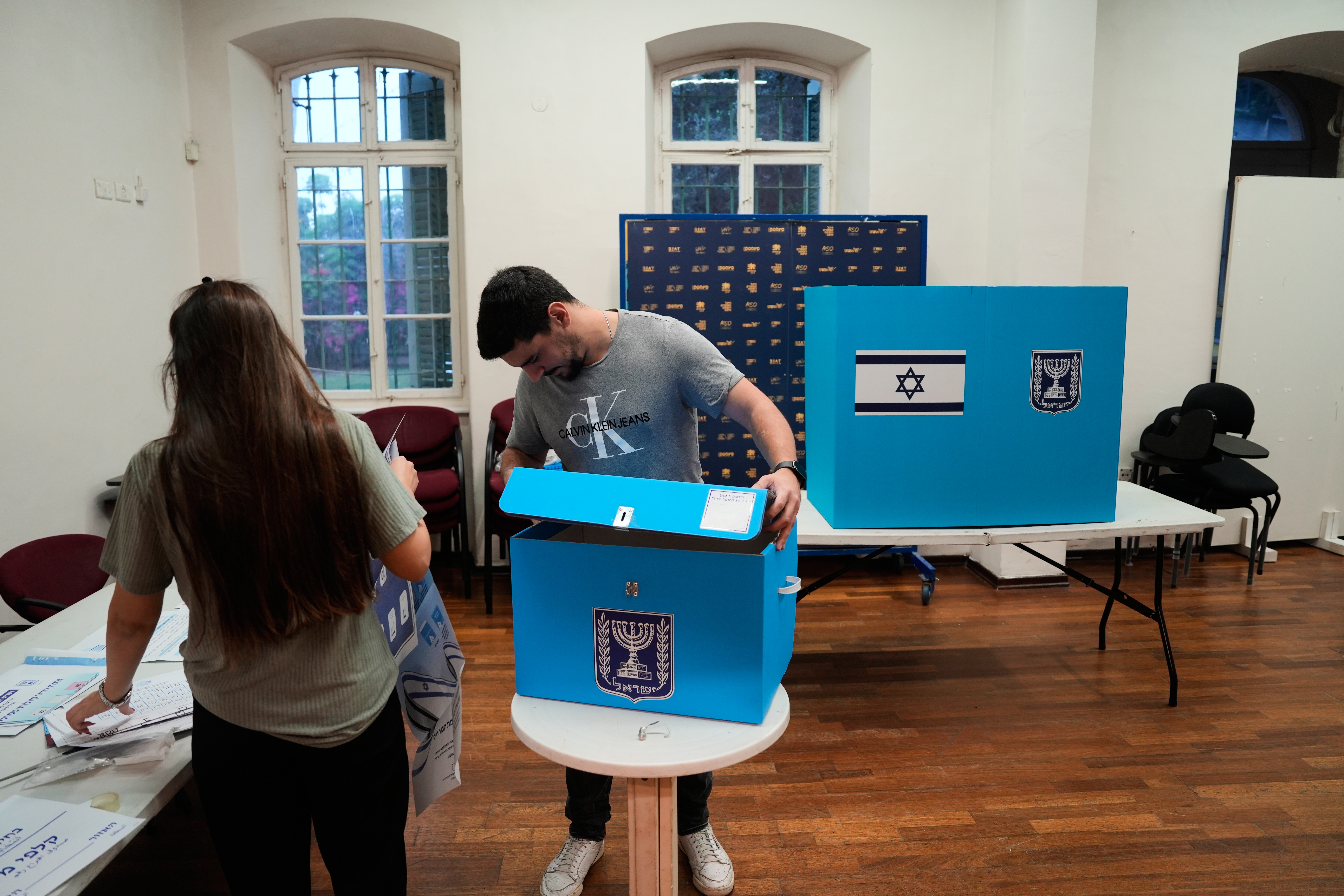
Every election cycle, the same tired headline resurfaces in international media. Pundits wring their hands over the lack of Indian-origin Jews in the Israeli Knesset. They frame the 2026 Israel election results through a lens of historical grievance, painting a community of roughly 85,000 to 100,000 people—Bene Israel, Cochin Jews, Baghdadi Jews, and Bnei Menashe—as perpetual political outsiders waiting for their turn at the podium.
That narrative is completely backwards.
Obsessing over a single seat in Jerusalem isn't a strategy for empowerment; it is a distraction from how real political power operates in Israel. Having watched diaspora coalitions and minority lobbying groups burn millions of shekels and decades of goodwill chasing symbolic representation, the diagnosis is clear. The "long fight" to put an Indian-origin candidate into the Knesset misses the structural reality of Israeli proportional representation, misunderstands the community's own voting behavior, and ignores where actual policy leverage lives.
The Proportional Representation Trap
To understand why chasing a dedicated "Indian seat" is a mathematical dead end, look at the mechanics of the Israeli electoral system. Israel operates under a single nationwide constituency with a closed-list proportional representation system. Voters do not elect local representatives from Dimona, Beersheba, or Ramla—cities with massive concentrations of Indian-origin Israelis. They vote for national party slates.
To enter the Knesset, a party must clear an electoral threshold of 3.25% of the total valid votes. In an election with roughly 4.5 to 5 million voters, that threshold hovers around 150,000 votes.
Do the math. Even if every single eligible voter of Indian descent in Israel—from third-generation Bene Israel families in Ashdod to newly arrived Bnei Menashe immigrants in Nof HaGalil—abandoned their ideological convictions and voted as a monolithic ethnic bloc, they still could not clear the threshold on their own.
Mainstream journalists treat the absence of an Indian-origin Member of Knesset (MK) as evidence of systemic exclusion. In reality, it is basic arithmetic. Parties reserve top slots on their electoral lists for candidates who bring massive, reliable vote banks—like the Haredi factions, the Russian-speaking immigrant base once mobilized by Avigdor Lieberman’s Yisrael Beiteinu, or the dense municipal networks of the Likud central committee. When a demographic lacks the raw numbers to threaten a party's survival, begging for a "reserved spot" on a party list turns community leaders into supplicants rather than power brokers.
The Myth of the Monolithic Indian Vote
The lazy consensus assumes that an Indian-origin Israeli in Yeruham shares the exact same political priorities as one in Herzliya. This reduces a richly varied population into a flat demographic caricature.
Indian Jews did not arrive in Israel as a single, unified tribe, nor do they vote like one today.
- The Bene Israel from Maharashtra, who form the largest segment, integrated heavily into development towns in the Negev and coastal cities during the 1950s and 1960s. Many gravitated toward center-right and traditionalist politics, aligning closely with Likud’s socio-economic populism and security posture.
- The Cochin Jews from Kerala arrived with distinct liturgical traditions and strong agricultural cooperative roots, dispersing across moshavim and urban centers with varied ideological leanings.
- The Baghdadi Jews from Mumbai and Kolkata often arrived with commercial capital and cosmopolitan networks, integrating rapidly into Israel’s secular middle and upper-middle classes.
- The Bnei Menashe from Mizoram and Manipur represent a much more recent wave of Aliyah, facing immediate hurdles regarding religious conversion bureaucracy, housing absorption, and peripheral settlement in the Galilee and West Bank.
Asking why "the Indian community" hasn't united behind a single candidate is like asking why all European-origin Israelis don't vote for the same person. When political operatives try to manufacture an "Indian ticket" or lobby for a token ethnic slot, they fail because the community itself refuses to be pigeonholed. Second- and third-generation Israelis of Indian heritage vote based on security, housing costs, judicial reform, and religious-state relations—not ancestral nostalgia.
Why Symbolic Representation Backfires
Look at what happened to other sectoral movements in Israeli politics. In the 1990s, Natan Sharansky’s Yisrael BaAliyah captured seven seats by mobilizing immigrants from the former Soviet Union. Within a decade, it dissolved into Likud. Why? Because once basic absorption hurdles were cleared, voters realized that an ethnic party has zero ideological coherence on the existential questions facing the state.
Even worse, look at the cautionary tale of Shas or the sectoral factions that trade municipal budgets for parliamentary loyalty. Those movements succeed only because they possess ironclad rabbinical discipline and massive demographic growth. Without those two engines, an ethnic faction inside a major party becomes window dressing.
Imagine a scenario where a major party places an Indian-origin candidate at slot 28 on its Knesset list—right on the borderline of getting elected. The party gets its photo-op at a Diwali celebration in Ramla. International press writes glowing profiles about "historic diversity." Meanwhile, that MK sits on the backbench with zero committee chairmanships, zero ministerial budget, and total dependence on the party leader for political survival. If they rebel to demand funding for their community, they get dropped from the list in the next election.
That isn't representation. That is co-optation.
Dismantling the Wrong Questions
When observers look at the 2026 election results and ask why no Indian-origin leader broke through, they are asking the wrong questions entirely. Let’s dismantle the standard talking points.
Why hasn't an Indian-origin politician risen through the ranks like Ethiopian-origin MKs?
Comparison to the Ethiopian-Israeli community—which has produced figures like Pnina Tamano-Shata and Gadi Yevarkan—is fundamentally flawed. The Ethiopian community is larger (over 160,000 people) and mobilized around acute, systemic crises involving policing, racial profiling, and state-sponsored discrimination that forced national political intervention. Indian-origin Israelis, while facing documented historical friction with the Chief Rabbinate in the 1960s over marriage registries, assimilated largely into the socioeconomic mainstream without an ongoing, acute civil rights flashpoint that demands street-level mass protest.
Does the lack of an MK mean the community lacks influence?
Only if you think power starts and ends inside the Knesset plenum. In Israel, real day-to-day resource allocation happens in municipal councils, labor unions, the Histadrut, and civil service ministries. Indian-origin Israelis hold significant sway in local municipalities like Dimona, Ramla, and Ashdod, as well as critical roles in the defense establishment, medicine, and the tech sector. Measuring a community's success solely by Knesset headcount ignores their deep integration into the state's operational backbone.
What about the India-Israel strategic alliance?
Commentators love to argue that an Indian-origin MK is needed to bolster ties between Jerusalem and New Delhi. This is pure fantasy. Bilateral relations between Israel and India—spanning multi-billion-dollar defense contracts, semiconductor partnerships, and agricultural technology transfers—are driven by hard geopolitical realism at the Prime Minister's Office, the Ministry of Defense, and the National Security Council. New Delhi cares about Israeli drone technology and intelligence sharing, not the ancestral background of a backbench parliamentarian.
Where Real Leverage Actually Lives
If community activists want actual results rather than symbolic headlines, they need to abandon the Knesset obsession immediately and adopt a ruthless, transactional playbook.
- Master the Party Primaries (Hitpakdut): In parties like Likud and Labor (now The Democrats), the electoral list is determined by registered party members voting in primaries. You do not need 150,000 voters to swing a primary; you need 5,000 to 8,000 disciplined, dues-paying members voting in coordinated blocs. Instead of begging party leaders for favors, organized voting blocs force candidates to come to them, sign binding commitments on municipal budgets or Bnei Menashe Aliyah quotas, and deliver—or face elimination in the next primary.
- Capture Municipal Strongholds: In Israel, mayors and deputy mayors control zoning, local education budgets, and municipal hiring. Concentrating political capital on winning mayoralties and deputy mayoralties in cities with dense Indian-origin populations yields immediate, tangible returns for families on the ground.
- Target Bureaucratic Chokepoints: The greatest friction facing parts of the community—specifically the Bnei Menashe—is not legislative; it is bureaucratic. It happens inside the Ministry of the Interior, the Ministry of Aliyah and Integration, and the Chief Rabbinate. Placing career civil servants, legal advisors, and director-generals inside those ministries alters policy faster than a dozen Knesset speeches ever could.
The Hard Truth About This Strategy
There is an obvious downside to abandoning the quest for a Knesset seat: you lose the spotlight.
Working the municipal trenches, organizing primary voter drives, and navigating civil service bureaucracies is unglamorous, grueling work. It won't generate viral clips from the Knesset podium or flattering profiles in foreign newspapers. You trade the emotional satisfaction of seeing "one of your own" take the oath of office for the cold, transactional reality of backroom politics. Furthermore, primary mobilization requires sustained financial backing and strict organizational discipline—things that fragmented community associations notoriously struggle to maintain over multiple election cycles.
Yet the alternative is watching the same cycle repeat every few years: high hopes, tokenistic gestures from party headquarters, inevitable disappointment on election night, and another round of hand-wringing op-eds.
Stop measuring political maturity by who sits in a leather chair in Jerusalem. Power in Israel isn't handed out as a reward for patience or historical sentiment; it is extracted through organized, relentless leverage at the ballot box and in the ministries. Until the community stops asking for a seat at the table and starts controlling the votes that build the table, nothing changes.