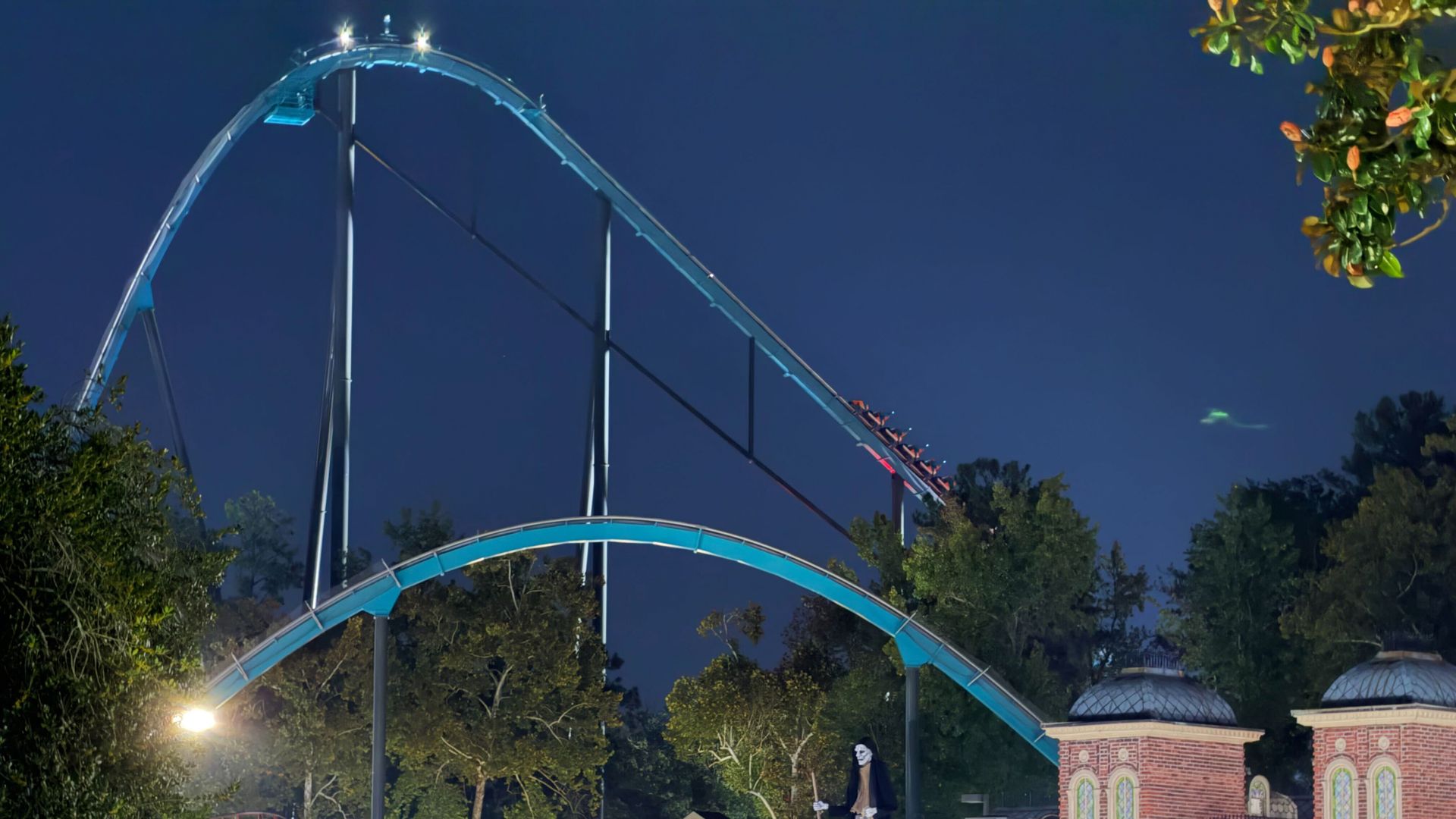
A day of family leisure at a major United States amusement park turned fatal when a catastrophic mechanical failure on a roller coaster resulted in one death and multiple severe injuries, exposing deep vulnerabilities in how extreme thrill rides are monitored, maintained, and regulated across the country.
For decades, the amusement industry has marketed speed, height, and G-forces as commodities of safe escapism. Yet behind the polished facade of corporate marketing and state-of-the-art engineering lies a patchwork regulatory framework that often relies on self-reporting, underfunded state inspection agencies, and aging infrastructure pushed to its absolute limits. When a ride malfunctions catastrophically, the public shock is often followed by a familiar cycle of corporate deflection, regulatory finger-pointing, and fleeting media scrutiny that fades long before systemic fixes are implemented. Meanwhile, you can read similar developments here: Why DNA and GPS Tracking Will Never Save Stolen Art.
The Anatomy of Modern Thrill Ride Engineering
Modern roller coasters are marvels of physics. Engineers harness linear synchronous motors, pneumatic launches, and complex computer-aided design software to subject the human body to forces exceeding four times the acceleration of gravity. These structures are built to withstand immense fatigue, cycling thousands of times a day through extreme thermal expansion, high winds, and continuous mechanical stress.
Yet stress takes a toll. Steel fatigues. Welds micro-fracture. Computer control systems suffer from software glitches and sensor degradation. While major theme parks employ rigorous internal maintenance schedules, the economic pressure to keep high-capacity attractions running during peak seasons creates an inherent conflict between aggressive uptime and conservative safety margins. When maintenance shortcuts occur or predictive maintenance technology fails to catch a sub-surface anomaly, the margin for error narrows to zero. To explore the complete picture, check out the detailed analysis by The Guardian.
The Myth of Uniform Safety Regulation
The public largely assumes that federal agencies such as the Consumer Product Safety Commission oversee all roller coasters. That assumption is dangerously false.
Under a legislative exemption known as the "Roller Coaster Loophole," fixed-site amusement parks are explicitly exempt from federal CPSC oversight. Instead, oversight is relegated to state and local governments. The result is a fractured landscape where safety standards vary wildly depending on geography.
Some states possess robust, year-round engineering divisions with mandatory independent third-party inspections. Other states have virtually no oversight, employing a single part-time inspector who relies entirely on documentation provided by the park itself. In states with weak or non-existent statutory frameworks, an amusement park can operate complex machinery for years without an independent set of eyes verifying structural integrity.
Compounding this issue is the National Association of Amusement Ride Safety Officials and various industry trade groups, which issue voluntary guidelines rather than binding legal mandates. While major corporate operators often exceed these voluntary standards to protect their brand reputation, smaller regional parks operating on thin financial margins may view safety compliance as a sliding scale rather than an absolute baseline.
The Human Cost of Corporate Defense
When tragedy strikes, the immediate corporate response follows a well-worn playbook. Public relations teams issue carefully sanitized statements expressing condolences while deflecting liability. Legal counsel moves swiftly to secure evidence, restrict public access to maintenance logs, and invoke arbitration clauses or liability waivers buried deep within admission ticket terms.
The victims and their families are left to navigate a labyrinth of civil litigation against corporate conglomerates backed by deep-pocketed insurance syndicates. Investigations by state authorities can take months, sometimes years, during which crucial pieces of physical evidence may be altered, repaired, or removed under the guise of resuming normal park operations. By the time an investigative report is finally published, public attention has shifted elsewhere, and the structural pressures that allowed the failure to occur in the first place remain entirely unchanged.
Toward True Accountability
Preventing future fatalities requires dismantling the current culture of self-regulation and operational secrecy.
Mandatory federal oversight for all fixed-site amusement parks is long overdue. Congress must repeal the CPSC exemption, establishing a unified national database for ride incidents, maintenance records, and mechanical recalls. Transparency must become a statutory requirement rather than a corporate courtesy. Furthermore, independent engineering audits should be conducted annually by certified inspectors who answer to public oversight boards, not to the parks that pay their fees.
Until the industry is forced to operate under transparent, enforceable federal standards, the illusion of absolute safety will continue to mask the very real dangers lurking on the tracks. Every time a new coaster breaks a height or speed record, the engineering community pushes the boundaries of human endurance. The oversight apparatus protecting the public must evolve at that exact same pace, ensuring that the pursuit of thrills never again comes at the ultimate price.