The mist over the River Clyde does not care about spreadsheets. It rolls in heavy, gray, and indifferent, swallowing the cranes of Govan and the sandstone tenements that have stood through a century of industrial broken promises. From a distance, Scotland looks like a postcard painted by melancholic gods. Up close, in the stairwells where the wind howls off the North Sea, it is a place where sirens have become a form of local weather.
Every year, statisticians gather in quiet rooms to update a ledger that no nation should ever lead. They look at columns of figures, calculate percentages per capita, and publish reports that make international headlines for precisely twenty-four hours before the news cycle devours them. The headlines always sound the same. Scotland is the worst in Europe. Scotland leads the continent in mortality rates tied to substance use.
Behind those numbers are not abstract units of data. They are sons who stopped calling home. They are daughters whose laughter echoes only in voicemail boxes saved on cracked smartphones. They are human beings who slipped through the net not because the net had holes, but because the net was never truly designed to catch them at all.
To understand how a country with a rich intellectual history, universal healthcare, and fiercely protective communities arrived at this precipice, we have to look past the political posturing and examine the chemistry of modern despair. We have to look at what happens when poverty, trauma, and a mutating underground market collide in the dark.
The Chemistry of Ruin
Drug markets do not remain static. They evolve with the ruthless efficiency of a biological virus. For decades, the narrative surrounding dependency in post-industrial Britain was anchored to older paradigms—heroin from distant fields, traditional routes of administration, an aging cohort of users who had survived the deindustrialization waves of the 1980s and 1990s.
That world is gone. The supply has shifted. It has grown darker, cheaper, and infinitely more lethal.
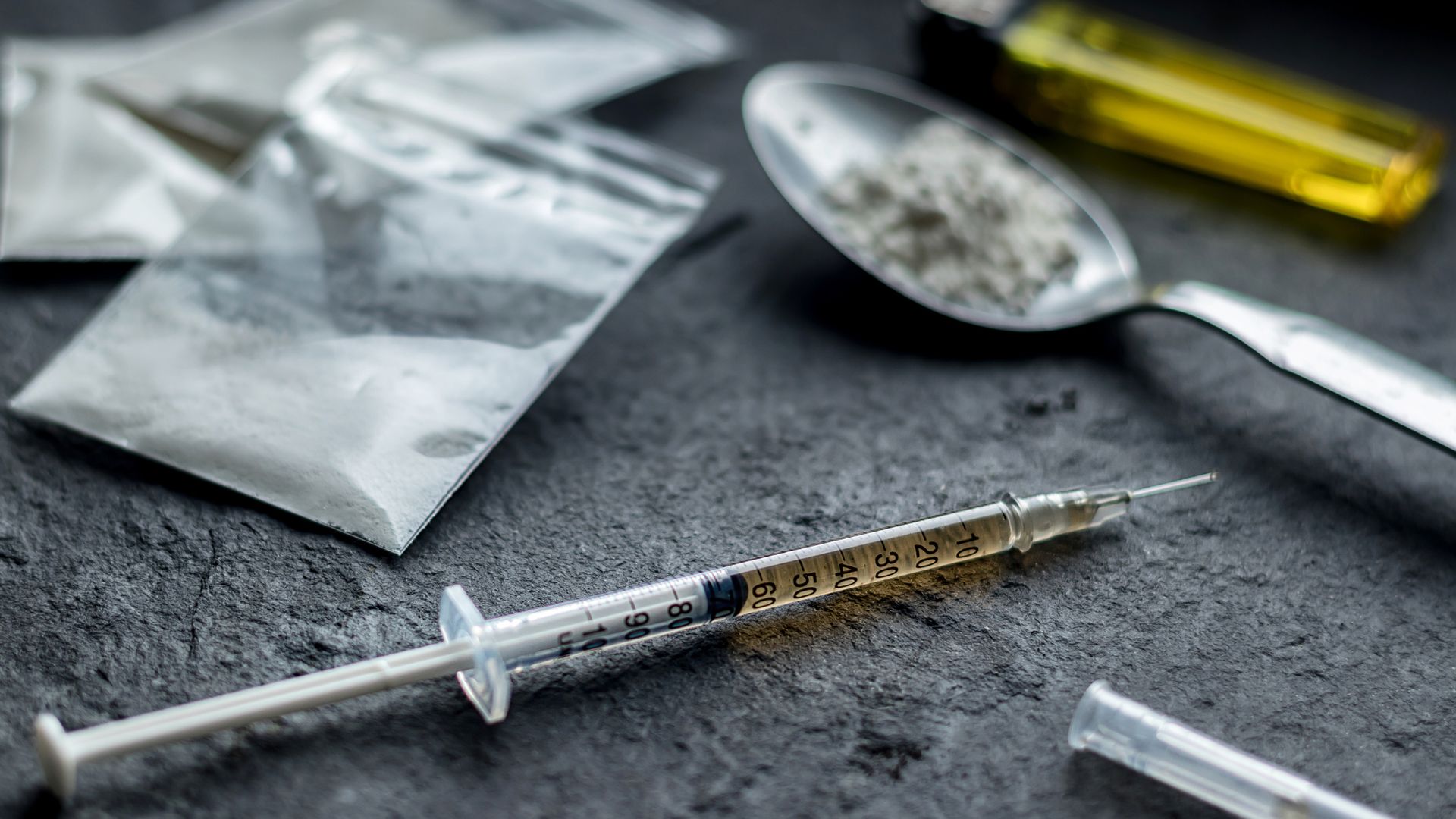
Consider what enters the bloodstream now. When forensic toxicologists analyze samples recovered from emergency rooms and post-mortem examinations, they find a cocktail that bears little resemblance to traditional substances. Street Valium—cheap, blue, illicitly pressed benzodiazepines—floods the market, sold for pennies a tablet. These are not manufactured in regulated pharmaceutical labs under sterile hoods. They are concocted in underground dens using potent chemical analogs, mixed with adulterants that amplify sedation and suppress respiration in unpredictable ways.
Add to this the creeping shadow of synthetic opioids. While North America experienced the horrific tsunami of fentanyl, Europe’s western edge has watched its own illicit supply become adulterated with nitazenes and other high-potency synthetics. A person buying what they believe is a familiar substance is often playing Russian roulette with a baggie whose exact potency is unknown even to the person who sold it.
The drug supply is increasingly toxic. That is the phrase used in parliamentary hearings, medical journals, and police briefings. It is clinical. It is sanitized. Translated into human experience, it means that a mistake—a single moment of vulnerability or bad judgment—no longer gives a person a second chance. The margin for error has shrunk to zero.
A Portrait in Gray
Imagine Callum. He is thirty-four years old, though the mirror tells a different story. His knuckles bear the scars of unheeded winters; his eyes carry the hollow fatigue of someone who hasn't experienced uninterrupted sleep since he was a teenager.
Callum does not fit the cartoonish stereotype of the addict conjured by daytime television. He is articulate. He reads history books when he can find them in the charity bins. He worked construction until a scaffolding collapse crushed his pelvis at twenty-two. The prescription painkillers came first, handed out in tidy orange bottles by a medical system that had plenty of pills and very few long-term physical therapists.
When the prescriptions stopped—as they always do, caught between budget caps and bureaucratic red tape—the pain remained. The body still screamed in the night. The street was there to fill the gap. The street is always open, unlike the clinics with their waiting lists, their missed appointment penalties, and their moralizing intake forms.
Callum’s story is multiplied across thousands of addresses in Dundee, Glasgow, Edinburgh, and the forgotten mining towns where the coal seams closed and the hope went out with them. When we talk about Scotland’s mortality crisis, we are talking about Callum. We are talking about the compounding interest of early childhood adversity, chronic pain, economic displacement, and an acute lack of mental health infrastructure that treats the mind as an afterthought to the body.
Why does Scotland suffer disproportionately compared to its neighbors across the UK and the wider European continent? The answers are tangled in history, poverty, and institutional inertia.
Sociologists point to the "Glasgow Effect"—a well-documented phenomenon where health outcomes in the city’s most deprived areas are significantly worse than in similarly deprived areas in England. This is not purely about current income; it is about generations of trauma. It is about heavy industry vanishing overnight, leaving entire communities stranded without an economic identity. It is about poor housing, high rates of chronic illness, and a cultural reluctance to seek help before a crisis turns catastrophic.
When emotional pain becomes a permanent resident in the nervous system, chemical anesthesia stops being a recreational choice. It becomes a survival strategy. It is an attempt to self-medicate a reality that feels unbearable.
The Institutional Wall
For years, the response from official quarters was defined by a rigid ideological divide. On one side stood those who argued for strict law enforcement—the belief that harsher penalties, increased policing, and abstinence-only programs would somehow scare people out of their chemical dependencies. On the other side stood advocates for harm reduction, pointing to international evidence showing that treating substance use as a public health crisis rather than a criminal offense saves lives.
The debate dragged on while the body count mounted.
To visit a needle exchange or speak with frontline outreach workers in Scottish cities is to witness a profound disconnect between the urgency on the pavement and the pace of legislative reform. These workers are the quiet saints of the modern urban landscape. They carry naloxone nasal sprays in their coat pockets like other people carry house keys. They know the names of the people sleeping in doorways. They know which batches on the street are currently killing people because they see the frantic texts flashing across burners at three in the morning.
Yet, structural barriers remain formidable. Safe consumption rooms—where individuals can consume pre-obtained substances under medical supervision, with immediate resuscitation available if an overdose occurs—have faced years of political friction, legal ambiguity, and jurisdictional disputes between Edinburgh and Westminster. While other European nations embraced these facilities decades ago, reducing overdose fatalities and connecting marginalized individuals to primary healthcare, Scotland’s debate bogged down in constitutional arguments and moral panic.
Progress is happening, but it moves at the speed of government paperwork while death moves at the speed of a chemical reaction.
The Cost of Looking Away
There is a comfortable fiction that many societies maintain: that people who die from drug toxicity brought it upon themselves, that their fate is the logical conclusion of poor personal choices, and that the rest of the community bears no responsibility for their survival.
This fiction is not only morally bankrupt; it is factually absurd.
No child grows up dreaming of living in a stairwell with a tourniquet tied around an infected vein. No human being chooses a life of unrelenting physical and psychological agony. When a society experiences mass casualties on the scale seen in Scotland year after year, it is not an aggregation of individual moral failures. It is a systemic failure. It is a reflection of a social fabric that has worn so thin in places that human beings are falling right through the weave.
Consider what happens when we stop treating this as a criminal justice issue and start treating it as an emergency of human rescue.
It means expanding heroin-assisted treatment programs for those whom conventional abstinence models have failed. It means radically overhauling mental health services so that a person seeking help does not encounter a six-month waiting list. It means flooding vulnerable communities with medical-grade resources, destigmatizing addiction so that people can ask for help without fear of losing their children, their housing, or their dignity.
It also means confronting the deeper spiritual malaise of our economic systems. When work is precarious, housing is unaffordable, and community bonds have been frayed by decades of individualism, people look for solace wherever they can find it. Some find it in alcohol. Some find it in prescription sedatives. Some find it in the dark embrace of street opioids.
The Final Reckoning
The mist over the Clyde does not lift easily. It clings to the brickwork, damp and heavy, mirroring the collective grief of a nation that has buried too many of its children.
The statistics will return next year. New spreadsheets will be compiled. Commentators will debate the numbers on television screens while viewers change the channel to find something more comforting. But behind every percentage point is a name, a voice, and a human story that deserved a different ending.
In a small flat overlooking a gray courtyard, a kettle boils on a stove. A photograph sits on the mantelpiece—a young boy with bright eyes and a gap-toothed smile, standing proudly beside a fishing rod on the banks of a Highland loch. That boy grew up to become one more entry in a tragic ledger.
The wind rattles the windowpane, whispering through the Scottish night, asking a question we have yet to answer with the courage it demands. How many more must we lose before we finally decide that every single one of them belongs to us?