The global counterterrorism playbook is getting a massive rewrite, and the United States is leading the charge.
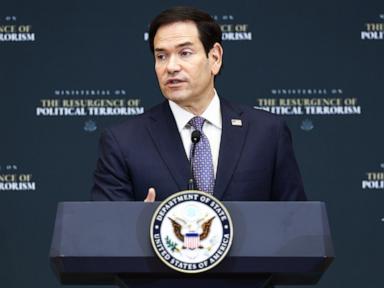
On July 16, 2026, Secretary of State Marco Rubio gathered diplomats and representatives from more than 65 countries at the State Department for the inaugural "Ministerial on the Resurgence of Political Terrorism." The goal was straightforward: convince international allies to treat far-left extremism as a primary global threat on par with Islamist militancy.
This isn't just a minor policy shift. It's a complete pivot in how the U.S. government defines and fights national security threats.
If you've been watching the headlines, you might wonder why this is happening now. Is far-left violence actually a rising global threat, or is this a calculated political move? To understand what's really going on, we have to look at the details of the summit, the administration's new tactics, and the deep skepticism coming from long-time American allies.
Inside the Far Left Summit in Washington
The Trump administration brought out its heaviest hitters to make the case. Alongside Rubio, FBI Director Kash Patel, Treasury Secretary Scott Bessent, and White House Deputy Chief of Staff Stephen Miller addressed the delegation.
The rhetoric was incredibly intense. Rubio called far-left political terrorism a "distinctive and unique evil" driven by "a hatred for civilization itself." Miller went even further, calling left-wing political violence a "fatal cancer to civilization" that, if left unchecked, "always becomes a Gulag."
But the summit wasn't just about harsh speeches. The State Department quickly followed up by announcing targeted visa restrictions. These restrictions block entry to any foreign nationals who finance, recruit, incite, or assist far-left terrorist networks.
The administration also plans to use financial tools to dry up funding. Bessent and Miller pointed to National Security Presidential Memorandum 7, a directive signed last year, as the mechanism they will use to identify, defund, and "debank" these groups.
The Blind Spot Argument versus the Cold Data
Rubio argued that Western intelligence agencies have an ideological "blind spot" when it comes to left-wing violence. He claimed that for years, the media and political institutions treated far-left violence as protected political expression rather than actual terrorism.
To build his case, Rubio pointed to a mix of historical and recent events, including:
- Historical left-wing militancy in Europe and Latin America
- The rise of the Antifa movement
- The assassination of conservative activist Charlie Kirk
- Recent assassination attempts on Donald Trump
Is the threat growing? The data offers a mixed picture.
According to a recent Europol report, there were 12 recorded acts of left-wing terrorism in Europe in 2025, which put it second only to jihadist attacks (which stood at 24).
However, many counterterrorism experts and academic institutions don't see eye-to-eye with the State Department's framing. An analysis by the Center for Strategic and International Studies (CSIS) noted that while left-wing violence has ticked upward over the last decade, it remains far less lethal and less frequent than violence committed by right-wing extremists or jihadists.
Why Allies are Hesitant and Critics are Worried
Getting 65 countries into a room is one thing; getting them to change their domestic policing is another.
Several European and Latin American allies have expressed quiet skepticism about this new U.S. focus. Their own domestic intelligence agencies simply do not rate the far-left as their primary national security concern. They worry that shifting scarce counterterrorism resources away from active jihadist networks or highly lethal far-right groups could backfire.
Domestically, the pushback is even louder. Congressional Democrats on the House Foreign Affairs Committee sent a letter to Rubio questioning the lack of data backing up this sudden strategic shift.
Civil liberties groups, including the American Civil Liberties Union (ACLU), have warned that using sweeping counterterrorism laws to target "far-left networks" is a slippery slope. Because definitions of "antifa" or "left-wing extremist" can be highly subjective, critics worry these tools will eventually be used to police peaceful domestic protest, monitor activist groups, or silence political opponents.
What Happens Next
This summit was just the opening salvo in a broader campaign to reshape global security priorities. If you want to track how this policy actually changes things on the ground, keep an eye on these specific areas:
- Foreign Terrorist Designations: The Trump administration previously designated four European left-wing groups as Foreign Terrorist Organizations (FTOs). Rubio hinted that more designations are coming soon. Watch to see which international groups get added to the list next.
- Banking and Asset Seizures: Watch how the Treasury Department uses its sanction powers. If the U.S. starts debanking international activist networks, it will set off major legal battles over financial privacy and state overreach.
- Intelligence Sharing: The real test of this initiative is whether foreign intelligence agencies actually start sharing data on left-wing activists with the FBI and State Department, or if they choose to protect their own citizens from what they perceive as political targeting.