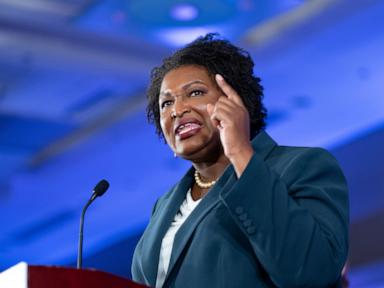
Most people still think of Fair Fight as a Georgia voter registration machine. They're wrong.
Stacey Abrams didn't build a multi-million-dollar political apparatus just to hand out clipboards outside grocery stores in Atlanta. When she announced plans to refocus Fair Fight on broader threats to democracy, a lot of political observers shrugged it off as a routine rebrand after her second gubernatorial loss to Brian Kemp in 2022. That's a massive misreading of what's actually happening on the ground in American politics right now.
Let's be honest about the math. Traditional voter registration drives are hitting a wall of diminishing returns in battleground states. Between aggressive voter roll purges, new restrictions on mail-in ballots, and local election boards getting stacked with partisan loyalists, simply registering a new voter doesn't guarantee their ballot gets counted anymore. Abrams realized that fixing the front door means nothing if someone is quietly boarding up the windows behind you.
What the Fair Fight Shift Actually Means
Fair Fight Action started in 2018 right after Abrams' razor-thin loss to Kemp—a race decided by roughly 55,000 votes and haunted by allegations of voter suppression, exact-match registration purges, and closed precincts. Back then, the mission was straightforward. Get people registered, sue states over restrictive voting laws, and fund local organizing in battleground states.
It worked, up to a point. Fair Fight raised over $100 million across two election cycles and helped turn Georgia blue in the 2020 presidential race and the 2021 Senate runoffs.
Then the ground shifted. By late 2023 and heading into the 2024 and 2026 cycles, Fair Fight laid off a significant chunk of its staff—cutting roughly 75% of its workforce during a painful restructuring—to pivot away from expensive, traditional field operations. You don't burn down a famous organizing model unless you believe the old playbook is broken.
Abrams' new direction targets the structural machinery of democracy itself. Instead of treating voting access as an isolated issue, the organization is zeroing in on three interconnected fronts:
- Election subversion and certification sabotage at the county and state board levels, where local officials have increasingly threatened to refuse certifying legitimate election results.
- Disinformation ecosystems that target Black, Latino, and young voters with tailored lies about polling locations, mail-in deadlines, and civic participation.
- Authoritarian policy creep that goes beyond the ballot box—things like state legislatures stripping power from locally elected prosecutors, overriding municipal minimum wage laws, and restricting public protest rights.
Think about that third point for a second. If voters in a city elect a progressive district attorney or pass a local ballot measure, and the state legislature immediately passes a law nullifying their authority, did those votes actually matter? Abrams is betting that voters won't show up to the polls if they feel their local democracy is rigged after the ballots are already cast.
Why Traditional Voting Rights Groups Are Losing Ground
I've watched civic organizations make the same mistake for over a decade. They treat voting rights like a seasonal retail business.
Every two years, millions of dollars flood into battleground states around August. Groups hire temporary canvassers, knock on doors for ninety days, run a few digital ads telling people that "this is the most important election of our lifetimes," and then pack up their folding tables on the first Wednesday in November.
That model is dead. Conservative legal networks and state legislatures play a twelve-month, multi-year game. Organizations like the Heritage Foundation and state-level policy councils draft model legislation in January, pass it through GOP-controlled legislatures by April, and defend it in federal courts through the summer. By the time traditional voter turnout groups show up in the fall, the rules of the game have already been rewritten.
Fair Fight's restructuring is an admission that reactive election-cycle spending can't beat year-round institutional pressure. You can't out-canvass a bad law. And you definitely can't out-canvass a county election board that refuses to certify tallies.
The Money Problem Nobody Wants to Talk About
Let's look at the financial reality behind Abrams' pivot. During the peak of the anti-Trump resistance between 2018 and 2022, small-dollar online donors poured historic amounts of cash into Fair Fight. That well dried up fast after 2022.
Small-dollar donors react to outrage and high-profile villains. Fighting Brian Kemp or Donald Trump generates viral fundraising emails. Explaining the nuances of Georgia's State Election Board rule changes or the mechanics of municipal preemption laws? That doesn't pull in $15 ActBlue donations at midnight.
Abrams had to shrink Fair Fight's burn rate to survive in a leaner fundraising environment. Cutting staff wasn't just a strategic choice—it was financial triage. By narrowing the focus to high-leverage democracy defense, legal advocacy, and narrative counter-programming, Fair Fight can operate with a smaller footprint while punching above its weight in policy fights.
The Real Threats Happening Below the Radar
Most cable news coverage obsesses over presidential polls and Supreme Court rulings. Meanwhile, the real battle over American democracy is happening in obscure county commission meetings and state administrative boards.
Take Georgia's State Election Board as a prime example. Over the last couple of years, a conservative majority on that board pushed through rules requiring hand counts of ballots at precincts and granting local board members broad discretion to conduct "reasonable inquiries" before certifying results. Legal experts across the political spectrum—including Georgia's Republican Attorney General Chris Carr—warned that these rules could invite chaos and delay certification past statutory deadlines.
This is the exact terrain Fair Fight is moving into. Here's why it matters so much:
- Certification delays create legal openings. If a county misses a state certification deadline, partisan actors can argue the results are invalid or kick the decision to a partisan state legislature.
- Hand-counting introduces human error. Machines count millions of ballots faster and far more accurately than exhausted poll workers at 2:00 AM, yet hand-count mandates continue to spread as a wedge issue.
- Intimidation drives out experienced workers. Roughly one in three local election officials nationwide have reported harassment or threats since 2020, leading to a massive brain drain of nonpartisan administrators.
When experienced county clerks quit, who replaces them? Often, it's activists who spent the last four years claiming the 2020 election was stolen. Fair Fight's focus on monitoring these local administrative bodies fills a massive blind spot that national Democratic committees largely ignore until a crisis hits in November.
What Critics Get Wrong About Stacey Abrams
Abrams is a polarizing figure, and honestly, she brings plenty of baggage to this fight. Critics on the right paint her as an election denier because she refused to call her 2018 loss to Kemp "legitimate" due to systemic voter suppression, even though she legally acknowledged he won the office. Critics on the left argue that her 2022 campaign spent too much money on glossy media consultants and celebrity appearances while failing to expand her coalition among Black men and rural voters.
Both critiques have teeth. Her 2022 campaign burned through over $100 million and still lost by more than seven points—a far worse margin than her 2018 run.
Writing her off completely, though, is foolish. Few figures in modern American politics understand the intersection of state-level legislative mechanics, grassroots organizing, and media narrative better than Abrams. When she shifts her focus, donors, legal strategists, and progressive state legislators pay attention. Even more importantly, she has spent years building relationships with voting rights litigators like Marc Elias and civil rights groups like the NAACP Legal Defense Fund, giving Fair Fight an immediate seat at the table in major constitutional battles.
How This Impacts Future Elections Beyond Georgia
You might live in Wisconsin, Arizona, Pennsylvania, or North Carolina and think Georgia politics has nothing to do with you. Think again.
Georgia has functioned as the testing ground for modern election legislation for the past six years. When Georgia passed Senate Bill 202 in 2021—which restricted drop boxes, shortened the runoff window, and made it a misdemeanor to hand out water to voters waiting in line—similar bills popped up in over a dozen Republican-led statehouses within months.
The reverse is also true. Strategies that successfully defend democratic norms in Georgia become blueprints for civic groups across the Sun Belt and the Rust Belt. If Fair Fight proves that a leaner, democracy-focused organization can effectively expose local election board overreach, counter targeted disinformation in real time, and mobilize communities around local governance issues, other state-level groups will copy the formula immediately.
The Disinformation Blind Spot
One of the sharpest parts of Fair Fight's updated strategy involves tackling non-English and community-specific disinformation. Traditional fact-checking organizations spend hours debunking wild conspiracy theories on X or cable news, completely missing the lies circulating in private WhatsApp groups, local talk radio, and targeted social media feeds.
During recent election cycles, researchers documented coordinated campaigns spreading false claims in Spanish and Black-targeted digital spaces—telling voters they could vote by text message, or claiming that voting would trigger outstanding warrant checks or tax audits. By the time mainstream fact-checkers notice these narratives, Election Day is over. Fair Fight's pivot puts direct resources into rapid-response counter-messaging inside those specific communities rather than preaching to the choir on national television.
How You Can Track and Protect Local Democracy Yourself
Waiting for national organizations or famous politicians to save democracy is a losing strategy. The entire point of Fair Fight's shift is that democratic erosion happens locally, which means the defense has to happen locally too.
If you want to actually do something useful before the next election cycle heats up, skip the outrage scrolling and take three concrete steps right where you live:
- Watch your county election board meetings. Almost every county board of elections streams its monthly meetings online or posts agendas publicly. Spend thirty minutes a month checking who is trying to change precinct locations, drop box hours, or certification rules in your backyard.
- Sign up to be a nonpartisan poll worker. The best antidote to election conspiracy theories and administrative chaos is working inside a polling place for fourteen hours. Counties desperately need tech-savvy, calm people to check in voters and verify equipment.
- Follow state-level preemption bills. Pay attention when your state legislature tries to strip power from your local city council, school board, or county prosecutor. Call your state representative—not your member of Congress—because state lawmakers get far fewer phone calls and actually notice when constituents push back.
Stacey Abrams is betting the future of Fair Fight on a simple, uncomfortable truth. Protecting the right to vote doesn't mean much if the system counting the votes—and the government answering to them—is hollowed out from the inside. Whether Fair Fight's leaner, sharper model succeeds will tell us a lot about whether American democracy can defend itself before the next crisis arrives.


