To understand how a landlocked country trapped between two superpowers fights for its breath, you have to look past the ink of diplomatic communiqués and stand in the biting wind of the Gobi desert.
For decades, Mongolia has survived in a state of delicate, agonizing suspense. Bound on the north by Russia and swallowed on all remaining sides by China, the nation has mastered a quiet kind of geopolitical acrobatics. But survival is expensive. Every time a truck fires its engine in Ulaanbaatar, or a tractor cuts through the earth in the northern valleys, the lifeblood keeping that machine alive comes from outside. Historically, nearly all of Mongolia's refined petroleum has arrived via Russian pipelines.
Imagine a country where you own the land, you elect the parliament, but someone else holds the key to the ignition of every vehicle you own. It is a psychological weight as much as an economic one.
Then consider what happens next.
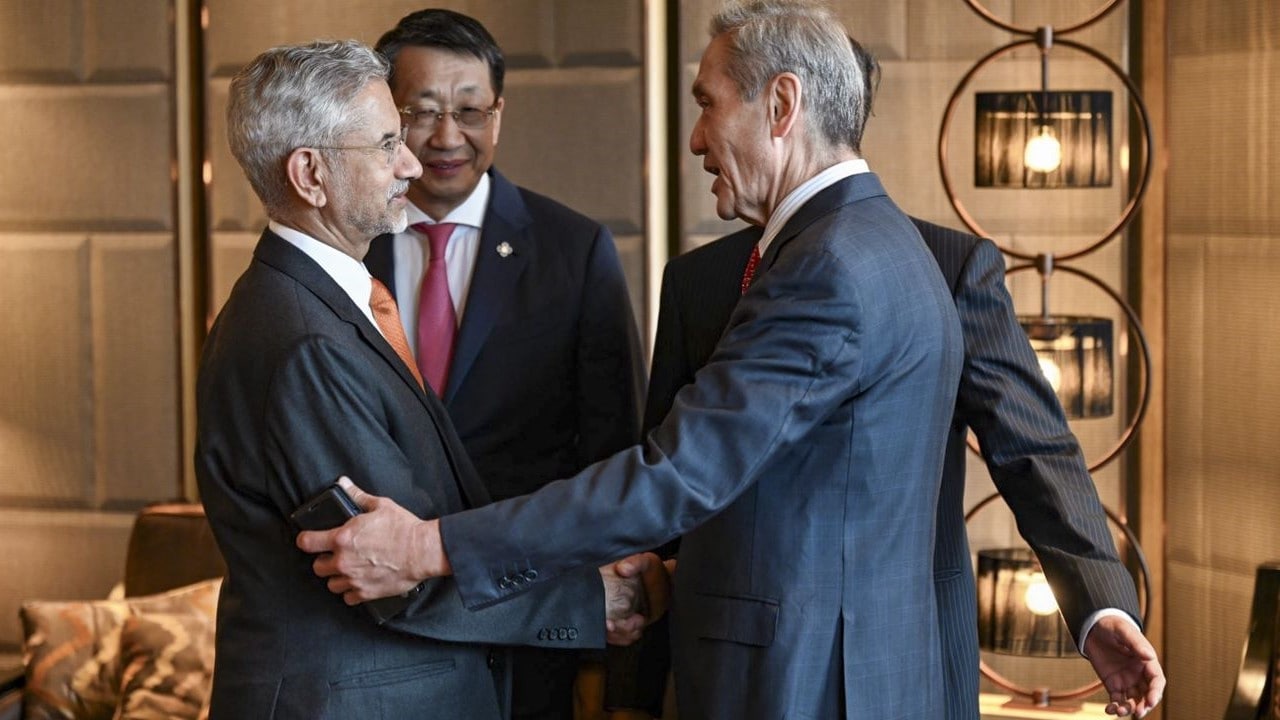
In June 2026, India's External Affairs Minister, S. Jaishankar, touched down in Ulaanbaatar. The official press releases spoke of a two-day visit, a review of bilateral cooperation, and the 70th anniversary of diplomatic ties. The words were smooth, diplomatic, and entirely bloodless. They missed the plot.
The real story was unfolding in Sainshand, an eastern desert town where the horizon stretches until it dissolves into grey heat. There, rising out of the sand, is a $1.7 billion monument to defiance: Mongolia’s first greenfield oil refinery, built with Indian engineers, financed by Indian lines of credit, and designed to smash a structural monopoly that has lasted for generations.
When Jaishankar stood with Mongolian Foreign Minister Battsetseg Batmunkh, he used a phrase that bridges the thousands of miles separating New Delhi from the steppe. He called the two nations "spiritual siblings."
It sounds like soft poetry. It is actually hard strategy.
For India, Mongolia is the ultimate "third neighbor"—a democratic ally tucked deep inside the inner courtyard of Eurasia. For Mongolia, India is an anchor outside the immediate, suffocating pressure of its giant neighbors. The bond isn’t built on shared borders; it is built on ancient Buddhist lineages and a modern, shared anxiety about over-dependence.
But spirit alone cannot power a country. You need diesel.
The refinery at Sainshand is designed to process 1.5 million metric tons of crude oil per year. To the casual reader, that number is just a statistic on a spreadsheet. To a Mongolian truck driver, it represents something entirely different. It is the end of the line for artificial fuel shortages. It means that when regional politics shift or winter freezes the supply lines from Siberia, the pumps in Mongolia will not run dry.
Building something of this magnitude in the middle of the steppe is an exercise in sheer stubbornness. The logistics are brutal. Temperatures swing from scorching summer highs to winter lows that crack steel. Every piece of heavy equipment must be routed through complex international corridors.
The complexity is dizzying, even terrifying, for the engineers on the ground. I remember talking to a project manager who confessed that there are nights when the sheer isolation of the site makes the entire endeavor feel like an illusion. Yet, the work continues because the stakes are structural. This is not a "quick-impact project" meant to look good in a photo opportunity. It is a fundamental rewiring of a nation's sovereign capabilities.
If you only read the standard news feeds, you would think diplomacy is just an endless sequence of handshakes in wood-paneled rooms. You would see Jaishankar meeting with President Ukhnaagiin Khurelsukh, exchanging pleasantries from Prime Minister Narendra Modi, and moving on to the next summit.
But look closer at what else was packed into the diplomatic briefcase during that Ulaanbaatar meeting.
They discussed an Information and Communications Technology center. They discussed an India-Mongolia Friendship School. They talked about training programs to elevate English language skills across the steppe.
Why does a country building an oil refinery care about language schools and computer labs?
Because infrastructure without human capacity is just expensive scrap metal. India is not merely exporting steel and debt; it is exporting the knowledge required to run the systems once the foreign engineers pack up and go home. By anchoring the relationship in education and technology, New Delhi is ensuring that the next generation of Mongolian engineers, coders, and policymakers look toward the subcontinent when they think of partnerships.
The strategy is brilliant, but it is also fragile.
Every move India makes in Mongolia is watched closely by Moscow and Beijing. It is a high-stakes chess match played on a board of sand and wind. India cannot offer Mongolia a contiguous trade route. It cannot change geography. What it can offer is an alternative perspective, a democratic counterweight, and the technological muscle to build domestic independence.
When the Sainshand refinery finally comes fully online, it will satisfy three-quarters of Mongolia's domestic fuel demand. That shift changes the psychological landscape of the region. A self-reliant Mongolia is a more confident actor on the global stage.
As Jaishankar wrapped up his talks and prepared to board his flight to Seoul for the next leg of his journey, the cameras captured the standard departures. The flags flapped in the Ulaanbaatar breeze. The official statements were logged into the archives.
But away from the capital, in the dust of Sainshand, the true legacy of the visit remained. The heavy machinery kept turning, throwing long shadows across the Gobi. Each weld on those massive oil tanks is an assertion of freedom—a physical declaration that a nation’s destiny does not have to be dictated solely by the accident of its geography.