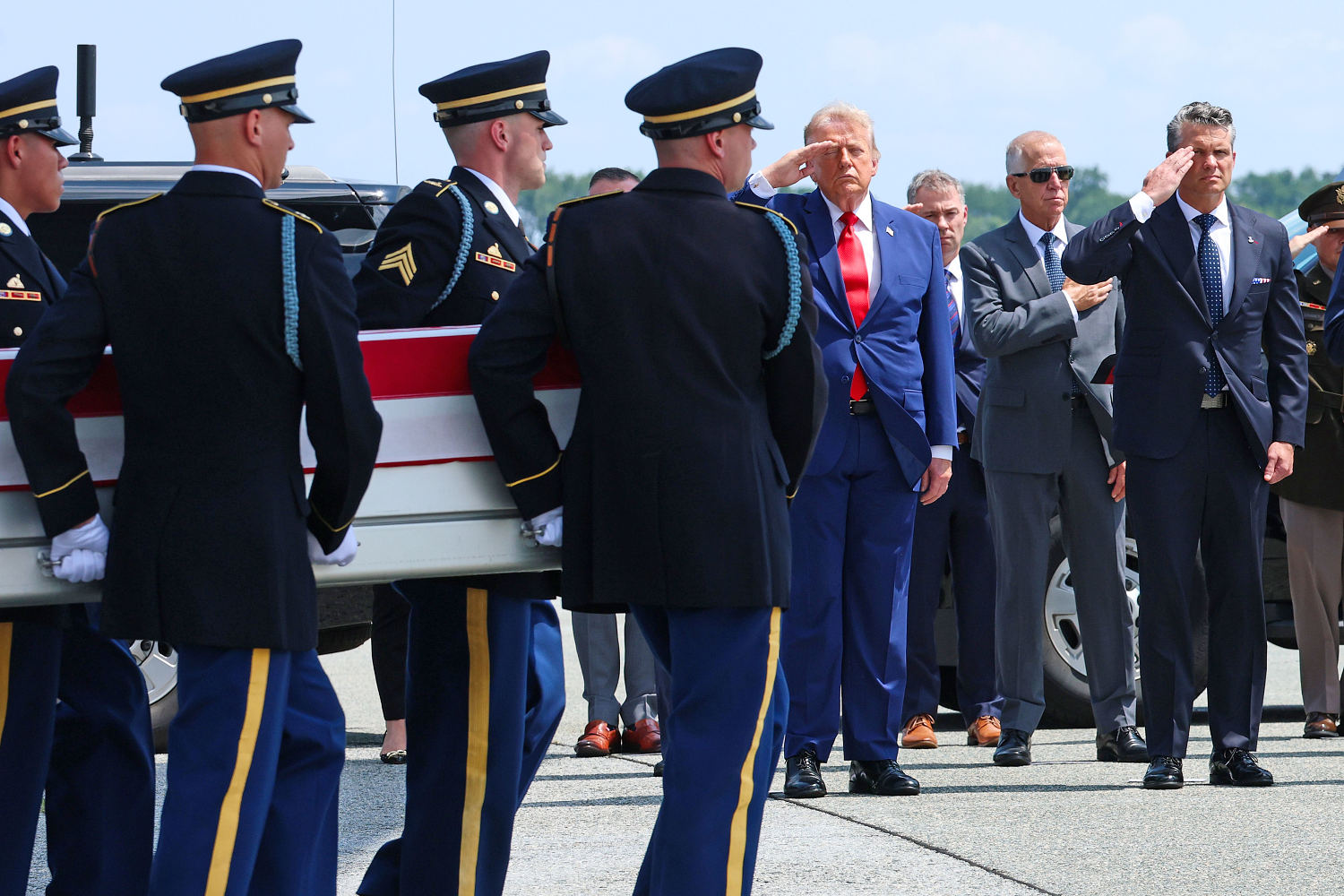
The cable news cameras cut to a darkened tarmac at Dover Air Force Base. A row of uniformed flag-bearers moves in cadence under the glow of stadium lighting. A commander-in-chief stands at attention, head bowed, hand over heart, as flag-draped transfer cases are carried off the back of a C-17. The commentary that follows across mainstream networks is predictable, almost rehearsed: reverence, solemnity, national unity, and honor.
It is a performance. A carefully engineered visual designed to transform catastrophic strategic failure into a quiet moment of patriotic submission.
When politicians stand on the tarmac to receive the bodies of service members killed in foreign military actions, the public is told to focus entirely on honoring the dead. Questioning the policy that put them in harm’s way at that exact moment is labeled uncouth, partisan, or disrespectful. But that moral shield is precisely why military commanders and political operatives love the ceremony. The dignified transfer has become the ultimate public relations buffer—a ritual that weaponizes grief to silence accountability.
I spent years inside defense policy circles watching how executive teams handle crisis communications after tactical failures. When a mission blows up, the immediate directive is never to defend the strategy; it is to shift the narrative from why the target existed to how honorably we grieve. The moment you make the conversation about national mourning, you choke off the hard questions about strategic ineptitude.
The Illusion of Unity on the Dover Tarmac
Mainstream press coverage of presidential visits to Dover Air Force Base almost always centers on optics and body language. Did the president look solemn enough? Did he speak to the families? Did he check his watch?
This coverage completely misses the point.
The entire apparatus of the dignified transfer was constructed to manage domestic fallout. Prior to 2009, the Pentagon maintained a strict media blackout on flag-draped caskets arriving at Dover. That ban, originally instituted during the Gulf War, was lifted under the guise of transparency. But transparency was not the goal. Control was.
By allowing selective, heavily stylized media access to these arrivals, the Department of Defense turned a logistical movement of remains into a national ritual. Look closely at how these events are staged:
- Silence is strictly enforced on the flightline, preventing reporters from asking questions.
- Camera angles are tightly restricted to produce identical, iconography-rich photographs.
- The focus remains entirely on individual sacrifice rather than command decisions.
The ceremony forces the observer into an emotional trap. You cannot criticize the strategic blunder without appearing to dishonor the fallen. So the public swallows its frustration, murmurs about the high cost of freedom, and moves on. Meanwhile, the policymakers who signed off on flawed intelligence or ambiguous mission parameters walk away completely unscathed.
When Retaliation Becomes a PR Strategy
Look at the operational background of foreign troop deployments across volatile regions in the Middle East. Service members are frequently stationed at exposed, poorly defended outposts with vague mission objectives that boil down to "deterrence."
In military strategy, deterrence requires a credible threat of decisive action and a clear definition of success. Positioned as stationary targets for proxy drone attacks or rocket barrages, exposed forces are not deterring anything. They are sitting ducks serving as strategic tripwires.
When an attack inevitably succeeds and casualties occur, Washington executes a predictable two-step playbook:
- The Grief Phase: High-profile presidential attendance at Dover Air Force Base to dominate the news cycle with images of mourning and Commander-in-Chief reverence.
- The Kinetic Phase: A series of highly publicized, carefully calibrated airstrikes against low-level proxy targets or empty weapon caches to show "strength."
Notice what is missing from this playbook: an actual strategy.
The strikes retaliate just enough to satisfy domestic political demands for action, but deliberately avoid addressing the root cause of the threat out of fear of wider escalation. It is reactive policy disguised as decisive leadership. The service members pay the ultimate price for an ambiguous policy, and the political establishment uses their return home to reset the clock until the next strike happens.
The True Cost of Ceremonial Distraction
Some critics argue that questioning the dignity of these arrivals is heartless, claiming families deserve national recognition of their loss.
Of course families deserve honor and support. Private grief should be sacred. But public, televised political displays at military airbases are not private grief. They are state events.
When state events are structured to shield decision-makers from scrutiny, they actively harm national security. They allow top military commanders and foreign policy advisors to treat service member lives as acceptable friction in maintaining broken status-quo policies.
Imagine a corporate environment where an executive repeatedly sends employees into burning buildings without proper gear or clear objectives. When an employee dies, the company holds a massive press conference praising the employee's bravery, while firing zero managers and changing zero safety protocols. We would call that corporate malpractice and PR manipulation. When the federal government does it, cable news calls it "presidential."
Dismantling the Manufactured Consensus
If the public wants to break this cycle of endless, aimless deployment and ritualized mourning, it needs to change how it consumes these moments.
Stop assessing a leader's foreign policy by how somber they look on a tarmac. A president's job is not to be a mourner-in-chief; it is to ensure service members are never sent into harm's way without a clear, achievable mission and a defined end state.
The next time headlines hype a leader attending a transfer ceremony, ask these three brutal questions instead:
- What specific, vital national interest was served by placing those service members in range of that attack?
- What military or diplomatic failure allowed the strike to succeed, and who is being held accountable?
- Is the planned retaliation designed to win a defined objective, or merely to manage tomorrow's news cycle?
If the administration cannot answer those questions clearly, the ceremony on the tarmac isn't an act of honor. It's a cover-up for policy failure.
Real respect for military personnel doesn't look like solemn photo-ops or lower flags. It looks like demanding that leadership stop treating service members as disposable assets in endless, strategy-free conflicts. Until the public demands accountability over ceremonial theater, the C-17s will keep landing at Dover, and the political elite will keep using flag-draped cases to buy silence.