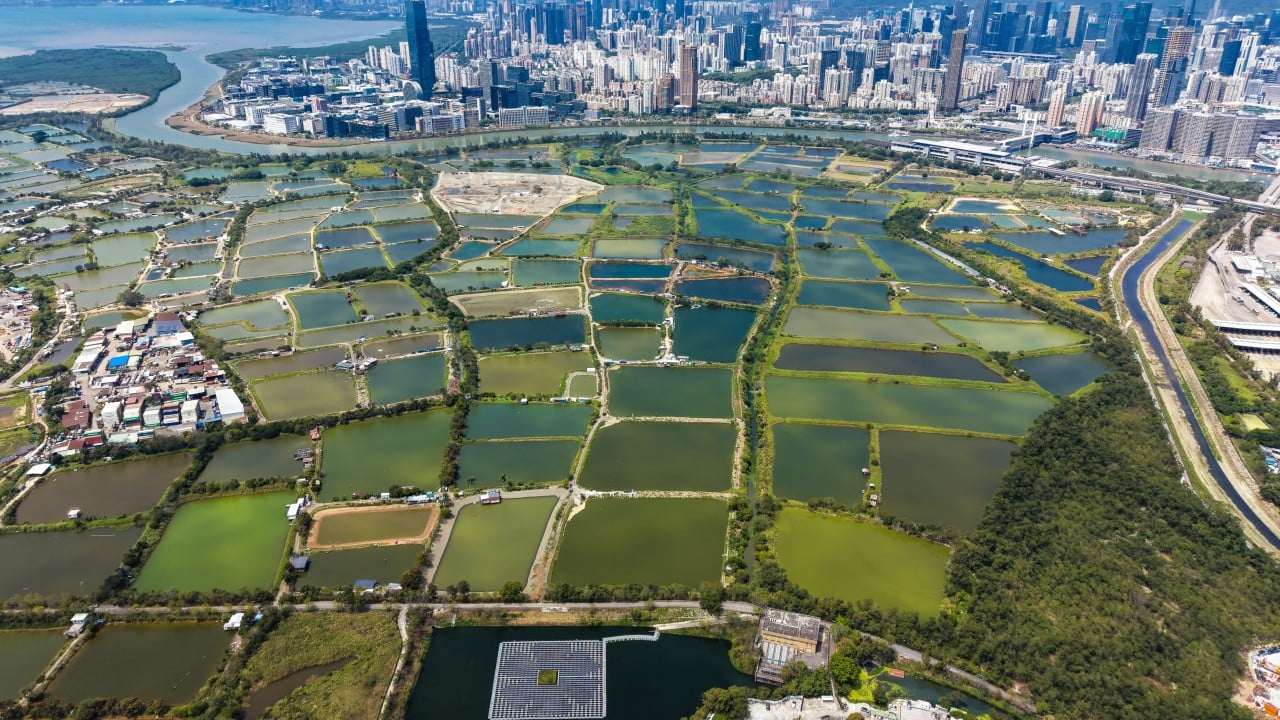
Replicating the Cambridge innovation ecosystem in Hong Kong’s Northern Metropolis requires solving an acute spatial and institutional mismatch. Most urban planners treat a university town as a real estate zoning exercise, assuming that co-locating academic buildings, residential towers, and commercial labs will organically generate economic output. This assumption fails because Cambridge is not a master-planned district; it is an eight-century accretion of decentralized governance, low-density land-use flexibility, and organic capital recycling. To build a functional university town in Hong Kong, policymakers must abandon architectural mimicry and engineer three specific mechanisms: institutional friction reduction, patient capital deployment, and high-density spatial porosity.
The Structural Divergence Between Organic Clusters and Master-Planned Zones
The primary analytical error in comparing Cambridge to Hong Kong lies in confusing correlation with causation. Cambridge’s economic output—often termed the Silicon Fen—is frequently attributed to the proximity of the University of Cambridge to surrounding science parks. In reality, the physical proximity is merely the container for a specific set of legal and financial incentives that do not currently exist in Hong Kong’s statutory framework.
In Cambridge, the collegiate system operates as a decentralized network of autonomous wealth managers. Individual colleges like Trinity and St John’s own vast tracts of agricultural and commercial land outside the historic city center. When Trinity College established the Cambridge Science Park in 1970, it did not execute a government directive. It acted as a private, tax-exempt endowment optimizing long-term yield on underutilized land. This created an alignment of incentives: the landlord was the academic institution, the tenants were spin-offs founded by its own faculty, and the lease structures could be adjusted to accommodate the erratic cash flows of early-stage deep-tech companies.
Hong Kong’s Northern Metropolis initiative, specifically the Hung Shui Kiu/Ha Tsuen and San Tin Technopole zones, operates under an inverted economic model. Land is a state monopoly, monetized upfront through high-premium leases that require rapid, high-density vertical development to amortize capital expenditure. When land acquisition costs dominate the balance sheet of a development project, the resulting physical infrastructure must command high commercial rents from day one. Early-stage research spin-offs, which require wet labs, clean rooms, and long gestation periods before generating revenue, cannot survive in a real estate market priced for financial services and luxury retail.
The Mechanics of Knowledge Spillover
Economist Alfred Marshall identified three drivers of industrial agglomeration: labor market pooling, input sharing, and knowledge spillovers. While Hong Kong excels at the first two within finance and logistics, its physical and institutional architecture actively suppresses knowledge spillovers in scientific research.
Knowledge spillovers rely on low-cost, high-frequency, unplanned interactions between researchers, venture capitalists, and corporate engineers. In Cambridge, this occurs because the urban fabric is horizontal and porous. A researcher can walk from the Cavendish Laboratory to a pub or a coffee shop in Grantchester and encounter an angel investor or a patent attorney. The spatial layout forces disparate economic actors to share the same public realm.
Hong Kong’s urban morphology is vertical and compartmentalized. Podium-and-tower developments isolate users inside climate-controlled, security-gated silos connected by elevated walkways or mass transit. A professor working in a university tower in Pok Fu Lam or Shatin rarely crosses paths with a private-sector R&D director in Science Park unless a formal meeting is scheduled. Formal meetings do not generate serendipitous innovation; they merely execute pre-existing agendas. Without deliberate urban design that forces street-level friction, a university town in Hong Kong risks becoming a dormitory suburb attached to a teaching hospital or a collection of isolated corporate campuses.
Deconstructing the Cambridge Operating System
To extract actionable lessons from Cambridge, one must strip away the historic aesthetics and isolate the operational variables that drive its commercialization engine. These variables fall into four distinct categories.
1. Intellectual Property Ownership and Equity Splits
The most consequential policy shift in Cambridge’s modern history was the formalization of generous intellectual property (IP) rules that favored the inventor over the administration. Historically, the university exercised a laissez-faire approach to IP, allowing academics to own their discoveries outright. While the university has since modernized its technology transfer office, Cambridge Enterprise, the cultural precedent remains: friction at the point of spin-out is kept to an absolute minimum.
In contrast, public universities in Hong Kong remain heavily reliant on University Grants Committee (UGC) funding, which brings bureaucratic oversight and risk-averse procurement rules. Technology transfer offices in Hong Kong have historically operated as compliance gatekeepers rather than commercial accelerators, often demanding high upfront equity stakes or restrictive licensing terms that make university spin-offs uninvestable for institutional venture capital.
- The Cambridge Mechanism: Standardized, transparent equity splits (often leaving the founding academics with 60% to 80% of the initial equity prior to institutional dilution) and rapid licensing execution.
- The Hong Kong Bottleneck: Protracted valuation disputes over nascent IP, which stall company formation during the critical window when a technological advantage is defensible.
2. The Architecture of Patient Capital
Deep-tech innovation—spanning biotechnology, advanced materials, and quantum computing—operates on a 10-to-15-year commercialization cycle. Standard private equity and traditional Hong Kong family office capital, historically conditioned by real estate and public market arbitrage, expect liquidity within three to five years.
Cambridge solved this mismatch through the emergence of dedicated, evergreen patient capital vehicles, such as Cambridge Innovation Capital (CIC) and the Amadeus Capital Partners network. These funds are structurally integrated into the university ecosystem. They possess the technical literacy to underwrite pre-revenue scientific risk and the balance sheet duration to hold equity through multiple clinical trials or hardware prototyping phases.
Hong Kong’s recent establishment of the Hong Kong Investment Corporation (HKIC) and the Research, Academic and Industry Sectors One-plus (RAISe+) Scheme represents an attempt to manufacture this capital layer through state intervention. However, state-backed matching funds operate differently from private evergreen endowments. Government co-investment programs inevitably introduce bureaucratic reporting requirements, local hiring quotas, and political sensitivity to failure. A genuine innovation cluster requires a high tolerance for capital destruction; roughly 70% to 80% of early-stage deep-tech ventures will fail. If public fund managers are penalized for write-offs, they will gravitate toward late-stage, low-risk commercial expansions rather than foundational scientific spin-offs.
3. Modular, High-Specification Lab Infrastructure
A critical bottleneck in any university town is the "scale-up gap." Universities provide subsidized bench space for academic research, and mature corporations can afford bespoke headquarters. Between these two stages sits the Series A startup—a team of 15 to 40 scientists that has outgrown the university lab but cannot afford the $10 million capital expenditure required to fit out a raw commercial shell with HVAC systems, fume hoods, and bio-safety containment.
In Cambridge, private developers like TusPark, Kadans Science Partner, and the Wellcome Trust have built speculative, modular wet-lab facilities. These buildings are engineered with reinforced floor loads, high floor-to-ceiling clearances, and redundant power supplies, allowing a startup to lease 5,000 square feet of turnkey lab space on a flexible three-year term.
Hong Kong’s commercial real estate stock is overwhelmingly optimized for Grade-A office use. Standard office towers lack the structural capacity, ventilation shaft volume, and hazardous waste drainage required for life sciences or hardware prototyping. Retrofitting an existing office building in Kowloon or Central for wet-lab use is economically unviable. Therefore, the Northern Metropolis cannot simply zone land for "innovation and technology"; the government must enforce strict architectural covenants requiring developers to build high-specification, modular industrial-lab shells, even though such structures yield lower initial returns per square foot than luxury residential units.
4. Housing Elasticity and Talent Retention
Cambridge’s primary vulnerability—and the clearest warning for Hong Kong—is housing affordability. Over the past two decades, Cambridge’s economic success has outpaced its housing supply, driving residential prices to levels that rival London. Because the city is encircled by a strict statutory Green Belt, spatial expansion has been severely constrained. This has resulted in severe traffic congestion, lengthening commute times, and a recruitment crisis for mid-level laboratory technicians, postdoctoral researchers, and administrative staff who cannot afford to live near their workplaces.
Hong Kong already suffers from the highest residential housing costs in the world. If the Northern Metropolis replicates the territory’s historical pattern of restricting land supply to prop up land auction revenues, the resulting university town will fail to attract global academic talent. A junior researcher earning a standard academic stipend cannot spend 60% of their post-tax income on a 300-square-foot apartment in Yuen Long.
To prevent housing costs from choking the ecosystem, talent housing must be decoupled from the speculative residential market. In Cambridge, colleges mitigate this by providing subsidized, college-owned accommodation for fellows and graduate students. Hong Kong must implement a similar non-market housing tier within the Northern Metropolis, ring-fencing dedicated residential blocks exclusively for faculty, researchers, and lab technicians at below-market, cost-recovery rents.
The Cost Function of Geographic Isolation
A frequent miscalculation in Hong Kong’s urban planning is the assumption that locating a university town near the Shenzhen border automatically creates a cross-border innovation powerhouse. While proximity to Shenzhen’s hardware supply chains and manufacturing ecosystem is a strategic asset, the border itself remains a hard regulatory, legal, and digital firewall.
Data flows, biological samples, human genetic material, and dual-use technologies cannot move freely across the Lok Ma Chau or Lo Wu checkpoints. A researcher working in the Hong Kong-Shenzhen Innovation and Technology Park (HSITP) in the Lok Ma Chau Loop faces complex customs declarations simply to send a prototype circuit board or a chemical reagent across the Shenzhen River for testing.
This regulatory friction imposes a hidden tax on R&D velocity. In Cambridge, a hardware startup can order a custom component from a machine shop in Huntingdon and receive it the next morning without customs clearance, currency conversion, or export control reviews. For Hong Kong’s university town to capitalize on Shenzhen’s manufacturing speed, the physical border must be bypassed through legal harmonization. Without a "white list" regulatory sandbox that allows seamless, duty-free, and permit-exempt movement of research materials, data, and accredited personnel between the Northern Metropolis and Shenzhen’s Nanshan or Futian districts, the geographic proximity is largely symbolic.
Four Operational Mandates for the Northern Metropolis
To move beyond real estate speculation and construct a self-sustaining academic-industrial cluster, Hong Kong’s policymakers must execute four structural interventions. These measures address the underlying economic mechanics rather than the surface aesthetics of a university town.
Mandate 1: Implement a Dual-Track Land Valuation Model
The Hong Kong government must remove Northern Metropolis educational and R&D land parcels from the traditional high-premium land auction system. Land designated for university campuses, incubators, and speculative wet-lab facilities should be granted via private treaty at nominal premiums, paired with strict anti-speculation clawback clauses.
Instead of capturing value upfront through land sales, the government should capture value downstream through equity participation and corporate tax expansion. Developers awarded contracts to build science parks in San Tin should be evaluated on their operational track record in managing laboratory real estate and their willingness to offer subsidized, flexible leases to early-stage companies, rather than their ability to submit the highest upfront cash bid.
Mandate 2: Enforce Standardized, Inventor-Friendly IP Charters
The University Grants Committee should tie future block-grant funding to the adoption of a unified, low-friction IP commercialization charter across all eight public universities. This charter must establish:
- A 30-Day Licensing Cap: Technology transfer offices must execute standard licensing agreements within 30 days of disclosure, utilizing pre-approved templates rather than bespoke legal negotiations.
- Capped University Equity: University equity stakes in faculty spin-offs should be capped at 5% to 10% non-dilutable up to the seed round, eliminating the predatory equity structures that deter international venture capitalists.
- Sabbatical Protection: Faculty members must be granted a guaranteed two-year commercial sabbatical with full tenure protection to act as founders or chief scientific officers of their spin-offs.
Mandate 3: Engineer Horizontal Streetscapes and Third Places
Urban planners designing the Hung Shui Kiu and San Tin districts must prohibit the construction of enclosed, podium-style megastructures. Zoning regulations must mandate fine-grained, street-level permeability:
- Active Ground Floors: Require at least 70% of ground-floor frontage in academic and commercial zones to be occupied by independent cafes, restaurants, co-working spaces, and maker-spaces rather than blank walls, parking entrances, or corporate lobbies.
- Pedestrian-First Grids: Design narrow, shaded pedestrian networks connecting university dormitories, faculty housing, research institutes, and transit hubs, ensuring that daily commutes occur at street level rather than through subterranean tunnels or elevated walkways.
- Shared Core Facilities: Centralize expensive capital equipment—such as electron microscopes, genomic sequencers, and clean rooms—in neutral, publicly accessible facilities situated at the geographic center of the district, forcing researchers from different universities and private companies to share physical workspaces.
Mandate 4: Establish a Cross-Border Regulatory Sandbox
The Hong Kong SAR Government, in coordination with central authorities in Beijing and municipal authorities in Shenzhen, must establish a legally binding Special Innovation Zone covering the Lok Ma Chau Loop and adjacent Northern Metropolis sectors. Within this zone, three specific barriers must be dismantled:
- Biomedical Material Passports: Pre-approved accreditation for research institutions to transport biological samples, reagents, and clinical trial materials across the Shenzhen River within 24 hours, bypassing standard commercial customs inspections.
- Cross-Border Data Corridors: Dedicated fiber-optic networks allowing anonymized clinical and scientific datasets generated in Mainland hospitals to be processed by AI researchers in Hong Kong universities without violating cross-border data transfer restrictions, provided the raw data remains ring-fenced within the zone.
- Unified Talent Visas: A single, multi-entry work and research permit allowing international faculty, postdoctoral fellows, and corporate engineers based in the Hong Kong university town to live, work, and conduct laboratory operations on both sides of the river seamlessly.
The Strategic Trajectory
If Hong Kong executes the Northern Metropolis as a traditional property development project—prioritizing land revenue, vertical density, and monumental architecture—it will produce an expensive collection of empty laboratories and commuter apartments. Cambridge’s success demonstrates that a university town is fundamentally a governance and capital-allocation system. Hong Kong’s leadership must therefore shift its primary metric of success from square footage constructed and capital raised to two operational indicators: the average time elapsed between academic patent filing and commercial Series A funding, and the retention rate of non-local postdoctoral researchers five years after graduation. Only by optimizing for institutional speed and talent density will Hong Kong transform its northern frontier into a functional engine of scientific commercialization.