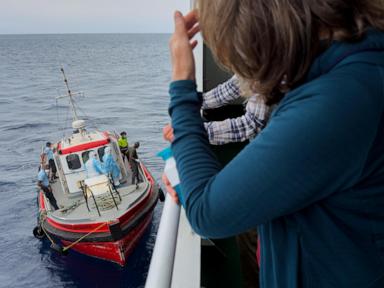
Spanish health authorities and emergency response teams in the Canary Islands are currently finalizing a high-stakes evacuation protocol for a cruise ship carrying confirmed or suspected cases of hantavirus. The vessel, diverted toward the archipelago due to its proximity to specialized medical infrastructure, represents a rare and dangerous intersection of maritime logistics and infectious disease control. While cruise ships are frequent breeding grounds for norovirus or respiratory infections, hantavirus introduces a significantly higher mortality rate and a complex transmission profile that threatens to overwhelm local quarantine facilities.
The situation is unprecedented for the region. Hantavirus is not a standard "sea-borne" illness. It is traditionally associated with rodent droppings and urine in rural, land-based environments. The presence of such a pathogen on a luxury liner suggests a catastrophic failure in the supply chain or a localized infestation that went undetected during the ship’s recent port calls. Spanish officials are now forced to treat the vessel as a floating biohazard, balancing the humanitarian need to treat the sick with the absolute necessity of preventing the virus from jumping to the mainland or the island population. Read more on a related subject: this related article.
The Viral Logistics of a Floating Hot Zone
Hantavirus Pulmonary Syndrome (HPS) is a severe, sometimes fatal, respiratory disease. It does not spread through human-to-human contact in the same way as the common cold, but the confined environment of a ship changes the math. On a vessel, air filtration systems and tight corridors can create concentrated pockets of viral particles if the source—rodents—is present in the hold or food storage areas.
The primary concern for the Canary Islands health ministry is the extraction process. You cannot simply walk patients through a busy cruise terminal. The evacuation requires "level-four" containment strategies, involving negative-pressure transport pods and specialized decontamination teams. If a single mistake occurs during the transfer from the gangway to the waiting ambulances, the risk of environmental contamination in the port of Las Palmas or Santa Cruz de Tenerife becomes a reality. Additional reporting by AFAR delves into related perspectives on this issue.
The sheer scale of a modern cruise ship makes total containment nearly impossible. With thousands of passengers and crew sharing a centralized ventilation system, the medical staff on board are fighting a losing battle. They are trained for sprained ankles and food poisoning, not a viral pathogen that causes the lungs to fill with fluid.
Tracking the Source of the Outbreak
Investigating how hantavirus reached a high-end cruise ship requires looking at the "last mile" of maritime logistics. Every time a ship docks, it takes on massive quantities of dry goods, fresh produce, and linens. This is the industry’s greatest vulnerability. A single pallet of grain or vegetables from a warehouse with a rodent problem can introduce the virus to the ship’s bowels.
Supply Chain Failures
In the rush to restock during twelve-hour port windows, rigorous inspections often take a backseat to efficiency. If the ship recently docked in a region where hantavirus is endemic among local rodent populations, the jump from warehouse to hull is a short one. Once the virus is inside the ship’s climate-controlled environment, it can remain viable long enough to be inhaled by crew members working in storage areas.
The Crew as First Victims
Early reports indicate that the initial cases appeared among the galley and engineering staff. This follows the classic pattern of hantavirus exposure. These workers operate in the least ventilated, most cramped parts of the ship—the exact places where a hitchhiking rodent would seek shelter. By the time the virus reached the passenger decks, the internal outbreak was likely already weeks old.
Why the Canary Islands Were Chosen
The decision to route the ship to the Canary Islands was not a matter of convenience; it was a matter of survival. The islands possess some of Spain’s most advanced viral research and treatment centers, specifically designed to handle tropical and rare diseases due to their geographic position as a gateway between Europe, Africa, and the Americas.
Specialized Infrastructure
Hospitals like the University Hospital of Gran Canaria Dr. Negrín are equipped with the specialized ICU beds required for HPS patients. Treatment for hantavirus is largely supportive, often involving mechanical ventilation and, in extreme cases, Extracorporeal Membrane Oxygenation ($ECMO$). $ECMO$ acts as a temporary replacement for the heart and lungs, pumping blood out of the body, oxygenating it, and returning it. This is a resource-intensive procedure that most smaller ports cannot provide.
The Quarantine Buffer
The islands also provide a natural geographic buffer. Controlling a potential outbreak on an island is tactically easier than managing one in a major Mediterranean port like Barcelona or Valencia. If the situation escalates, the Spanish government can restrict movement between the islands and the mainland with far more precision than they could on the Iberian Peninsula.
The Economic Fallout for the Cruise Industry
This incident arrives at a time when the cruise industry is still trying to scrub the "petri dish" image it acquired during the 2020 pandemic. A hantavirus outbreak is a PR nightmare because it implies a lack of basic hygiene and pest control. It suggests that despite the "ultra-luxury" branding, the fundamental back-of-house operations are flawed.
We are likely to see a massive shift in how maritime health inspections are conducted. Expect new mandates for "rodent-free" certification for all food suppliers and a possible overhaul of shipboard air filtration standards. The cost of these upgrades will be passed to the consumer, but the cost of doing nothing is the total collapse of traveler confidence.
Managing the Human Element
The passengers currently trapped on the ship are facing a unique psychological horror. They are confined to cabins, watching the horizon for islands they might not be allowed to step onto for weeks. The Spanish government is under immense pressure to repatriate foreign nationals, but the legalities of moving "high-risk" individuals across international borders are a quagmire.
Every passenger must be monitored for the incubation period, which can last up to eight weeks. This means that even those who appear healthy cannot simply fly home. They represent a potential delayed-action viral fuse. The Canary Islands are currently preparing "quarantine hotels," a grim echo of recent history, to house those who were exposed but are not yet symptomatic.
The Scientific Reality of the Threat
There is no vaccine for hantavirus. There is no specific cure. The mortality rate for HPS can be as high as 38%. When you compare that to the much lower mortality rates of more common shipboard illnesses, the gravity of the Spanish government’s response becomes clear. They are not overreacting; they are attempting to prevent a lethal pathogen from establishing a foothold in a major tourist hub.
The virus thrives in dust. When rodent waste is disturbed, the virus becomes aerosolized. On a ship, the simple act of a cleaning crew sweeping a storage locker or an engineer opening a crawlspace can release a cloud of invisible, deadly particles. This makes the "deep clean" of the vessel an engineering challenge of the highest order. It will likely require the use of hydrogen peroxide vapor and the complete replacement of the ship’s soft surfaces—carpeting, curtains, and upholstery—in affected areas.
The Strategy for Extraction
The planned evacuation will likely occur in phases. The most critical patients will be airlifted directly from the deck via military helicopters to avoid any contact with the port infrastructure. This is the most dangerous part of the operation. High winds and the confined space of a helipad make the transfer of biohazard pods a high-wire act of coordination.
Following the critical cases, the remaining passengers will be triaged. Those with even a slight fever will be funneled into the specialized medical track, while the asymptomatic will begin their mandatory isolation. The ship itself will then be moved to a remote mooring, far from the commercial shipping lanes, to undergo a sterilization process that could take months.
Spain is currently writing the manual for a crisis that the modern travel industry never thought it would face. The intersection of global logistics, luxury travel, and ancient pathogens has created a scenario where the only way forward is through a rigorous, uncompromising application of biosafety protocols. There is no room for "hospitality" in a hot zone. The focus has shifted entirely from guest experience to biological containment.
The coming days will determine if the Canary Islands become a model for pandemic response or a cautionary tale about the limits of maritime safety. The eyes of the global health community are on the port of Las Palmas, watching to see if the barrier between a controlled evacuation and a public health disaster can hold.
Monitor the air filtration logs and the supply chain manifests; that is where the real story of this infection lies.