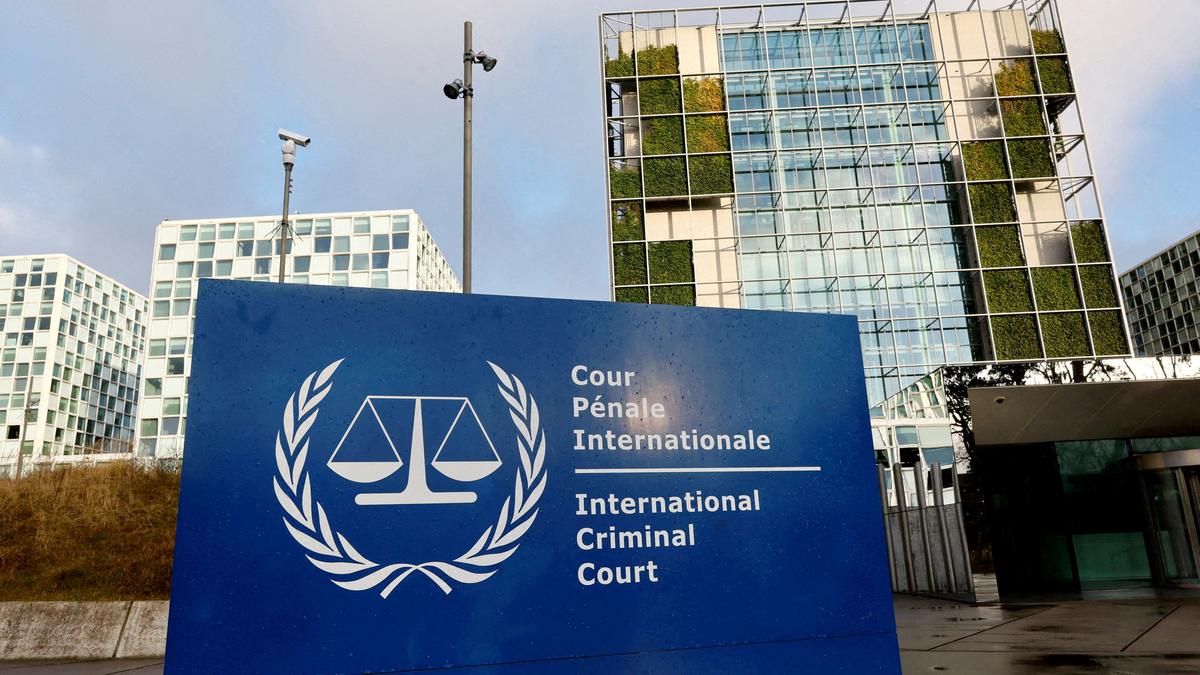
The modern architecture of international justice rests on an inherent structural contradiction. Supranational tribunals derive their mandate from multilateral treaties, yet their operational capacity depends entirely on the sovereign enforcement mechanisms of nation-states. When a global judicial body asserts jurisdiction over non-party states, it triggers a predictable institutional conflict between sovereign immunity and international accountability. The decision by the United States to deploy economic sanctions against the International Criminal Court represents not merely a diplomatic dispute, but a calculated exercise of financial deterrence designed to disrupt the operational plumbing of an adversarial legal body.
The Weaponization of Financial Infrastructure
International organizations operating out of The Hague function within the architecture of global commerce. They require commercial banking services, cloud computing infrastructure, payroll processing systems, and telecommunications contracts to maintain day-to-day operations. By utilizing the International Emergency Economic Powers Act and freezing the assets of specific court officials, the United States executive branch targets these exact commercial dependencies.
The mechanism relies on secondary and primary financial exclusion. When individuals associated with the tribunal are designated under sanctions lists, compliance departments at international banks, credit card processors, and software vendors immediately sever ties to mitigate regulatory exposure.
- The Banking Choke Point: Denying access to SWIFT-connected financial institutions prevents the court from efficiently transferring operational funds or paying staff salaries.
- The Digital Dependency Deficit: Restricting access to standard enterprise software, cloud storage providers, and routine communication tools creates severe administrative friction.
This creates an asymmetric pressure environment. The target is not the legal theory of the court, but its administrative throughput. Without operational continuity, investigation dockets stall, and witness protection logistics degrade.
The Jurisdictional Collision Course
The core legal friction stems from divergent interpretations of treaty law versus customary international law. The International Criminal Court operates under the Rome Statute, a treaty ratified by over 120 countries. However, the United States, alongside several other major geopolitical powers, never signed or ratified the treaty.
From the perspective of Washington, any attempt by the tribunal to investigate or prosecute American citizens—or citizens of allied non-party states involved in military operations—represents an unconstitutional extension of jurisdiction without consent. The state's position holds that domestic legal systems retain primary jurisdiction over national security actions.
Conversely, the tribunal views its mandate as universal regarding crimes committed within the territory of member states, regardless of the nationality of the perpetrator. This creates an unbridgeable legal deadlock:
- The Assertion of Universal Reach: The tribunal expands docket intake based on territorial jurisdiction over state parties.
- The Defense of Absolute Sovereignty: The non-party state views this expansion as an illegitimate encroachment on national security prerogatives.
- The Escalation Threshold: When judicial actions cross into formal indictments or arrest warrants against nationals of non-party states, the affected state responds with economic and diplomatic countermeasures.
The Cost Function of Institutional Defiance
Institutions like the International Criminal Court rely heavily on normative legitimacy and perceived impartiality to survive. When a superpower launches a sustained financial campaign against the institution's personnel, it forces member states and international civil servants into a difficult risk calculation.
Judges and prosecutors face frozen personal assets, canceled credit lines, travel restrictions, and systemic exclusion from Western financial systems. While jurists often emphasize professional duty and institutional resilience, the personal cost of service rises steeply. Administrative churn increases as qualified personnel weigh the professional prestige of international justice against personal financial isolation.
At the same time, the broader diplomatic ecosystem splits. European allies and international human rights organizations issue statements defending judicial independence, yet stop short of providing the direct financial or legal indemnification required to fully neutralize U.S. sanctions. This leaves the court structurally exposed, relying on host-country support from the Netherlands and piecemeal legal challenges in domestic courts to preserve its functionality.
Strategic Trajectory
The ongoing clash between sovereign state power and international judicial ambition signals a permanent limitation on global governance. Multilateral institutions cannot effectively regulate or penalize the core security actions of nuclear-armed superpowers without possessing independent enforcement power. When financial coercion meets institutional idealism, operational realities dictate the outcome. The survival of the court depends entirely on whether its state parties are willing to absorb the economic friction and redesign their financial architecture to bypass American-controlled payment rails—a transformation that carries immense cost and systemic fragmentation for global trade.


