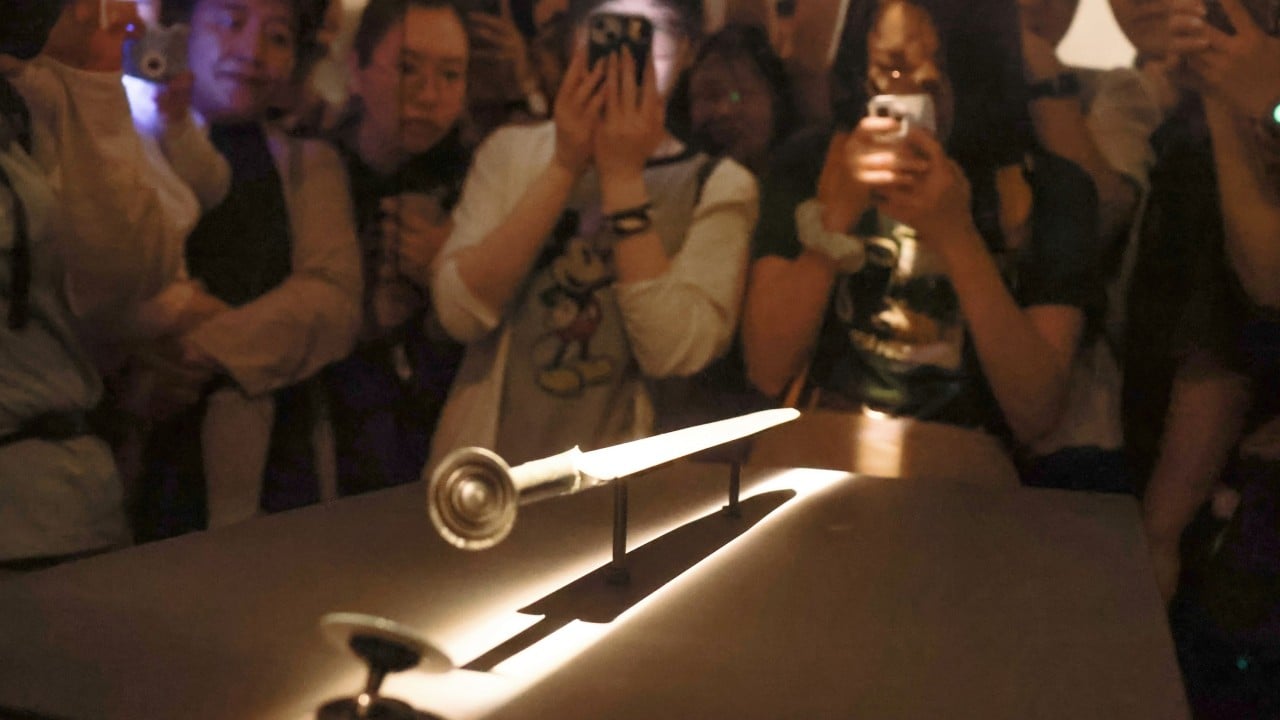
You just spent an amazing week exploring the historical sites of Xi'an or wandering through Hangzhou. You spot a beautifully crafted replica sword in a local market. It looks like the legendary Yue Wang Goujian sword—the ancient bronze weapon often called the Excalibur of the East. It is the perfect souvenir. You buy it, pack it, and head to the airport.
Then everything goes wrong at the security checkpoint.
Travelers in China are learning this lesson the hard way. Airport security teams across the country are confiscating these historical replicas at an alarming rate. It is not just full-sized blades causing chaos. Tiny letter openers, keychain pendants, and decorative miniature swords are getting seized too. If you are planning to bring home a piece of Chinese military history, you need to know the strict rules governing these souvenirs. Otherwise, your expensive keepsake will end up in an airport disposal bin.
The Excalibur of the East and the Souvenir Craze
To understand why everyone wants one of these blades, you have to understand the history. The original Sword of Goujian is a technological marvel. Discovered in a damp tomb in Hubei province back in 1965, the 2,500-year-old bronze blade was unsheathed to reveal a completely untarnished, razor-sharp edge. It had survived centuries without rusting.
Museums and gift shops across China capitalized on this fascination. They started selling replicas of all sizes. Some are intricate, life-sized metal reproductions meant for display. Others are tiny, palm-sized trinkets designed to hang from backpacks or sit on desks.
Tourists buy them up by the thousands. They see them as harmless cultural mementos. Security screeners at Chinese transportation hubs see them very differently. To an X-ray machine, a weapon is a weapon, regardless of whether it is a historic replica or a pocket-sized toy.
What Airport Security Officials Really See On The X-Ray
Airport security checkpoints in China operate under incredibly strict regulations. The Civil Aviation Administration of China maintains a comprehensive list of forbidden items. Controlled knives, sharp blades, and highly realistic replica weapons are strictly banned from both carry-on and checked luggage.
When a miniature sword passes through the scanner, it flags the system. Screeners cannot always tell the difference between a sharpened letter opener and a dangerous tool without a physical inspection. Even if the edge is completely blunt, the pointed tip of a souvenir sword poses a safety risk in a crowded airplane cabin.
This issue is not limited to airports either. China’s high-speed rail network features security screening protocols that are just as rigorous as aviation checkpoints. Travelers trying to board trains with these souvenirs face the exact same confiscation policies.
The Confusion Surrounding Miniature Weapons
A common mistake travelers make is assuming that size matters. You might think a three-inch sword keychain is obviously a toy. Security staff do not look at it that way.
Many of these miniature weapons are made from dense metal alloys. They look incredibly realistic under X-ray surveillance. If an object has a defined point, an edge, and resembles a weapon, it will likely be flagged.
Local police and airport authorities regularly issue warnings to domestic and international tourists about these items. Yet, gift shops right outside the airport gates continue to sell them without any warning labels. It creates a frustrating trap for unsuspecting visitors who assume that if a shop sells it, it must be legal to carry home.
How to Get Your Chinese Souvenir Swords Home Safely
You do not necessarily have to abandon the idea of owning a replica of the Excalibur of the East. You just have to change how you get it out of the country. Do not try to sneak it through a passenger checkpoint.
Use Insured International Shipping
The smartest move is to let the professionals handle it. High-end souvenir shops and reputable vendors in major cities often offer direct international shipping services. They know how to declare these items properly for customs. Shipping via DHL, FedEx, or China Post directly from the point of sale avoids the airport security headache entirely.
Request Official Documentation
If you buy a high-quality, full-sized replica sword from a licensed museum gift shop, ask for an official certificate of authenticity and a receipt. This documentation clearly states that the item is a decorative craft piece, not a functional weapon. While this will not let you bring it into a plane cabin, it can assist when checking the item through specific customs channels.
Declare and Check the Item Properly
If you must travel with a larger replica, it absolutely cannot enter the cabin. It must be packed securely inside your checked baggage. Before you even head to the security lines, go straight to your airline's check-in desk. Declare the item to the airline staff. Different airlines have specific protocols for transporting decorative replicas, and some may require you to sign a waiver or use specialized baggage handling.
Check Local Laws in Your Home Country
Getting the souvenir past Chinese airport security is only half the battle. You also have to worry about the customs regulations in your destination country.
The United Kingdom, Australia, and Canada have incredibly strict laws regarding the importation of swords, curved blades, and martial arts weapons. For instance, the UK has specific bans on certain types of curved swords, while Australia requires specific police permits for importing various types of daggers and edged replicas.
Before handing over your cash at a market in China, open your phone. Check the border force or customs website for your home country. Look up the specific rules for decorative weapons and replica blades. If your home country bans the item, it does not matter how safely you ship it—it will get seized at your local customs depot anyway. Save your money, avoid the stress, and stick to buying souvenirs that will actually make it onto your shelf at home.