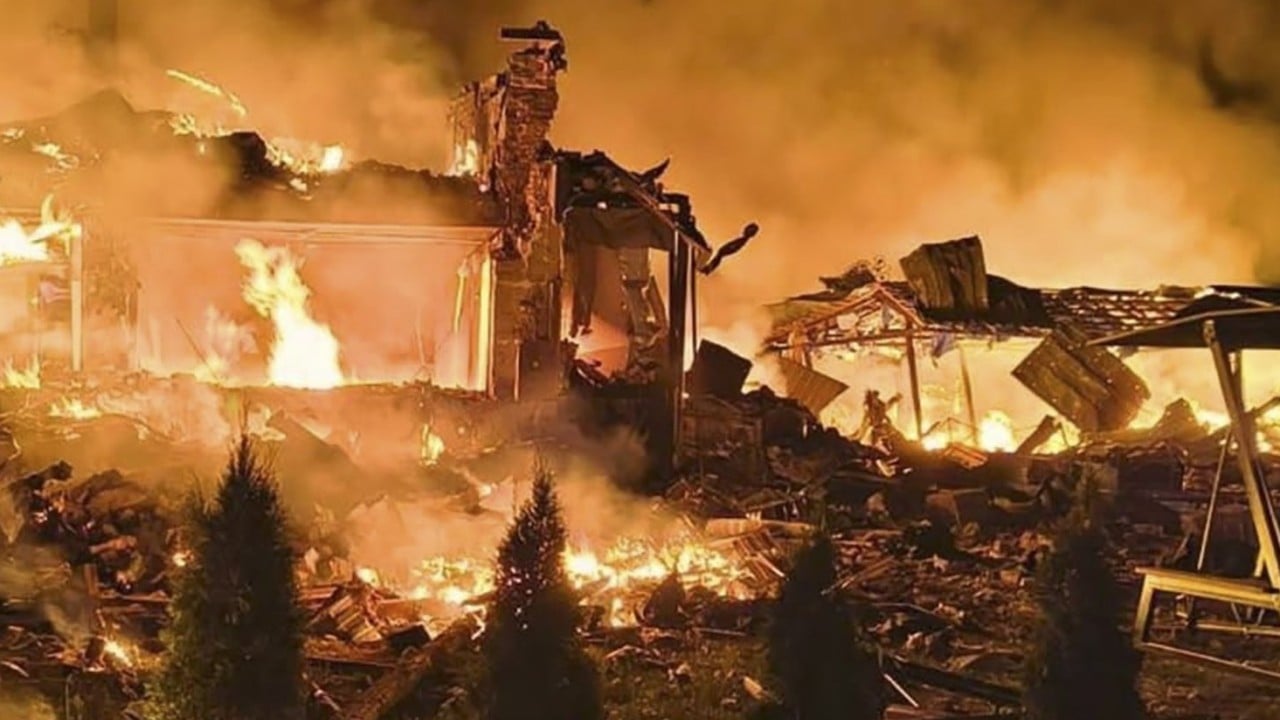
The sirens do not sound like music. They are a mechanical shriek that cuts through sleep, through walls, through the fragile quiet of a Tuesday night.
I remember the first time I heard one echo across a darkened square, the sudden rush of cold air as people scrambled into basements, clutching coats and half-packed bags. You never quite get used to the geometry of fear. It compresses time. Seconds stretch into hours while you wait in the damp dark, listening to the dull thud of distant impacts, wondering if the ceiling overhead will hold or give way.
And then comes the silence. That heavier, more terrifying silence when the smoke clears and the tally begins.
Four lives. Snuffed out in an instant. Among them, a child of three. Just three years old. A life measured in small shoes by the door, half-finished drawings on crumpled paper, and the sweet, uncomplicated laughter of a morning that should have stretched out for decades.
Air defenses failed. Three simple words on a news ticker, but behind them lies a cascade of desperate fractions of a second. Radar screens flicker. Interceptors launch too late or lack the raw physics to outrun incoming death. The math of war is brutal. When a shield cracks, flesh and bone pay the price.
We look at maps with red arrows and blue lines, discussing missile trajectories and intercept rates as if they were abstract variables in an economic equation. They are not. They are the difference between a bedtime story and an empty bed.
Consider what happens next in these shattered neighborhoods. Dust settles on children's toys left abandoned in courtyards. Neighbors gather with quiet fury and hollow eyes, shoveling debris, looking for a lost phone, a favorite blanket, anything to anchor themselves to a reality that unraveled before dawn.
The political capitals argue over supply chains and export licenses, debating millimeters of steel and the political cost of escalation. Meanwhile, the cost is already being paid in blood on cobblestones. Every delayed shipment of defensive hardware translates directly into structural vulnerability. Every hesitation leaves another window unprotected.
We try to sanitize the horror with professional language. Collateral damage. Strategic strikes. Defensive gaps. But language fails when you stare at a broken crib.
War strips away our illusions of safety. It forces us to confront the raw fragility of human existence, reminding us that civilization is only ever as strong as the walls we build to protect the most defenseless among us. And right now, those walls are letting too much darkness through.
The air raid siren starts up again in the distance. Another night begins. Another test of endurance for a people living on the edge of tomorrow.
The night air smells of dust and cold iron.