There is a specific frequency to political anger. It does not sound like a riot. It sounds like paper tearing.
Stand in a gymnasium in Texas long enough, beneath the humming fluorescent tubes and the faint, persistent smell of floor wax and stale popcorn, and you will learn to recognize the exact moment a room stops believing. I have stood in those rooms. I have watched the faces of people who spent decades tying their identities to a single party, a single brand of conservatism, slowly realize that the man standing behind the podium is talking past them. Or worse, laughing at them.
The air conditioning units rattle against the humidity. A baby cries in the third row, sharp and sudden, then gets hushed by a frantic grandmother.
Then comes the heckle.
It cuts through the practiced cadence of a stump speech like a jagged piece of glass. Someone in the middle rows—not a professional activist, not a paid heckler, but a voter with graying temples and calloused hands—does not shout a slogan. They shout a question. They ask about the integrity of the oath. They ask about the investigations, the private jets, the quiet settlements, the weight of cheating allegations that have followed Ken Paxton through courtroom corridors and legislative chambers like a long, dark shadow.
Silence follows. Not the respectful kind. The heavy, vibrating kind where everyone holds their breath to see how the man in charge will react.
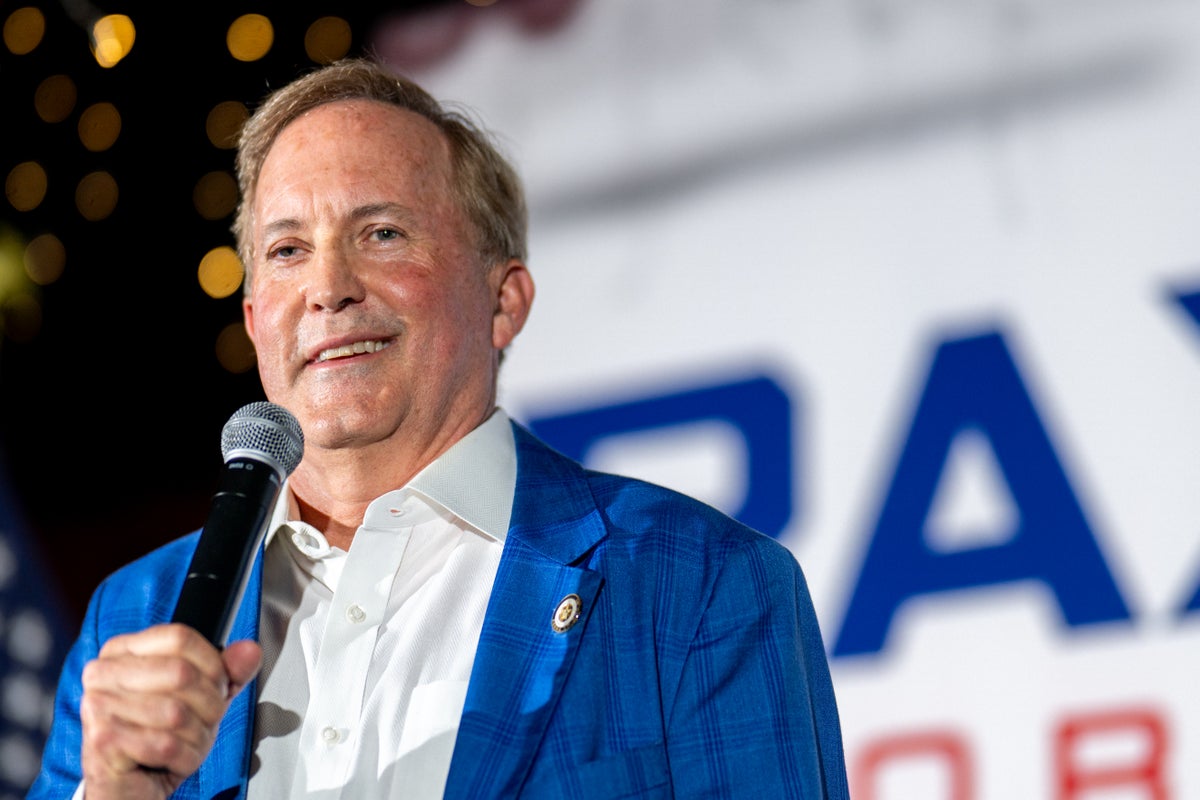
Paxton does not blink. He rarely does. He smiles that familiar, slightly tight smile, leans into the microphone, and brushes the accusation away with the dismissive wave of a hand that has signed subpoenas and injunctions. He calls it noise. He calls it the desperation of political enemies.
But the room does not laugh along. That is the thing about modern political theater. The script calls for the audience to nod, clap, and purchase a yard sign on the way out. Instead, a cluster of people in the bleachers fold their arms. They look down at their sneakers. They exchange glances that require no translation.
To understand why a campaign stop in Texas can turn so brittle, you have to look past the cable news chyrons and the endless cycle of legal filings. You have to understand the psychology of the betrayed believer.
Imagine a mechanic who has taken their car to the same trusted shop for twenty years. They paid every bill, defended the mechanic to their neighbors, and trusted the diagnosis implicitly. Then one day, another mechanic looks under the hood and finds the parts were never replaced, the oil was never changed, and the engine has been running on fumes and duct tape.
That is what these allegations represent to a segment of the conservative base. It is not just about legality. It is about a breach of the unspoken contract.
When Ken Paxton faced impeachment by the Texas House—a body controlled by his own party—the defense wasn't always a point-by-point refutation of the evidence. Often, it was an appeal to tribal loyalty. The argument was simple: We are fighting a war against common enemies, and you do not shoot your own soldiers in the trenches.
For a long time, that argument worked. In Texas politics, tribalism is a powerful narcotic. It numbs the sting of ethical compromises. It convinces voters that personal flaws are merely tactical weapons used by the opposition.
Yet, there is a limit to how much weight a single word—loyalty—can carry before it snaps.
Listen to the murmurs in the back of that gymnasium. The conversation isn't about tax rates or border security anymore. It is about accountability. It is about whether the law applies equally to the man who enforces it. When allegations of abusing public office for personal gain move from the realm of abstract headlines into the daily reality of voters, the armor begins to dent.
Paxton’s survival strategy has always relied on speed and defiance. He moves fast, attacks first, and frames every legal challenge as an assault on the conservative movement itself. It is a brilliant, high-stakes rhetorical jujitsu. By merging his personal survival with the political survival of his constituents, he creates a binary choice: either you stand with him, or you surrender to the progressive tide.
For years, that binary worked like magic.
But magic wears out its welcome when the stage lights get too hot.
During this particular campaign stop, as the shouts of "cheater" bounced off the gymnasium walls, something shifted in the geometry of the room. The heckler wasn't escorted out immediately. Security hesitated. That hesitation spoke volumes. When the people whose job it is to maintain order look around and realize the crowd is divided on who the real threat is, the illusion of absolute authority fractures.
We have lived through an era where politicians treat scandals like weather patterns. They wait them out. They open an umbrella of public relations, weather the storm of headlines, and assume the sun will come out tomorrow and everyone will forget.
Sometimes, they are right. Voters have short attention spans, fed daily by a firehose of digital outrage.
Yet, local politics has a long memory. In Texas, where retail politics still happens in hot gymnasiums, VFW halls, and diner booths, people remember who looked them in the eye and who looked over their heads. They remember the names of the whistleblowers. They remember the testimonies of former aides—men and women who were once part of Paxton's inner circle before walking away with heavy hearts and professional destruction hanging over their heads.
Consider the human cost of those defections. These weren't anonymous bureaucrats in a distant federal agency. They were young conservatives who believed in the mission, who took jobs in the attorney general's office because they wanted to serve the state. When they realized what was happening behind closed doors, they faced an impossible choice: keep their heads down, collect their paychecks, and become complicit, or blow the whistle and watch their careers burn to ash.
Choosing the whistle meant exile. It meant losing friends, facing public smears, and stepping into a legal wilderness.
When you talk to people who made that choice, you realize that the drama of a campaign heckling incident is just the surface foam on a deep, turbulent current. The anger in that gymnasium is the cumulative weight of all those quiet betrayals bubbling up to the surface.
Paxton’s political survival is a masterclass in institutional resilience. He understands the machinery of the party better than most of his critics. He knows that primaries are won not by winning the hearts of the moderates, but by locking down the ideological core. As long as he can convince enough primary voters that he is the victim of a corrupt establishment, the math still works in his favor.
Mathematically, it is a sound strategy. Humanly, it is exhausting.
There is a weariness that creeps into the bones of a state when its highest legal officer is perpetually under a cloud. It turns governance into a daily soap opera. Every policy decision, every legal brief filed by the state, is viewed through the prism of personal survival. Is this lawsuit filed to protect Texans, or is it filed to create a favorable headline for the morning news cycle?
That question lingers in the minds of voters who just want a government that works without a lawyer present.
The heckler at the microphone that evening eventually lowered his voice. The security guard stepped forward, placed a hand on the man's shoulder, and guided him toward the exit doors. There was no brawl. There was no dramatic arrest. Just the heavy, dragging sound of rubber-soled shoes moving across the polished floorboards.
Paxton didn't miss a beat. He smoothed his lapel, adjusted his glasses, and returned to his script. He delivered his lines about freedom, about the border, about the enemies at the gate.
The applause came, rhythmic and automatic, filling the void where the tension had been.
Yet, as the crowd began to file out into the parking lot under the vast, indifferent Texas sky, the silence returned. People climbed into their pickup trucks and sedans, turned the ignition, and drove home through the dark. They didn't talk about the speech. They talked about the look on his face when the question was asked. They talked about the crack in the armor.
The machinery of power continues to grind forward, fueled by money, loyalty, and defiance. But in rooms like that one, the first draft of a different story is already being written by people who are tired of pretending they cannot see the seams.