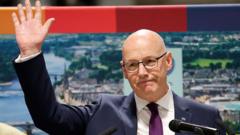
John Swinney isn’t just breathing a sigh of relief. He’s staring at a map of Scotland that’s changed color in ways no one predicted five years ago. The SNP just pulled off a fifth consecutive term in office, a feat that defies the gravity of modern politics. They’ve held onto 62 seats—not quite the 65 needed for a total lockout, but more than enough to keep the keys to Bute House.
Honestly, the "historic" tag gets thrown around too much in politics, but how else do you describe a party that’s been in power for nearly two decades and still manages to crush its rivals? Yet, if you look past the yellow ticker tape, the celebratory mood at Holyrood is tinged with some pretty cold reality. This isn’t the same Scotland that voted in 2021.
The Math Behind the Mandate
The big story isn’t just that the SNP won. It’s who they’ll have to share the room with now. With 62 seats, Swinney is short of a majority, meaning the pro-independence alliance with the Scottish Greens is more than a convenience—it’s a survival strategy. Together, they hit 78 seats, a solid wall of support for another run at independence.
But here’s the kicker. The unionist side of the chamber has been totally scrambled. The Scottish Conservatives didn't just lose; they cratered, dropping to a mere seven seats in some projections. Meanwhile, Reform UK has exploded from a rounding error in the polls to a genuine force with 17 to 19 MSPs. You’ve now got a parliament where the opposition is split between a "hurting" Labour party and a surging populist right.
Why the SNP Kept Winning
You’d think twenty years of government baggage would be enough to sink any party. So why are they still here?
- The Independence Engine: For a huge chunk of the electorate, the SNP isn't just a political party; it’s a vehicle for a constitutional dream. As long as that question remains "settled" for London but "unsolved" for Edinburgh, the SNP has a floor that won't drop.
- The Leadership Reset: John Swinney’s "steady hand" approach actually worked. After the turbulence of the last few years, voters seemingly preferred a known quantity over the relative unknowns of a fragmented opposition.
- Tactical Resilience: Look at Shetland. The SNP taking that from the Lib Dems is a massive upset. They aren't just holding defensive lines; they’re still capable of offensive strikes in territory that’s been "no-go" for decades.
The Fiscal Cliff Edge
The party is over, and the bill is on the table. The Institute for Fiscal Studies (IFS) has been pretty blunt about this. Scotland’s budget is under a kind of pressure we haven't seen in the devolution era.
We're talking about an estimated £1.4 billion annual funding gap by the end of the decade. The SNP manifesto promised a massive expansion of childcare and a statutory price ceiling on essential food items. Those sound great on a flyer, but the money has to come from somewhere. Without a magic money tree, the next few years at Holyrood will be defined by "tough choices"—a polite political term for tax rises or service cuts.
The Reform UK Wildcard
The arrival of 17+ Reform MSPs changes the "vibe" of Holyrood completely. For years, the Scottish Parliament has prided itself on being a more "consensual" and progressive place than Westminster. That bubble has burst.
You now have a significant bloc that isn't just anti-independence, but anti-Green and anti-establishment in a way the old-school Scottish Tories never were. Every debate on climate change, gender reform, or the "activist state" is about to get a lot louder and a lot more confrontational. Swinney doesn't just have to manage his coalition; he has to manage a chamber that’s becoming increasingly polarized.
What Happens on Monday
If you're waiting for a quiet period of governance, don't hold your breath. The SNP needs to formalize its deal with the Greens immediately to ensure they can pass a budget.
- Cabinet Reshuffle: Swinney needs to reward the loyalists who held the line during the campaign while making room for the "new blood" like Stephen Flynn, who’s making the jump from Westminster.
- The Section 30 Fight: Expect a renewed push for a referendum mandate. With a combined 78 pro-independence seats, the "mandate" argument is stronger than ever, even if the UK government’s "no" remains just as firm.
- NHS Recovery: The wait times aren't getting shorter on their own. The first 100 days will be judged on whether the government can actually move the needle on public services, not just constitutional theory.
The SNP has won the right to lead, but the Scotland they're leading is more fractured and fiscally strained than the one they inherited five years ago. They’ve got the seats; now they need the solutions.
Keep a close eye on the first First Minister's Questions (FMQs) of the new term. It'll be the first real look at how this weirdly shaped new parliament actually functions.