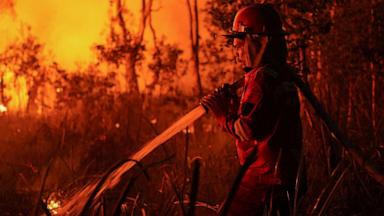
Indonesian law enforcement authorities have detained 72 individuals suspected of orchestrating the catastrophic blazes sweeping through national acreage. This sweeping crackdown arrives as dry seasonal winds stoke recurring infernos that routinely choke Southeast Asia in toxic haze. Yet, framing these detentions as a definitive victory over environmental crime ignores the structural mechanisms driving land clearing across Sumatra and Kalimantan.
Ground-level enforcement consistently targets low-level agricultural workers rather than the financial architectures funding corporate land grabs. Local farmers utilizing slash-and-burn traditions become convenient scapegoats while corporate entities behind industrial palm oil and paper pulp expansion evade direct liability. For a closer look into this area, we suggest: this related article.
The Economics of Arson
Fire remains the cheapest method for land preparation. Clearing dense tropical brush with heavy machinery requires capital investment, logistical planning, and fuel. Striking a match costs nothing.
Smallholders caught by provincial police units often act under explicit instructions from middlemen or localized contractors tied to larger supply chains. When authorities announce 72 arrests, public relations offices frame the action as uncompromising law enforcement. They fail to disclose that these suspects represent the bottom tier of a massive commercial apparatus. For additional background on this issue, extensive analysis can also be found at The Guardian.
Smallholders operate within tight economic margins. Global commodity markets demand cheap vegetable oil and paper products, driving down prices at the farm gate. Producers feel intense pressure to expand acreage illegally into protected peatlands to maintain profitability.
Peatland Destruction and Carbon Bombs
Peat soils store centuries of concentrated carbon. When drained and ignited, these ecosystems transform from carbon sinks into massive emission sources.
- Subsurface smoldering: Peat fires burn underground out of reach of standard water drops.
- Hydrological disruption: Canals dug to dry out swamps lower water tables across vast regions.
- Atmospheric toxicity: Regional air quality drops to hazardous levels, shutting down schools and airports.
Traditional firefighting techniques fail completely against subsurface peat fires. Extinguishing them requires massive rainfall or intensive canal blocking to restore saturation levels. Arresting individuals who set surface brush cannot reverse the underlying hydrological damage inflicted on regional ecosystems.
Corporate Liability Shields
Corporate boardrooms maintain strict deniability protocols. Concession holders routinely lease plots to independent growers or local cooperatives, creating legal insulation against environmental violations.
When satellite telemetry detects thermal anomalies over a corporate concession, management points the finger at rogue operators or invading smallholders. Investigators face formidable hurdles proving corporate complicity due to opaque ownership structures hidden behind offshore holding companies.
Government oversight agencies struggle with chronic underfunding and political interference. Regional officials often rely on agricultural tax revenues generated by plantation conglomerates, creating clear disincentives for aggressive corporate investigations.
Shifting Accountability
Real systemic reform demands moving past mass arrests of rural laborers. Prosecutors must pierce corporate veils to penalize executives and beneficial owners profiting from illegal clearance.
Supply chain transparency initiatives require buyers to trace commodities back to the exact plot of origin. Brand owners purchasing palm oil or pulp must sever ties with suppliers linked to fire incidents, regardless of who struck the match.
Until enforcement targets financial backers and commodity traders instead of impoverished farmers, annual smoke seasons will persist across the archipelago.


