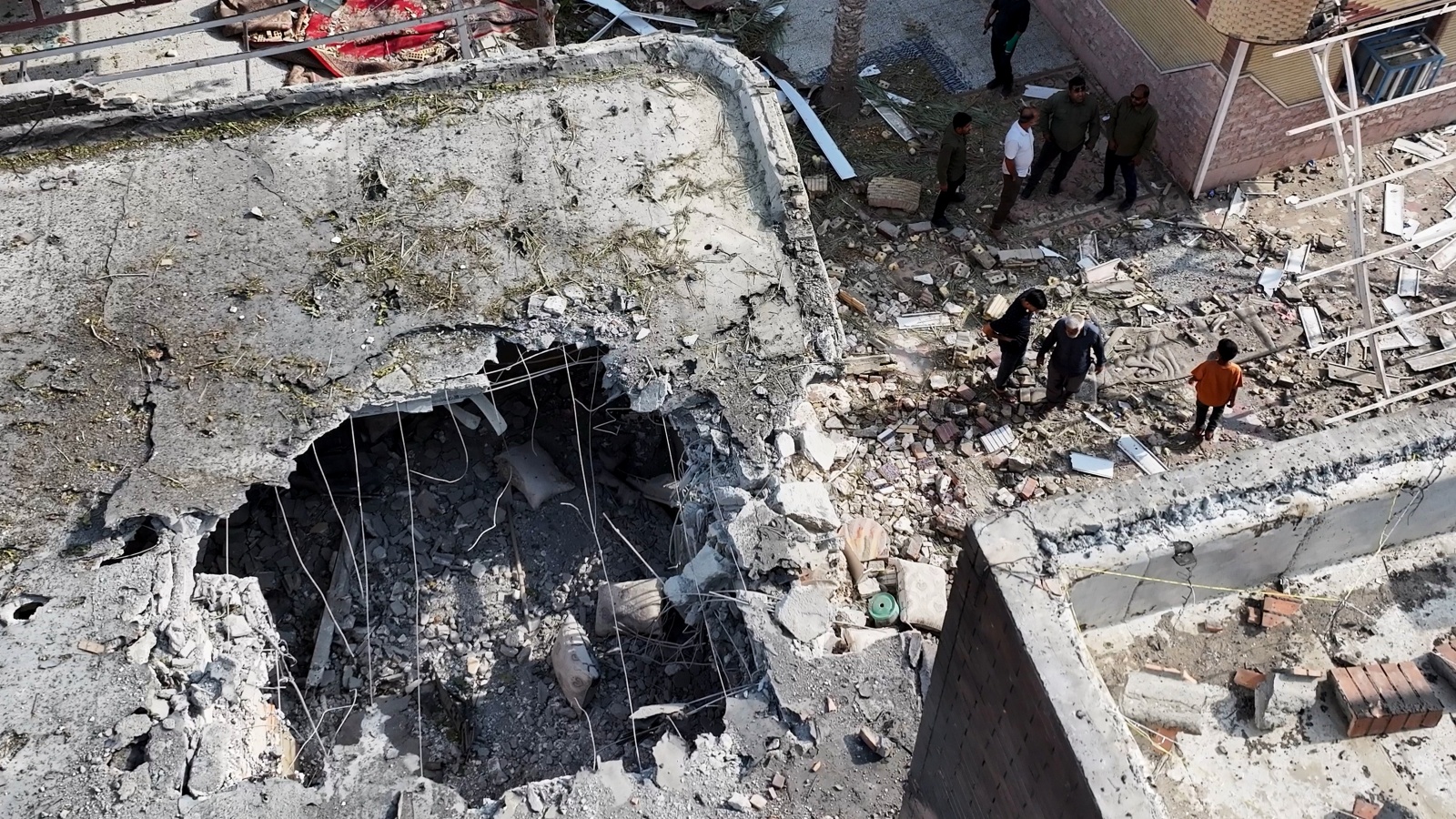
The air in Kyiv tasted of copper and wet ash. It is a specific flavor known to anyone who has spent an autumn morning in a city waiting for the sirens to stop. Down below street level, in the limestone ribs of the subway stations, the hum of human breathing blended with the distant, rhythmic thud of interception. Above, the sky was a bruised gray canvas, torn open by the raw signature of cruise missiles.
On that exact morning, Indian External Affairs Minister Subrahmanyam Jaishankar stood inside the perimeter of the Ukrainian capital.
Diplomacy has its own peculiar choreography. It relies on crisp suits, polished mahogany tables, guarded handshakes, and the comforting fiction that words spoken in quiet rooms possess enough gravity to bend the trajectory of falling steel. Delegations move through a city like glass ships, insulated by protocol, security details, and the ancient diplomatic convention that statesmen are meant to be observers of history, not targets within its crosshairs.
Yet reality has a cruel habit of shattering the glass.
When the air raid alerts wailed across the city, they did not check passports. They did not pause because a senior representative from the world’s most populous democracy was sitting across the table from Ukrainian leadership, discussing trade routes, reconstruction, and the elusive architecture of a durable peace. The missiles arrived with brutal indifference, turning high-level geopolitical dialogue into a surreal juxtaposition: a high-stakes diplomatic mission unfolding against the immediate, concussive backdrop of an active attack.
President Volodymyr Zelenskyy would later point to that precise moment with a quiet, biting clarity. The message sent from Moscow was not written on diplomatic stationery. It was written in fire and shockwaves.
To understand why that moment matters, you have to step away from the ticker tapes and the polite joint communiqués. You have to look at the map through the eyes of a nation that has learned to measure time not in hours, but in air raid warnings.
India walks a diplomatic tightrope that few nations can even visualize. For decades, New Delhi has maintained a complex, multi-aligned foreign policy, keeping historical ties with Moscow alive while simultaneously expanding its strategic and economic partnerships with Western democracies and nations of the Global South. It is a balancing act born of pragmatism, energy security, and regional defense dependencies. When Jaishankar stepped off the train in Kyiv, he carried the weight of that balancing act in his briefcase. He came representing a nation that has consistently called for dialogue and diplomacy, urging both sides to step back from the precipice, while pointedly avoiding direct condemnation of the Kremlin in international forums.
Then the sirens started.
Imagine sitting in a conference room, discussing the intricacies of supply chains and bilateral cooperation, while the floor beneath your shoes vibrates from an explosion three miles away. It forces a reckoning. It strips away the comforting abstraction of diplomatic neutralities.
When a sovereign capital is struck while a foreign minister is physically present inside its borders, the act ceases to be a localized tactical decision. It becomes a broadcasted signal. It tells the world—and specifically those capitals attempting to remain non-aligned—that the rules of engagement have dissolved. It communicates a chilling disregard for the safety of international interlocutors and the sanctity of diplomatic channels.
Zelenskyy’s observation was not merely a tactical complaint. It was a diagnostic X-ray of modern international relations. It exposed the limits of standing on the sidelines.
For months, various global capitals have positioned themselves as potential mediators, third-party peacebrokers who might float above the fray. They issue calls for restraint from safe distances, offering to host summits in neutral European cities or tropical island resorts. But neutrality is easy when you are thousands of miles away from the impact zone. It is entirely different when the debris of intercepted ordinance falls onto the streets you are walking through.
The juxtaposition of Jaishankar’s visit and the assault on Kyiv serves as a harsh tutorial for the Global South. Many nations across Asia, Africa, and Latin America view the war in Ukraine through the lens of their own economic struggles—surging grain prices, disrupted fertilizer supplies, and inflation triggered by distant sanctions. Their instinct has been to hunker down, urge peace, and refuse to pick a side in what they perceive as a European conflict with global collateral damage.
Yet the falling missiles in Kyiv demonstrate that isolation is an illusion.
When international law is rewritten by artillery, no nation remains safely outside the blast radius. The global economy is a single nervous system. When a missile strikes Kyiv, a market in Mumbai feels the twitch, a shipping lane in the Red Sea tightens, and a diplomatic calculation in New Delhi shifts by a fraction of a degree.
Consider the sheer psychological weight of that meeting. On one side of the table sat a leadership fighting for its literal survival, weary of international partners who offer sympathy wrapped in procedural delays. On the other side sat a representative of a rising superpower, pragmatic, measured, and bound by national interests that demand a delicate dance with the aggressor.
When the explosions echoed outside, the polite language of diplomacy must have felt thin indeed. You cannot negotiate with an adversary who views negotiations as a sign of weakness, nor can you remain comfortably neutral when the ceiling above your head is shaking.
History does not often provide such crisp, theatrical moments of irony. Usually, the erosion of international norms happens slowly, in bureaucratic conference rooms and whispered communiqués, where things decay out of sight. But here, the decay was illuminated by the orange flash of an air defense battery.
The smoke cleared, as it always does. The meetings resumed. The statements were issued, filled with the requisite diplomatic cadence about sovereignty, territorial integrity, and the urgent necessity of humanitarian corridors. The delegation eventually boarded their train and rolled out of the station, heading back into the complex, interconnected web of global politics.
But something fundamental shifted in that room. The illusion that a nation can stay safely detached from the consequences of unprovoked aggression was punctured by the sound of breaking glass and sirens.
The war came to the room where peace was being discussed. And in that violent intersection, the old rules of global diplomacy quietly burned away, leaving behind a stark, undeniable truth: when the world is on fire, standing downwind is no guarantee that the ash will miss you.