Acids. Tear gas. The sharp, metallic tang of burning plastic drifting into a third-floor bedroom where a six-year-old is trying to sleep before school.
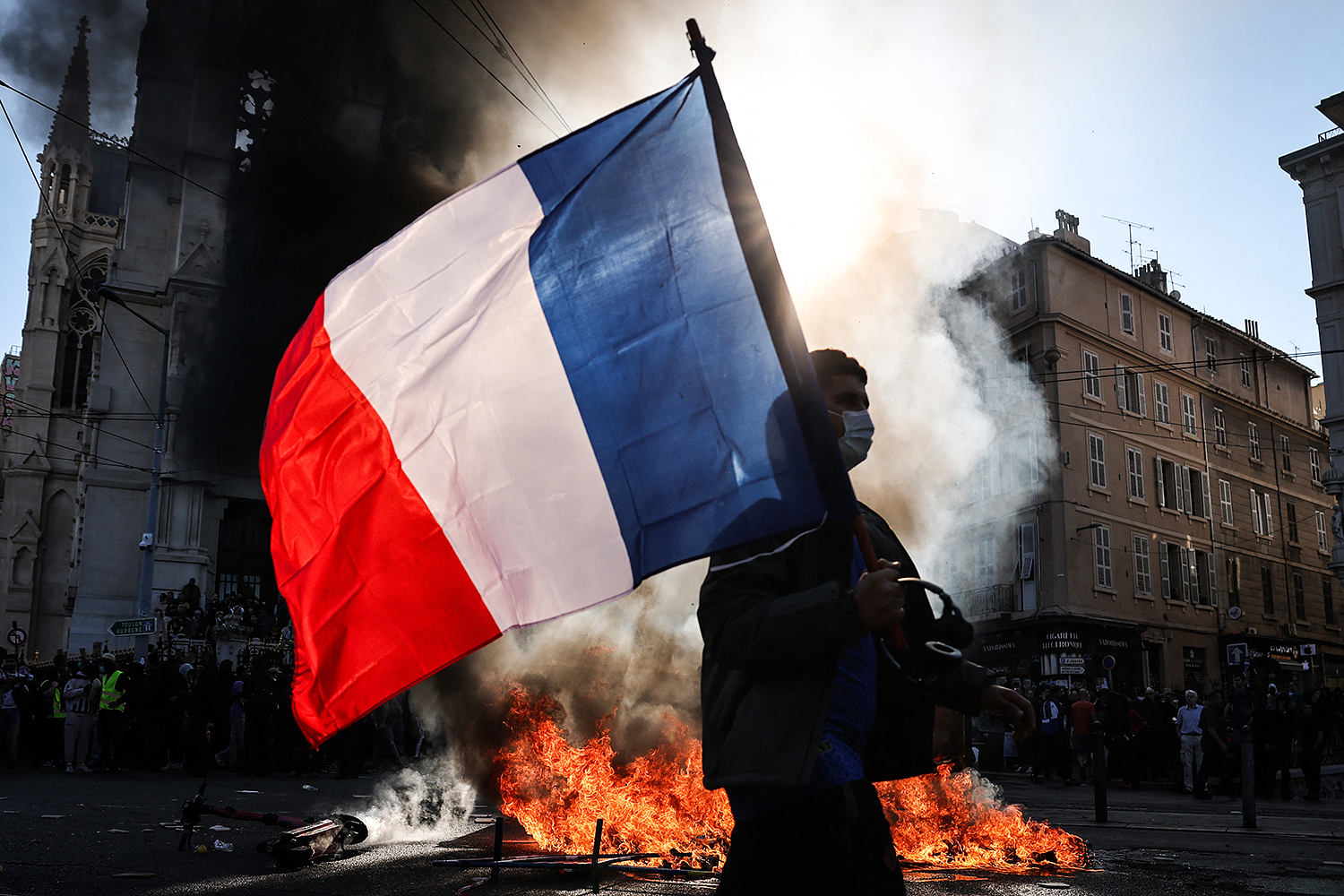
When a breaking-news wire flashes a headline about dramatic images of violent unrest sweeping across France, most of us scroll with one thumb and look for the spectacle. We look for the shattered glass of a bank window in Lyon, the black column of smoke rising over a boulevard in Marseille, the dark wall of riot gear lining up on a wet cobblestone street in Paris. Spectacle is easy to consume. It arrives in ten-second clips with sirens wailing in the background and a ticker running underneath.
Spectacle is not the story.
I have stood on enough smoky avenues and watched enough neighborhood shopkeepers pull down steel shutters with trembling hands to know what happens after the cameras pack up and head for the next border. The air tastes like scorched rubber and vinegar-soaked rags. Your eyes water even two blocks away, long after the chanting has thinned into scattered shouts. People think unrest begins with a thrown brick or an overturned trash bin. It doesn't. It begins months—sometimes years—earlier, in quiet kitchens over unpaid utility bills, in overcrowded classrooms, in late-night shifts where wages barely stretch from the fifth of the month to the eighteenth.
To understand why streets across France erupt with such fierce, recurring fury, we have to step away from the wide-angle lens and look at the people standing inside the frame—and the ones trapped behind the curtains.
The Architecture of a Boiling Point
(Note: The following characters—Nadia, Henri, and Thomas—are hypothetical composites created to illustrate real structural pressures, grounded in documented French economic, social, and policing dynamics rather than reporting on a single isolated incident.)
Picture Nadia at 6:45 a.m. in a suburb outside Lille. She is a nursing assistant who drives forty minutes each way because housing closer to the hospital costs more than she brings home in a month. When fuel prices climb or regional transit lines stall during a strike, her commute does not just get longer; her entire monthly budget buckles. On a Saturday afternoon when marches swell along a major thoroughfare, Nadia is not looking for a fight. She is trying to get to a pharmacy before it closes and hoping a stray firework or a panicked crowd does not trap her car on a side street.
Now consider Henri, a baker whose family has run the same corner shop for three generations. When protests turn destructive, his storefront becomes a target simply by being glass and visible. Even if his windows survive the night, three consecutive weekends of road closures, rerouted buses, and nervous foot traffic can wipe out a month of thin margins. Insurance covers some repairs after months of paperwork and inspections, maybe, if the policy language cooperates. It does not replace the lost morning rush or the quiet exhaustion of wondering how long a small business can weather another season of turmoil.
And then there is Thomas, a young officer in a riot unit who spent twelve hours standing in heavy protective gear under a cold drizzle. From his side of the line, every crowd carries the threat of flying cobbles, fireworks aimed at faces, and split-second decisions made amid noise, confusion, and viral rumors. Both sides often enter the street already convinced the other wants blood.
Why does this pattern repeat so reliably in France compared with many neighboring democracies? Part of the answer lies in history and political culture. France has a long, deeply ingrained tradition of direct street action—from 1789 through 1848, May 1968, the Gilets Jaunes (Yellow Vests) movement, and fierce battles over pension and labor reforms. In French civic life, taking to the pavement is often treated not as a breakdown of politics, but as politics by other means when citizens feel distant institutions are deaf to lived reality.
Yet acknowledging tradition does not excuse violence, nor does it explain the sharpest friction points. When peaceful frustration collides with small militant groups looking for chaos, or when heavy-handed crowd control meets dense urban streets, escalation feeds on itself. A single viral video clip—real, edited, or stripped of context—can pull hundreds of angry newcomers toward a flashpoint within an hour.
Why Dramatic Images Lie by Omission
There is an old trap in modern media: the camera loves extremes. A peaceful march of thirty thousand people walking calmly behind union banners rarely makes the front page unless something catches fire. Five hundred people clashing with police at the tail end of that march can dominate an entire evening broadcast.
But the real problem lies elsewhere: visual drama flattens complex grievances into a cartoon. Watching flames rise on a screen tempts viewers into two equally lazy conclusions. One camp sees pure lawlessness and calls for nothing but force. The other sees pure righteous rebellion and excuses every smashed window or injured bystander as inevitable collateral damage.
Reality is messier—and far more revealing.
Consider what happens next when a city experiences repeated waves of unrest:
- Neighborhood trust fractures. Residents who already feel neglected by public services feel doubly abandoned when their own streets become battlegrounds.
- Emergency response slows. Ambulances, firefighters, and delivery vans face detours, blocked intersections, and heightened risk.
- Economic scars linger. Tourism dips after alarming headlines, local jobs feel shaky, and municipal budgets divert money from parks, schools, and repairs toward security and cleanup.
I remember talking to a woman in a provincial city after a rough night of clashes near a train station. She wasn't a political theorist. She had just spent two hours wiping soot off her balcony railing while her elderly mother sat in the hallway because a siren kept echoing outside. "Everyone wants to talk about the big symbols," she told me, voice tight. "Nobody asks who sweeps the glass at dawn."
The Invisible Stakes Beneath the Headlines
When unrest sweeps across France, outsiders often ask a straightforward question: Why do protests escalate into riots so quickly there? There is no single switch you can flip to turn anger off. Instead, several pressures tend to stack up at once—cost-of-living strain, perceived political disconnect, frustration over policing tactics, and social media amplification.
Another common question is almost as practical: Is it safe to travel to France during civil unrest? The honest answer is that conditions vary sharply by city, neighborhood, and hour. Major tourist hubs and transport corridors can swing from calm to disrupted within a single afternoon, while other regions remain completely quiet. Checking local official advisories, avoiding demonstration routes, and building flexible travel buffers matter far more than panicking over dramatic clips—or pretending nothing is happening.
People also wonder whether street unrest actually forces governments to change course. Sometimes pressure from the streets delays or reshapes policies, forcing leaders to negotiate or retreat. Other times, prolonged violence hardens public opinion, deepens polarization, and invites stricter laws that critics argue restrict peaceful assembly alongside genuine disorder. Street power is blunt. It can shake a government off balance without building a durable consensus.
What Happens When We Stop Watching From the Sidelines
If a crisis is purely a metaphor, it is easy to treat it like a storm in a snow globe—something you shake, watch swirl, and set back on the shelf. Street unrest is not a snow globe. Every tear-gas canister, every boarded-up shopfront, every bruised shin and frightened child belongs to a real life with real consequences.
Still, despair is a lazy reaction, too. Countries with deep social fissures do not heal through slogans or outrage alone; they heal through patient, unglamorous work—fairer economic footing for working families, accountable policing that protects both protesters and bystanders, honest political dialogue before resentment boils over, and media habits that look past the brightest flame to see the whole room.
The next time a dramatic photograph of unrest in France crosses your feed, pause for three seconds before scrolling past or picking a side. Look at the background windows. Think about the baker with the broom, the nurse on the late shift, the young officer gripping a heavy shield in the rain.
The fire gets the headline. The people living in the smoke pay the bill.