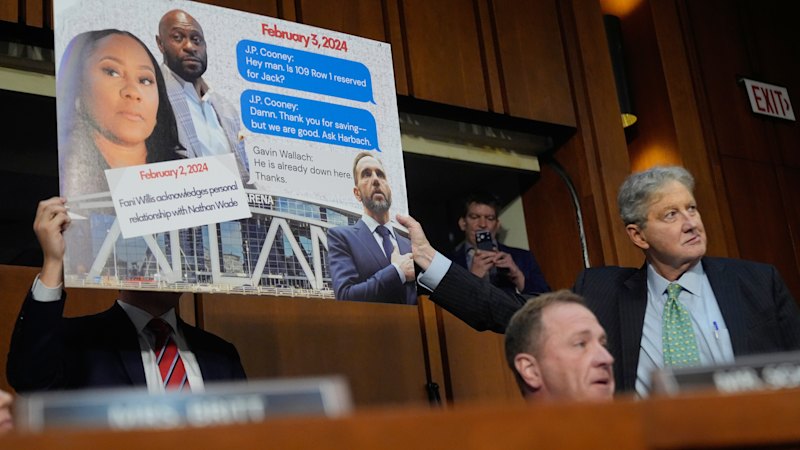
Political investigations are supposed to look like surgical strikes. Lately, they look more like someone dropping a wrench into their own engine.
When partisan operatives rush to build a case against a high-profile target without doing basic homework, the whole thing blows up on the launchpad. You've seen it happen repeatedly in Washington over the last few years. A committee chair or political ally drops a bombshell memo, leaks a selective text thread, or announces a referral meant to ensnare a prominent critic of Donald Trump. Within forty-eight hours, independent reporters and opposing lawyers read the fine print, spot the glaring contradictions, and turn the entire narrative upside down. If you enjoyed this post, you might want to read: this related article.
It isn't just bad luck. It's a structural failure in how modern opposition research and congressional oversight get conducted when viral clips matter more than verifiable facts.
The Anatomy of a Self-Inflicted Political Wound
If you spend enough time reading congressional committee reports and legal filings, you start noticing the exact same mistakes repeating across different scandals. People assume political operatives are master strategists playing three-dimensional chess. Honestly, most of the time they're rushing to meet a cable news booking deadline. For another look on this event, see the latest coverage from Associated Press.
Here is where these efforts usually fall apart before they even gain traction.
- Cherry-picking single messages out of long threads. Dropping one provocative text or email without the surrounding context works for about three hours on social media. Once the full transcript comes out, the missing context usually exonerates the target and makes the accuser look dishonest.
- Ignoring basic timeline verification. Accusations collapse fast when public calendars, flight logs, or sworn testimony prove the target wasn't even in the room when an alleged scheme took place.
- Relying on unvetted witnesses with obvious axes to grind. Putting a whistleblower or informant front and center without checking their prior statements, financial motives, or credibility gives opposing counsel an easy target to dismantle on live television.
- Confusing political spin with legal standards. What sounds scandalous in a fundraising email rarely meets the threshold for perjury, obstruction, or ethics violations.
When a Republican-led push to corner a vocal Trump critic misses these fundamentals, the backlash is immediate. Instead of damaging the target's reputation, the sloppy execution hands them a massive fundraising windfall, sympathetic media coverage, and a clean narrative of partisan overreach.
Why Modern Oversight Rushes Past the Facts
There's a specific reason these misfires happen so frequently now. The incentive structure on Capitol Hill changed.
Twenty years ago, a congressional committee spent months quietly subpoenaing bank records, deposing mid-level staffers behind closed doors, and locking down every single date before holding a public hearing. Think about the tedious, methodical pace of classic Senate investigations. Nobody went on television until the paper trail was airtight because getting caught with a factual error destroyed a lawmaker's credibility for a decade.
Today, the feedback loop is inverted. A lawmaker gets rewarded immediately for launching an aggressive probe, sending a fiery letter to the Justice Department, or accusing a political rival of corruption. The applause happens at the announcement, not at the conclusion. Because the political payoff comes upfront, staffers face intense pressure to produce dramatic allegations quickly rather than slowly building a bulletproof record.
That rush creates massive blind spots. Staffers skip the boring verification steps. They take partisan tips at face value. They assume reporters won't bother calling the secondary sources listed in footnotes.
When you build an entire political attack on assumptions instead of verified documents, one stubborn fact-checker can bring the whole house down.
How Targets Flip the Script on Bad Faith Attacks
Watch what happens when an experienced political operator or former prosecutor gets targeted by a sloppy smear campaign. They don't panic, and they rarely issue vague denials.
Instead, they weaponize the accuser's own paperwork against them.
First, they demand the release of the complete, unedited record. If a committee releases three lines from a closed-door deposition to make a Trump critic look shady, the target immediately challenges the chair to publish the entire transcript. If the committee refuses, they look like they're hiding something. If they comply, the full context usually kills the original headline.
Second, they focus relentlessly on procedural sloppiness. In Washington, process errors are lethal because they're easy for voters to understand. You don't need a law degree to grasp that an investigator misquoted a document, got a date wrong by two years, or failed to interview the primary witness. Highlighting those basic blunders shifts the public debate away from the target's behavior and onto the accuser's competence.
Third, they turn the attack into proof of their own relevance. Nothing validates a political figure's influence faster than opponents breaking the rules or embarrassing themselves trying to take them down.
What Smart Readers Should Look For When Bombshells Drop
You don't need insider access to spot a political hit job that's about to backfire. Whenever a new congressional referral, leaked memo, or explosive accusation hits your feed, run it through a quick filter before sharing or reacting.
Check whether the primary source document is actually attached. Real, devastating investigations almost always link directly to unredacted emails, financial ledgers, or sworn affidavits. When an announcement relies heavily on "summaries" written by committee staff rather than the underlying evidence itself, someone is probably hiding a weak case.
Look at who is speaking on the record. Credible allegations survive scrutiny under oath, where lying carries prison time. Claims that only appear in press releases, anonymous leaks, or partisan TV hits tend to evaporate the moment formal legal rules apply.
Pay attention to the timeline of the release. If a major accusation drops late on a Friday afternoon or right before a holiday recess, it's often designed to dominate a quiet news cycle without facing immediate pushback from working reporters.
Serious accountability requires patience, discipline, and uncomfortable facts that hold up under cross-examination. Until political operatives start valuing accuracy over viral outrage, sloppy attempts to ensnare rivals will keep blowing up in the faces of the people who launch them.