Silence.
That is what hits you first when the American airspace shuts down—not the shouting at the gate counter, not the frantic tapping of thumbs against glowing glass, not even the hollow chime of a cancellation alert echoing through a concourse built for fifty thousand restless souls. It is the sudden, unnatural absence of the low, subterranean rumble of jet engines vibrating through the soles of your shoes.
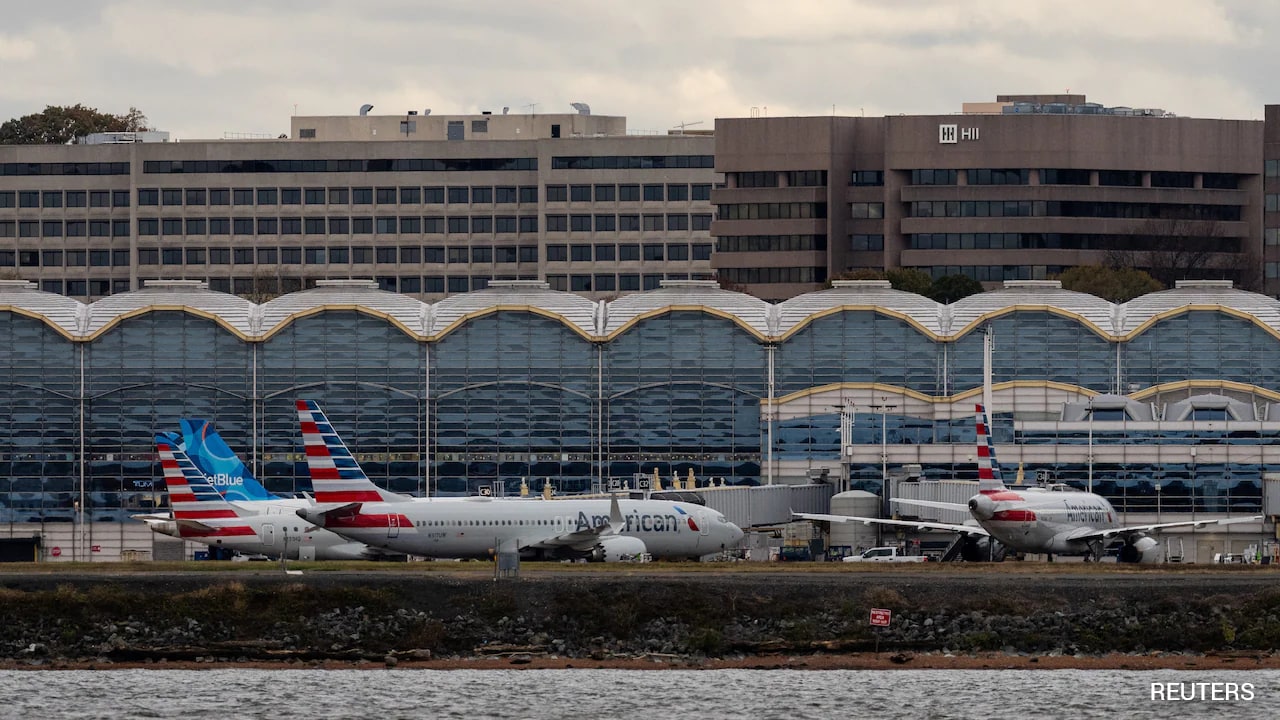
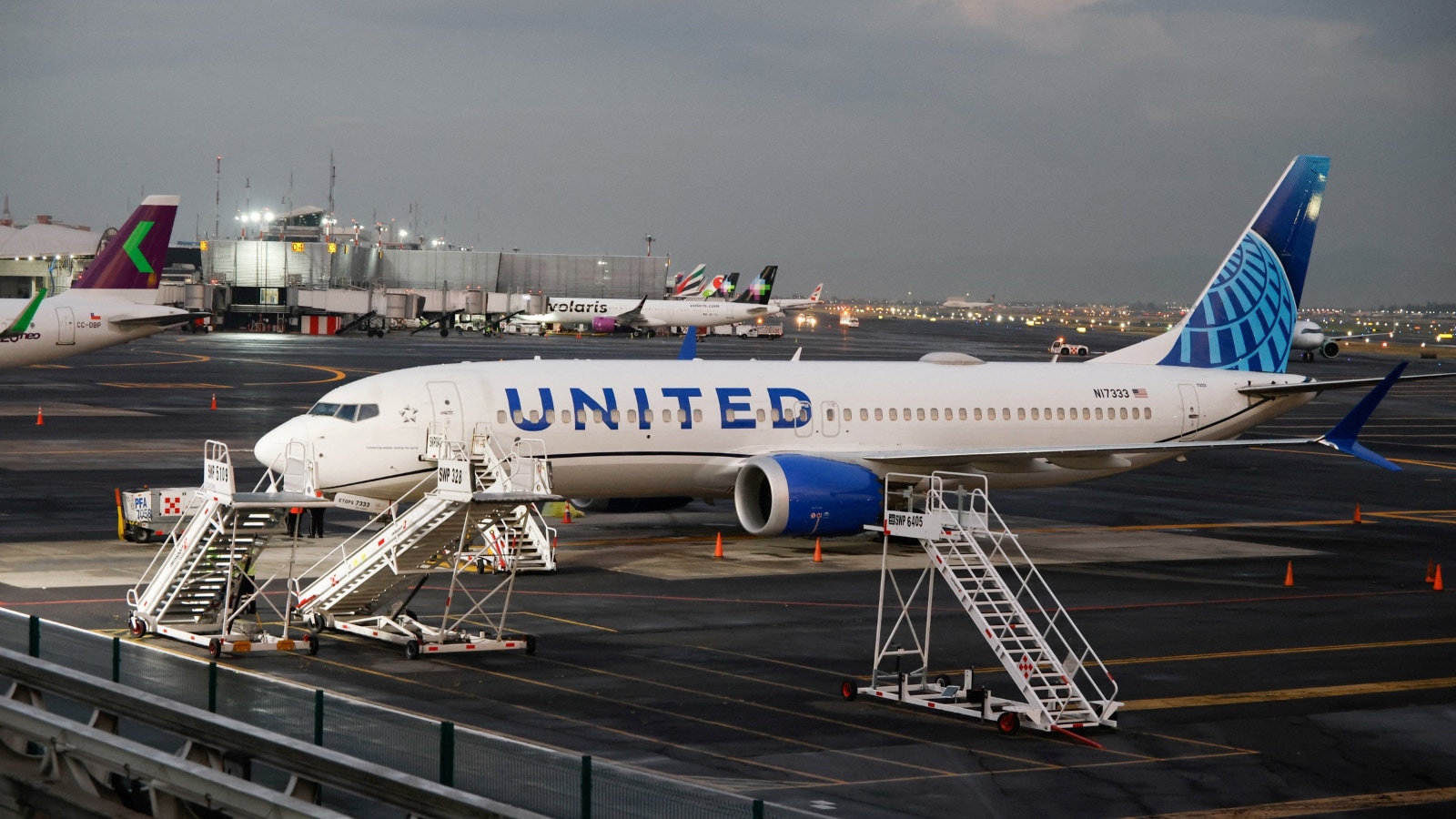
You stand near Gate B14 at Chicago O’Hare, holding a lukewarm cup of burnt airport coffee, watching a Boeing 737 sit completely motionless on the tarmac while snow or rain or blinding summer glare slides down the terminal windows. Outside, tugs stop moving. Baggage carts freeze in half-drawn arcs. Above you, across three million square miles of sky, an invisible curtain has just dropped.
When federal aviation authorities issue a nationwide no-takeoff order—a total ground stop across the United States—news tickers reduce the event to clinical logistics. They report the percentages of canceled departures. They quote transportation officials promising a swift restoration of normal schedules. They tell you, with tidy journalistic restraint, to expect three days of disruption.
They are lying to you, though not out of malice. They are lying because human language struggles to describe the violent physics of a system that was never designed to stop.
The Myth of the Light Switch
To understand why a single morning without takeoffs poisons the bloodstream of global travel for days—and often weeks—you have to abandon the way most of us picture an airline. We tend to think of commercial aviation like a city bus route, or perhaps a light switch on a living room wall. Flip it off when a storm rolls in or a computer system fails; flip it back on when the danger passes, and the buses simply start rolling down the avenue again.
Nothing could be further from the truth.
Picture, instead, a towering, three-dimensional house of cards constructed on the floor of a moving train, where every card is balanced against four others three thousand miles away. That is not a poetic exaggeration. That is the actual mathematical architecture of modern hub-and-spoke aviation.
Every day in the United States, roughly forty-five thousand flights carry nearly three million passengers across a delicate web of synchronized choreography. A single aircraft does not fly from New York to Dallas and call it a day. That plane wakes up in Boston at dawn, hops to Newark, shoots down to Atlanta, crosses to Denver, and finishes its shift in Seattle after midnight. Its pilots and flight attendants follow an entirely different, equally intricate path, legally bound by strict federal rest mandates that tick down to the exact minute. Meanwhile, the mechanics certified to sign off on that specific airframe are waiting in Denver, and the catering trucks stocked for its evening leg are idling on a ramp in Atlanta.
Now, pull one card out of the base. Better yet, sweep your hand across the entire bottom row for three hours.
What happens when the Federal Aviation Administration issues a nationwide ground stop—whether triggered by a corrupted database file in the Notice to Air Missions system, an air traffic control radar outage, or a severe security threat—is not a pause. It is a catastrophic desynchronization.
Consider a hypothetical traveler we will call Elena, a pediatric nurse standing in Concourse C in Charlotte, trying to reach her mother’s bedside in Phoenix. On paper, her flight was delayed by just four hours while authorities rebooted the system and lifted the no-takeoff order. By noon, the skies are officially open again. Elena breathes a sigh of relief, gripping the handle of her carry-on.
Then the gate agent picks up the microphone.
Elena’s plane is sitting on the tarmac in Charlotte, fueled and inspected. The weather in Phoenix is seventy-two degrees and cloudless. Yet the flight cancels anyway. Why? Because the first officer scheduled to fly that aircraft was stranded in Philadelphia during the ground stop. When his morning flight finally cleared the runway, air traffic congestion over the Eastern Seaboard stretched his duty day past the legal federal limit. The moment his clock hit zero, he was legally prohibited from touching the controls. There is no spare pilot sitting in a lounge in Charlotte waiting for an emergency. The spare pilots were already burned three hours ago covering morning delays.
Multiply Elena’s canceled flight by eight thousand, and you begin to glimpse the real architecture of the three-day nightmare.
Seventy-Two Hours of Controlled Freefall
Why three days? Why does a stoppage measured in hours consistently metastasize into seventy-two hours of terminal chaos?
Aviation analysts and airline operations directors know this window intimately, even if they rarely explain its brutal mechanics to the public. The recovery from a nationwide ground stop unfolds across three distinct, agonizing phases, each carrying its own quiet heartbreak.
Day One is the bottleneck. When a no-takeoff order lifts, thousands of aircraft are suddenly sitting at the wrong airports, in the wrong time zones, facing the wrong direction. Planes meant to be in Los Angeles are parked in Miami. Wide-body jets needed for transatlantic red-eyes are stuck at domestic hubs without international gates available to board them. At the same time, air traffic control centers cannot simply clear every plane for takeoff at once; doing so would overwhelm arrival corridors and stack hundreds of burning jets in holding patterns until their fuel gauges dipped into emergency reserves. So controllers meter the sky, releasing departures in agonizingly slow drips. Airports transform overnight into refugee camps of stranded humanity. By midnight on the first day, tens of thousands of travelers are sleeping on thin gray carpet beneath fluorescent lights that never dim, guarding power outlets like medieval fortresses.
Day Two is the crew collapse. This is the hidden crisis that travelers almost never see coming. Even after the planes begin moving again, the human beings required to fly them are scattered across the continent like seeds in a gale. Federal aviation regulations—written in the blood of past tragedies to prevent pilot fatigue—dictate precisely how many hours a crew member can remain on duty and how many uninterrupted hours they must spend in a hotel bed before flying again. During a nationwide disruption, phone lines at airline crew-scheduling desks jam completely. Pilots sit in hotel lobbies for six hours waiting on hold just to find out where they are supposed to fly next. When a crew times out on the tarmac, the flight cancels, dumping another two hundred passengers into the rebooking pool—a pool that is already overflowing because modern airlines fly at nearly ninety percent capacity. There are simply no empty seats left to absorb the displaced.
Day Three is the ghost wave. By the third morning, the cable news vans have usually packed up and driven away. The airport departure boards look mostly green again. If you arrive at the terminal on Day Three, you might assume the crisis is over. You would be wrong. This is the day when the invisible debris washes ashore. Luggage—tens of thousands of suitcases separated from their owners during frantic gate-changes and missed connections—piles up in sprawling, labyrinthine warehouses behind baggage claim, waiting to be manually scanned and routed onto planes that have no spare cargo weight to carry them. Maintenance schedules fall out of alignment because aircraft missed their overnight hangar inspections in Dallas or Minneapolis, forcing mechanics to pull planes out of service mid-afternoon for mandatory safety checks. A minor thunderstorm in Houston on Day Three, which an airline would normally shrug off in forty minutes, suddenly triggers another wave of cancellations because the system has zero slack left in its rope.
I have lived inside that third-day purgatory. Anyone who has flown frequently through North America over the past two decades carries the muscle memory of it in their shoulders. You remember the dry, recycled air stinging your sinuses after thirty hours without a shower. You remember the strange, gallows camaraderie that forms among strangers sitting cross-legged on the floor near a charging station, sharing warm trail mix and trading rumors gleaned from flight-tracking apps. You start checking the tail numbers of incoming aircraft on your phone, acting as your own amateur air traffic controller, praying that a regional jet currently descending through clouds over Ohio makes it to your gate before your connecting crew hits their midnight curfew.
It is exhausting, disorienting, and deeply humbling. It strips away the glossy illusion of modern mastery—the comforting lie that we have conquered distance and time—and reminds us that we are still entirely at the mercy of fragile machines and fallible human coordination.
The Fragility We Built on Purpose
If you want to understand why modern air travel shatters so violently when bumped, you have to look at the economics that shaped the sky over the last forty years.
Following the deregulation of the American airline industry in 1978, competition drove ticket prices down to historic lows, democratizing flight for millions of families who could never have afforded a cross-country seat a generation earlier. That was a genuine triumph. Yet to survive on razor-thin profit margins—where a single spike in jet fuel prices or a seasonal dip in bookings can erase an entire quarter’s earnings—airlines had to eliminate every ounce of waste from their operations.
In corporate boardrooms, "waste" had another name. They called it redundancy.
Forty years ago, major carriers kept spare aircraft parked at key hubs, ready to roll out if a primary jet developed a hydraulic leak or got trapped behind a weather front. They maintained deep reserves of on-call flight crews paid simply to sit near the airport in case of emergencies. Their software systems, while clunky by modern standards, were compartmentalized; a glitch in one regional network rarely paralyzed the entire continental grid.
Over decades of mergers, bankruptcies, and relentless algorithmic optimization, that cushion was shaved down to nothing. Every plane was scheduled to spend as many hours in the air as physics and maintenance allowed. Every seat was priced dynamically to ensure cabins departed full. Legacy computer systems—some built on decades-old code architectures patched together layer upon layer—were integrated into massive, centralized command hubs to squeeze out fractions of a percent in fuel efficiency and turnaround speed.
We built a Formula One race car, tuned to absolute perfection on a dry, sun-drenched track, and then we entered it into a cross-country rally through mud, sleet, and traffic.
When the track is clear, the machine is breathtaking. You can step onto an aluminum tube in New York after breakfast, watch two movies at thirty-six thousand feet while sipping ginger ale, and step out into Pacific salt air in San Francisco in time for a late lunch. We have grown so numb to this miracle that we complain when the Wi-Fi buffers for ten seconds over Kansas.
But efficiency and resilience are mortal enemies. The more tightly you weave a net, the harder it rips when something heavy drops through it. When a nationwide no-takeoff order hits a system running at ninety-nine percent utilization, there is nowhere for the kinetic energy to go. It slams straight into the passengers.
The Invisible Stakes Behind the Departure Board
When commentators tally the cost of a three-day aviation meltdown, they reach immediately for the big, tidy numbers. They cite hundreds of millions of dollars in lost airline revenue, refunded fares, hotel vouchers, and overtime pay for ramp workers. Those numbers are real, and they hurt corporate balance sheets.
They also miss the point entirely.
The true cost of a grounded sky is measured in quiet, unrecoverable human moments that never appear in a quarterly earnings call.
Think about the biological courier sitting in a terminal lounge in Newark, gripping a temperature-controlled cooler containing bone marrow harvested hours earlier in Frankfurt, watching the departure clock tick past the narrow viability window for a leukemia patient waiting in a sterile room in Houston. Commercial airlines carry millions of pounds of urgent medical cargo, human organs, and life-saving pharmaceuticals in their bellies every year. When the planes stop moving, the clock on human survival keeps ticking.
Think about the small business owner from Ohio who spent six months scraping together savings to fly to Las Vegas for a single twenty-minute pitch at an industry trade show—the one meeting that could keep her twelve employees on payroll through the winter—watching her flight cancel three times while her competitors shake hands on the convention floor.
Think about the immigrant worker who saved for three years to buy a single ticket home to see an aging father, only to lose four days of a seven-day leave sleeping on an airport bench in Miami, weeping quietly over a boarding pass that has become worthless paper.
And think about the workers inside the terminal—the gate agents, baggage handlers, and flight attendants wearing crisp uniforms over bodies running on four hours of fractured sleep. When the system breaks, those frontline employees become human lightning rods for the terror, grief, and rage of thousands of stranded strangers. Most of them are paid hourly wages that barely cover rent in major hub cities. Many do not even get paid until the aircraft cabin door closes and the brakes release—meaning that during a twelve-hour ground delay, flight attendants standing in the aisle calming panicked passengers are often working for pennies on the dollar.
Yet if you watch closely during the worst hours of a nationwide shutdown, you will see astonishing grace unfold beneath the fluorescent glare. You will see a gate agent in Atlanta stay two hours past the end of her shift, skipping dinner, furiously typing cryptic keyboard commands into a terminal to manually stitch together a three-leg routing through Salt Lake City so a tearful college freshman can make it home for a funeral. You will see a pilot walk off his plane into the gate area, take the microphone from an overwhelmed agent, and explain honestly and calmly to two hundred exhausted strangers exactly what is happening with the air traffic control flow, treating them like adults rather than cargo.
People hold the system together long after the software and the schedules have surrendered.
How to Survive When the Grid Breaks
If you travel by air in the modern era, you cannot prevent the next nationwide ground stop. Aging air traffic control infrastructure, staffing shortages in critical radar towers, extreme weather patterns, and hyper-centralized airline networks guarantee that this will happen again.
What you can do is stop traveling like a passive spectator and start moving like someone who understands how the machine actually works.
First, treat your smartphone not as a boarding pass holder, but as an early-warning radar. By the time a cancellation flashes on the terminal monitor and two hundred people sprint toward the customer service desk, the remaining seats on alternative flights are already gone. The moment a nationwide no-takeoff order is announced, do not stand in line. Open the airline’s mobile app, call the carrier’s international support line—where hold times are often a fraction of domestic queues—and simultaneously walk toward an airline club lounge if you have access or can buy a day pass. Inside those quiet rooms, seasoned agents with deep computer permissions can rebook you in three minutes while the concourse outside descends into bedlam.
Second, pack as if your checked bag will disappear for seventy-two hours—because during a multi-day meltdown, it almost certainly will. Keep medications, chargers, a fresh shirt, and essential documents in a bag that never leaves your sight. If you must check luggage during a period of national airspace instability, drop a Bluetooth tracker inside the lining before you zip it shut. Knowing your suitcase is sitting in Terminal 4 in JFK rather than lost in oblivion saves hours of blind panic.
Third, respect the geography of your itinerary. Nonstop morning flights—the ones departing before eight in the morning—are your strongest shield against cascading failure. At dawn, your plane is usually already parked at the gate from the night before, and your crew has just woken up with a full clock of legal duty hours ahead of them. Every connection you add after noon multiplies your exposure to the dominoes falling three states away.
And finally, pack a reserve of radical patience—not for the airline executives who designed a fragile system, nor for the regulators slow to modernize it, but for the exhausted human beings standing behind the podium and sitting in the middle seat beside you.
Because eventually, the databases reboot. The radar screens clear. Outside the terminal window, a ground crew worker raises two illuminated orange wands, signaling the tug to push the nose wheel backward onto the taxiway. Inside the cabin, the air conditioning vents hiss to life, a low rumble vibrates up through the floorboards, and two hundred strangers exhale in unison as the wheels finally leave the concrete—climbing back into the thin, bright blue air we never quite appreciate until it closes its doors.