Silence.
In the villages hugging the Bug River along Poland’s eastern frontier, silence is not merely the absence of noise; it is an ancient, hard-won currency that smells of damp pine, woodsmoke, and turned black earth, paid for by generations who learned to read the wind for the sound of approaching empires. For forty years after the Iron Curtain rusted away, that silence meant safety, an unspoken contract between a nation and the sky above it that the borders drawn on paper were solid walls of stone.
Then came a Friday morning when the contract tore.
Prosecutors in Warsaw and Lublin eventually reduced the terror of those hours into clinical, bloodless ink: three Russian missiles had crossed into Polish airspace. Three objects. Three trajectories plotted on radar screens in underground bunkers, tracked by cold phosphor sweeps, and later reconstructed from charred aluminum shards pulled out of muddy turnip fields. If you read the wire reports from that day, you get a neat little ledger of dates, altitudes, and official statements from ministries of defense. You get the sanitized version of geopolitics, where war is a chess match played with telemetry and diplomatic demarches.
What the wire reports leave out is the sound a supersonic cruise missile makes when it screams five hundred feet above a farmhouse roof while a grandfather is pouring boiling water over loose-leaf tea.
To understand what happened on that Friday, stop looking at the map of Europe as a collection of colored shapes and picture instead a real kitchen—let us call it Marek’s kitchen, a hypothetical composite drawn from the testimonies of border residents who lived through those thirty-nine seconds of intrusion. Marek is sixty-four. His knees ache when the barometric pressure drops before a November rain, and his entire universe is bounded by twelve hectares of orchard and the parish church spire three kilometers down the road. On this Friday, the air outside is heavy and gray, the kind of Polish autumn morning where the mist clings to the grass like sheep’s wool.
At 7:12 in the morning, the windows do not rattle. They bow inward.
A low-frequency roar—not thunder, because thunder rolls and fades, whereas this is a tearing, metallic shriek that vibrates inside the fillings of Marek’s teeth—rips across the valley from east to west. His teacup jumps on the saucer. Outside, the starlings explode out of the apple trees in a black, panicked cloud, wheeling wildly as if gravity itself has turned sideways. Before Marek can even drop the kettle, the sound is already gone, swallowed by the western horizon, leaving behind a vacuum so heavy his ears ring.
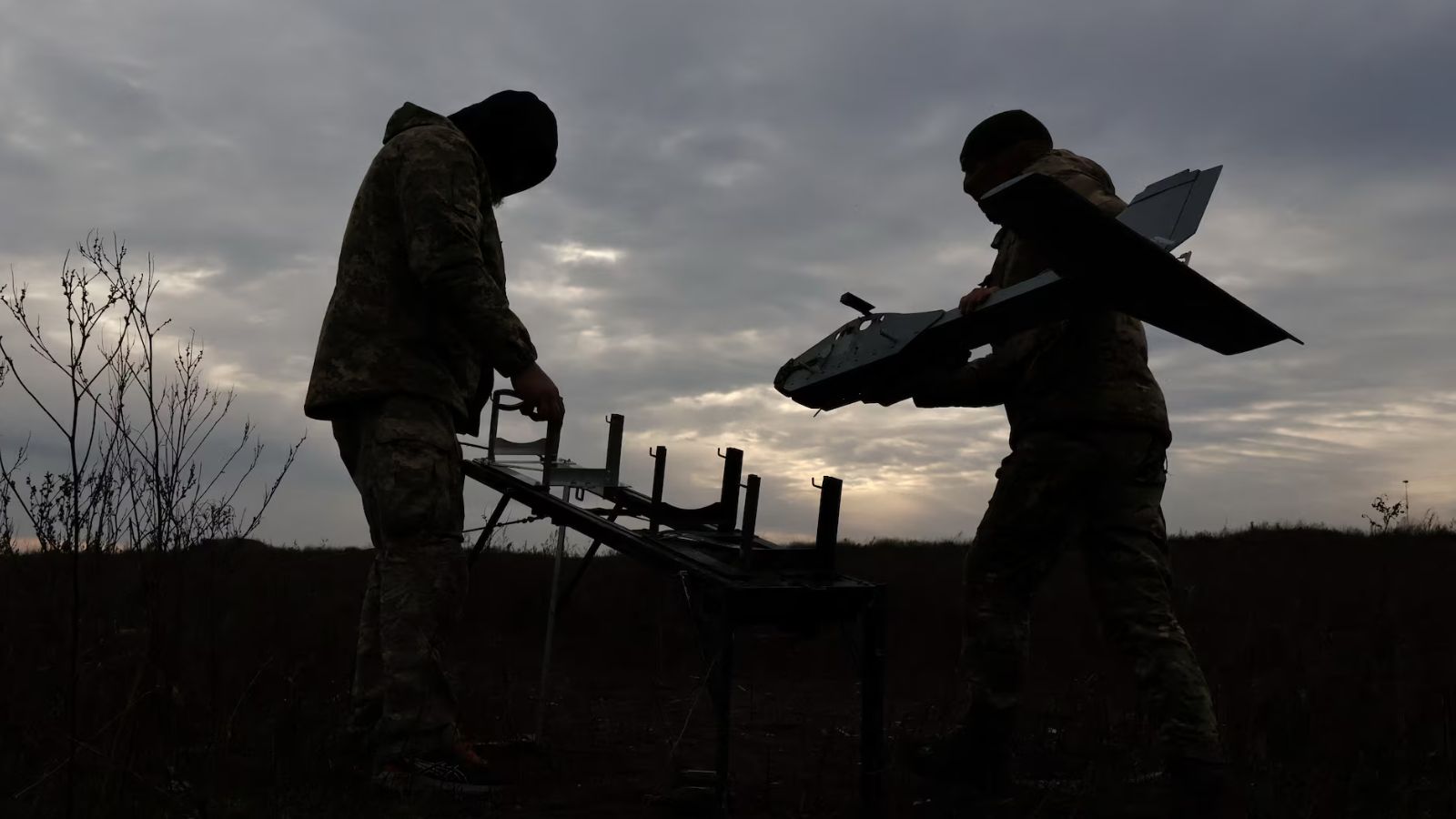
Three missiles. That is what the prosecutors confirmed after forensic teams combed the borderlands with metal detectors and evidence bags. Not one stray piece of debris blown off course by wind, and not an accidental misfire by a panicked battery crew, but three distinct projectiles launched during a massive aerial barrage against western Ukraine, cutting directly across the sovereign territory of a NATO member state before turning back toward their targets in Lviv or Stryi.
The news desks treated it as a procedural update. People living thirty miles from the border treated it as the day the walls of their house turned to glass.
The Geography of an Invisible Line
Why did those missiles cross into Poland? The military explanation is simple enough if you strip away the human pulse. Imagine a burglar trying to break into a house with bars on the front windows; instead of climbing straight over the gate, he steps onto the neighbor’s manicured lawn to get a better angle at the side door, betting the neighbor is still asleep in bed. Russian flight planners routinely program cruise missiles—weapons like the Kh-101 or the Kalibr—to hug the terrain and execute sharp, pre-programmed turns near international borders. By skirting the edge of Polish airspace, or dipping directly inside it, the missiles exploit a blind spot in Ukrainian air defense. Ukrainian radar operators looking west expect friendly skies, not incoming warheads, and even when they spot the tracks, they dare not fire surface-to-air interceptors toward Poland for fear of sending a stray rocket into an allied village.
It is a cynical, calculated use of someone else’s peace as a shield for murder.
Think about the sheer audacity of that geometry. A border is supposed to be a shield. From the moment Poland joined the North Atlantic Treaty Organization in 1999, an entire generation grew up believing that the eastern boundary of the Lublin Voivodeship was not just a line between two countries, but an impenetrable wall separating stability from chaos. On one side of the river, mothers walked children to school past newly paved roundabouts funded by European Union grants; on the other side, air-raid sirens wailed every night as apartment blocks collapsed into gray dust.
For years, that line held like a pane of thick, tempered glass. You could stand on the Polish bank of the Bug River, watch the smoke rise on the horizon ten miles away, and still feel fundamentally untouchable.
When three Russian missiles punched through that airspace on a Friday morning, they shattered the illusion that geography can ever be neutral. Prosecutors can measure the exact coordinates of the breach—latitude, longitude, speed in knots, duration in seconds—but no forensic instrument can measure what happens to a community’s nervous system when the sky stops being an umbrella and becomes a corridor for weapons.
I have spent years walking the towns along NATO’s eastern flank, talking to farmers, schoolteachers, and retired border guards, and the one detail outsiders never grasp is how intimately people here listen to the sky. In Warsaw or Berlin or Washington, an airspace violation is a headline you skim while waiting for your espresso, a fleeting spike in defense-stock tickers before you scroll to the sports scores. Along the Bug River, the sky is a living neighbor. You know the hum of the regional turboprop heading south to Rzeszów. You know the heavy, rhythmic thump of the Polish military helicopters patrolling the treeline. You know the high, thin whistle of commercial jets cruising at thirty-five thousand feet on their way from Helsinki to Vienna.
When an unfamiliar roar tears through that familiar acoustic landscape, your body knows before your brain does that the rules have changed.
Anatomy of a Thirty-Nine-Second Crisis
Consider what happens next in the chain of command when three unidentified tracks appear on NATO’s integrated air-defense screens.
In the public imagination, air defense works like a video game: a red dot crosses a dotted line, a button gets pressed, and a missile streaks upward to obliterate the threat in a neat burst of fire. Reality is infinitely messier, slower, and terrifyingly human. Radar operators watching the eastern perimeter see dozens of tracks during a major Russian strike on Ukraine—decoys, drones, ballistic arcs, and low-flying cruise missiles skimming just above the treetops to hide in ground clutter.
When three of those tracks cross the border into Poland, a clock starts ticking that measures decisions in heartbeats.
First, sensors have to confirm the tracks are real hardware and not atmospheric ghosts or electronic spoofing. Second, duty officers in underground operations centers have to calculate the trajectory in real time. Are these missiles heading toward a Polish city like Zamość or Lublin, or are they executing a dogleg turn back into Ukraine? Scrambled F-16 fighter jets roar off the tarmac at Łask or Krzesiny, afterburners punching twin orange cones into the gray morning, racing east at Mach 1.5.
Here is the dilemma nobody talks about when they demand instant retaliation: if a Polish pilot fires an air-to-air missile at a Russian cruise missile flying five hundred feet above a Polish village, where do the falling pieces go? A Kh-101 carries roughly four hundred kilograms of high explosive and a fuselage full of unburned aviation fuel. Shoot it down over farmland, and you rain flaming shrapnel onto barns, tractors, and country roads. Let it fly for thirty-nine seconds while watching it curve back toward Ukraine, and you avoid turning a Polish village into a crater—at the agonizing cost of watching the weapon continue on to kill innocent people ten miles across the river.
That is the moral trap Russia lays every time it bends a flight path across the border.
Prosecutors later confirmed the breach through painstaking detective work—collecting radar logs, interviewing eyewitnesses who heard the shriek overhead, and matching acoustic signatures to known Russian munitions. Their job is to establish legal truth beyond a reasonable doubt, building a dossier of international law violations that sits in filing cabinets while diplomats summon ambassadors for stern, closed-door lectures.
Legal truth, however, is cold comfort to a mother standing in a schoolyard when the windows rattle.
The Ghost of Przewodów
To understand why three missiles crossing into Poland on a Friday carries such a heavy, suffocating weight, you have to remember the cold November afternoon in 2022 when the war actually touched Polish soil.
In the tiny village of Przewodów, just four miles from the Ukrainian border, two men—Bogusław Wos and Bogdan Ciupek, ordinary workers at a local grain-drying facility—were going about the mundane business of weighing harvested corn when an explosion tore through the yard, killing them both instantly. For twenty-four agonizing hours, the world held its breath, convinced that World War III had just begun in a muddy farmyard in eastern Poland. Investigators later determined the blast was caused by an errant Ukrainian air-defense interceptor trying to shoot down a Russian barrage, a tragic accident born of desperation rather than a deliberate Russian strike on NATO.
Yet the graves in Przewodów are real. The empty chairs at two kitchen tables are real.
Every time Russian missiles violate Polish airspace—whether it is a single stray projectile found months later by a horseback rider in a forest near Bydgoszcz, or three missiles slicing across the border on a Friday morning—the ghost of Przewodów walks back into every living room in eastern Poland. People do not parse the subtle distinctions between a deliberate attack, a navigational error, and a tactical shortcut across allied airspace. They hear the roar in the clouds, and they remember two dead men beside a grain scale.
Doubt creeps in like dampness through old brick. If three missiles can cross the border on a Friday morning and exit before an interceptor can safely engage them, what happens when four cross? What happens when a guidance gyroscope fails over a town square instead of a turnip field?
The Slow Poison of Normalization
There is a danger far more insidious than a single dramatic explosion, and it is the exact strategy Moscow is playing out across Europe’s eastern edge. Call it the slow poison of normalization.
When the first missile crosses your border, it is an international crisis. Emergency meetings are convened at NATO headquarters in Brussels. Statements of ironclad solidarity echo from Washington to London. Anchors break into regular programming with urgent red banners across the bottom of the screen.
When the third, fourth, and fifth incidents happen—when three missiles cut across Polish airspace on a Friday, and the official response consists of scrambled jets, diplomatic protests, and a prosecutorial investigation—something subtle shifts in the collective psyche. The outrage dulls. The emergency meetings become routine briefings. The headlines shrink from front-page banners to three-paragraph briefs buried beneath stories about interest rates and celebrity divorces.
This is how deterrence dies—not in a sudden, cinematic flash of fire, but through a thousand tiny concessions to the unacceptable.
Think of a fence built around a pasture to keep wolves away from the flock. If a wolf steps three paces inside the fence, trots along the grass for half a minute, and slips back out into the woods without the farmer firing a single shot, the wolf learns something vital. It learns that the fence is just wood and wire. Tomorrow, it will step five paces inside. Next week, it will linger by the barn.
By testing Polish radar response times, forcing NATO pilots to burn fuel and airframe hours on constant scrambles, and desensitizing Western publics to the sight of Russian weapons inside allied skies, Moscow achieves a strategic victory without detonating a single warhead on NATO soil. It erodes the certainty of Article 5—the sacred promise that an attack on one is an attack on all—by operating in the gray zone just beneath the threshold of an unmistakable act of war.
What Prosecutors Cannot Measure
Let us go back to Marek’s kitchen on that gray Friday morning.
By noon, the mist has burned off, leaving a pale, watery autumn sun. Out in the orchard, the starlings have finally returned to the bare branches of the apple trees, chattering nervously as they peck at windfall fruit. On the radio sitting on the windowsill, a newsreader in Warsaw announces in a measured, baritone voice that prosecutors have confirmed three Russian missiles entered Polish airspace earlier that morning before exiting toward Ukraine. No injuries were reported. No property was damaged. The Ministry of National Defense assures citizens that the situation is under constant monitoring.
Marek listens to the broadcast, then walks over to the sink and pours his cold tea down the drain.
On paper, nothing happened to him. His roof is intact. His orchard is untouched. His name will never appear in a prosecutor’s file or a diplomatic cable. By every metric used by military analysts and wire services, Friday was a non-event—a brief incursion, a textbook scramble, a footnote in a long war happening across the river.
Yet when Marek steps out onto his wooden porch to bring in a basket of split birch logs for the stove, he does something he never did before that morning. Before he bends down to pick up the wood, he pauses, tilts his head back, and stares for ten long seconds at the empty blue dome of the sky, listening to the wind in the pines and wondering what is flying just beyond the clouds.
That pause—that sudden, involuntary flinch of an ordinary man standing on his own front porch—is the true casualty of the three missiles that crossed into Poland on Friday, and no radar screen on earth can tell you when the sky will feel safe again.