The clock in a military command center does not tick. It drops. Each second is a quiet falling weight, felt in the small of the back by the people paid to watch the world burn.
In Washington, the air smells of stale coffee and carpet cleaner. In Tehran, it smells of exhaust, dust, and the sharp, sweet scent of roasting sour cherries from a street cart just outside a government gate. Two worlds, separated by millennia of history and thousands of miles of ocean, are currently bound together by a single, fragile word.
Ceasefire.
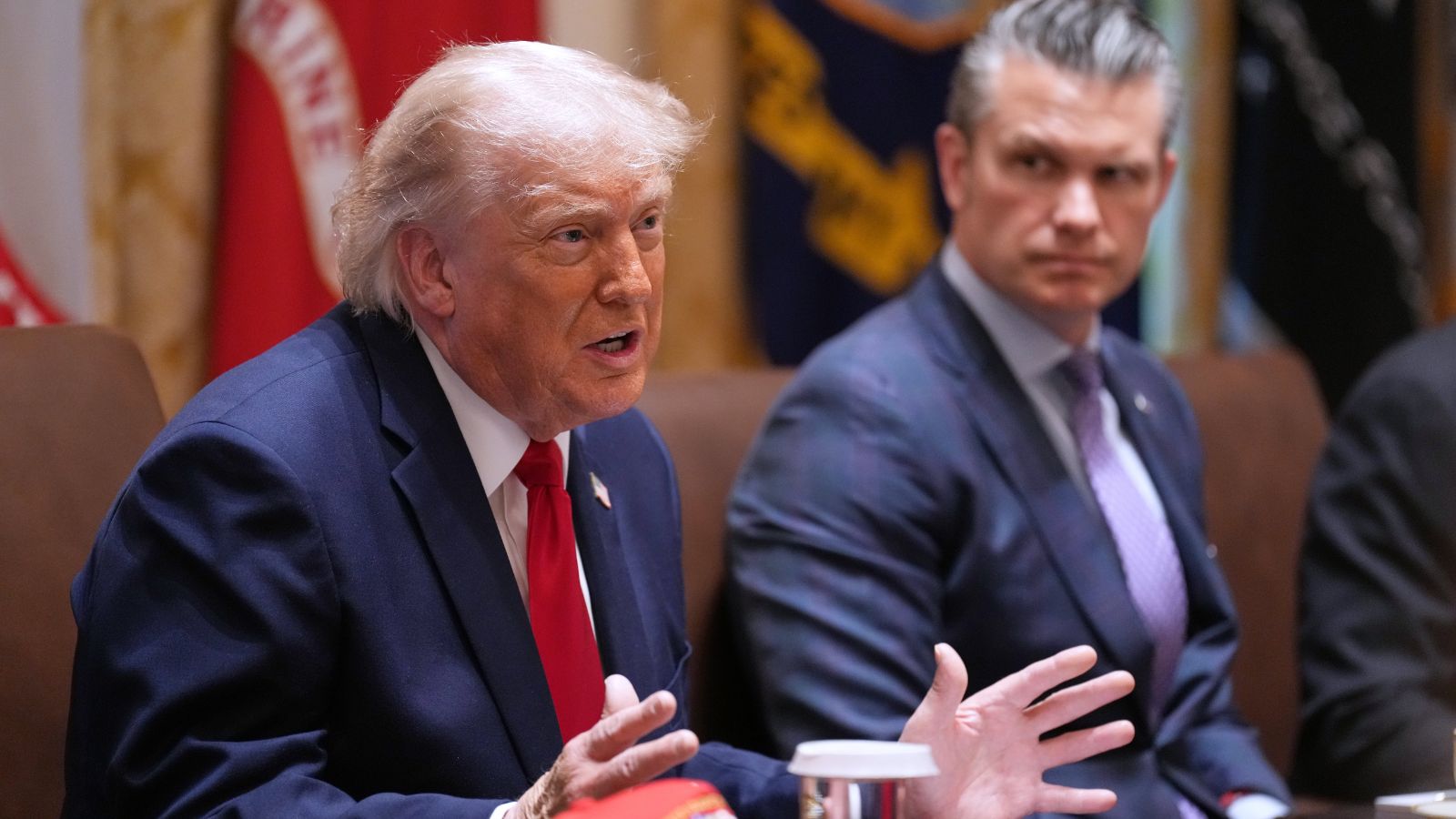
It is a word that sounds like peace but smells like gunpowder. Right now, the Pentagon chief has made it clear that the American military is ready to turn the machines of war back on if a permanent deal slips through their fingers. Meanwhile, the White House weighs a sixty-day extension. Sixty days. It sounds like an eternity when you are planning a vacation. It feels like a heartbeat when you are trying to avert a regional catastrophe.
To understand what is happening right now, you have to look past the press releases and the podiums. You have to look at the people who actually inhabit the numbers.
The Geography of Waiting
Consider an ordinary family in Esfahan. Let us call the father Omid. He is an engineer, a man who understands structural integrity, stress points, and load-bearing walls. For the past year, his life has been a study in a different kind of stress. Every time his phone buzzes with a breaking news alert, his eyes track to his daughter playing on the rug. He calculates the distance from the nearest military base. He measures the thickness of his apartment walls in his mind.
For Omid, a sixty-day extension is not a diplomatic line item. It is sixty more mornings of packing a school lunch without wondering if a missile will interrupt the afternoon.
Now shift the lens to a guided-missile destroyer sitting in the choppy waters of the Persian Gulf. A twenty-year-old sailor from Ohio stands watch. Her world is green radar screens and the low, constant hum of the ship’s ventilation. She has a mother who checks the news three times an hour back home, waking up in the middle of the night in a cold sweat because a headline used the word "imminent."
When the Pentagon states it is "ready to restart attacks," that sailor adjusts her body armor. The words spoken in a carpeted briefing room in Virginia manifest as physical weight on her shoulders in the Gulf.
This is the true currency of geopolitical brinkmanship. It is paid in the nervous systems of ordinary people.
The Architecture of the Ultimatum
Diplomacy often wears the mask of bureaucracy, but its skeleton is pure leverage. The current standoff is not a misunderstanding; it is a cold calculation of endurance.
The American strategy relies on a principle as old as siege warfare: peace through the credible threat of overwhelming force. By explicitly stating that the US is prepared to strike if negotiations fail, the Pentagon attempts to create a high-pressure environment where Tehran feels compliance is the only viable exit. It is the diplomatic equivalent of keeping an engine revving at the starting line. The noise itself is intended to intimidate.
But leverage is a double-edged blade.
When one side loudly proclaims its readiness to strike, the other side rarely backs down quietly. In the psychology of statecraft, perception is reality. For Iran's leadership, visible capitulation under direct American threats is a domestic impossibility. It risks showing weakness to a population already strained by economic sanctions and internal friction.
So, the tension builds. The sixty-day extension currently sitting on the president's desk is less a peace plan and more an oxygen mask. It buys time, but it does not fix the air.
The Friction of the Status Quo
What happens during these sixty days if the extension is granted? The danger of a prolonged pause is not inactivity; it is miscalculation.
History is littered with wars that nobody actually wanted, triggered by accidents that occurred while everyone was waiting for a meeting to start. A drone strays off course due to a navigational error. A panicky radar operator on a frigate misidentifies a commercial flight or a fishing boat. A rogue militia group, operating outside the direct command structure, fires a rocket just to see what happens.
When both militaries are at a high state of readiness, the time allowed for decision-making shrinks from hours to minutes.
Imagine driving a car at ninety miles an hour bumper-to-bumper with another vehicle. You might both intend to keep driving straight, but the slightest twitch of the wrist results in a fatal wreck. That is the Persian Gulf under a temporary ceasefire. It is a high-speed chase where everyone is trying to look like they are in control, but nobody can afford to brake.
The structural problem with a sixty-day window is that it creates an artificial horizon. Negotiators do not build long-term trust; they cram for a deadline like college students before a final exam. Deep-seated grievances—decades of sanctions, regional proxy conflicts, ideological opposition—cannot be dismantled in two months. You can barely get a zoning permit approved in sixty days, let alone unwind a generation of mutual hostility.
The Human Cost of the Unsaid
We talk about moving markets, oil prices, and strategic corridors. We analyze the troop movements and the capabilities of fifth-generation fighter jets. This technical language is a defense mechanism. It shields us from the raw, terrifying reality that millions of lives hang on whether two groups of aging men in different capitals can find a way to save face at the same time.
The uncertainty does something to a society. It acts like a slow-pouring acid on the institutions of daily life. Investors hold back capital. Store owners buy less inventory. Young couples postpone weddings because they do not know what the world will look like by the time the flowers arrive. The threat of war destroys a future long before the first bomb falls.
The psychological toll is invisible, but it is measurable in the quiet anxiety that fills the spaces between the headlines. It is found in the frantic text messages between cousins across borders, the checking of exchange rates, and the silent decisions to pack an emergency bag just in case.
The Empty Board
The negotiators will eventually return to the table, or they will walk away from it. The papers will be signed, or they will be torn up.
In the meantime, the rest of the world waits in the gallery, watching the players move pieces across a board where the squares are made of cities and the pawns are made of people. The sixty-day extension is a reprieve, but it is also a reminder of how close the edge truly is.
As the sun sets over the Potomac and rises over the Milad Tower, millions of people take a breath, look at their children, check their phones, and wonder how much time they have left before the clock drops again.