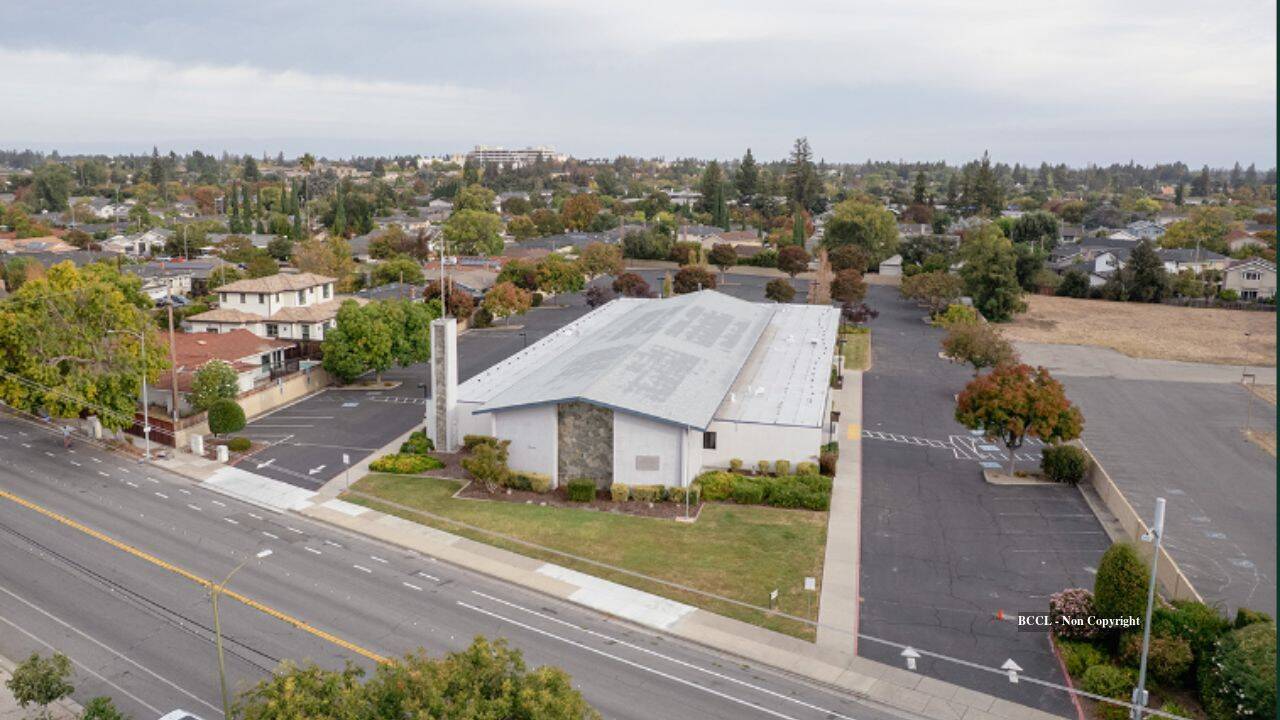
Two decades is long enough for a toddler to graduate from college, for an orchard to be razed and paved into a parking lot, and for a neighborhood to forget what it used to smell like after the rain.
In Cupertino, California, twenty years is also how long it took a local community to buy a single piece of dirt. Don't forget to check out our earlier coverage on this related article.
They paid $16.5 million for it.
On paper, that transaction looks like just another Silicon Valley real estate entry, buried beneath quarterly earnings reports and tech campus expansions. A parcel changes hands. Millions are wired. Escrow closes. To read more about the background here, BBC News provides an informative breakdown.
But if you have ever stood in a strip-mall parking lot on a Sunday morning, watching elders unload folding tables from the trunks of aging sedans because they have nowhere else to gather, you know that $16.5 million was never about square footage. It was about survival.
The Architecture of Erasure
To understand why a community would spend twenty years hunting for one property in Cupertino, you have to understand what happens to human connection when land becomes pure financial speculation.
Cupertino is famous globally as the glittering headquarters of Apple, a city of sleek glass rings, manicured corporate parks, and median home prices that routinely soar past $2.5 million. In the Santa Clara Valley—once known as the Valley of Heart’s Delight for its endless sea of apricot and plum blossoms—every square inch has been monetized, optimized, and zoned for maximum yield.
When real estate reaches those altitudes, something quiet dies first. Not the tech giants. Not the luxury retail. What dies is the "third place"—the unpretentious, non-commercial sanctuary where people gather simply to exist together without buying a $7 latte or swiping a corporate badge.
Consider a hypothetical family living three miles from Apple Park. Let’s call them the Chens. When they moved to the South Bay in 2004, they brought their aging parents with them to help raise their newborn daughter. The parents didn't drive on the sprawling eight-lane freeways. They didn't speak fluent English. For twenty years, their world shrank to the radius of a morning walk and whatever borrowed space their cultural and faith community could rent on weekends—a high school cafeteria smelling of floor wax, an empty office lobby, a crowded living room where shoes spilled out onto the concrete porch.
Think of a community without a permanent home like a tree kept in a plastic nursery pot for twenty years. It stays alive. It puts out leaves. Yet its roots coil tightly against the plastic walls, never quite able to anchor into the earth, always one landlord’s whim away from being hauled to the curb.
The Twenty-Year Math of Patience
Why does a land search take twenty years?
Anyone who has tried to buy property in the Bay Area knows the brutal physics of the market. Commercial land in Cupertino rarely hits the open market; when it does, cash-heavy developers and corporate entities swoop in within days, armed with financing that grassroots organizations simply cannot match.
For twenty years, this community lived inside a recurring heartbreak.
You find a lot. You gather the elders and the young professionals around dining tables late at night, sketching floor plans on the backs of utility bills. You run the numbers. You dare to picture a courtyard, a kitchen large enough to feed three hundred people during lunar festivals or weekend potlucks, a quiet room for reflection.
Then comes the reality check. Zoning restrictions block assembly uses. Environmental reviews add years of carrying costs. Or, most often, a corporate buyer offers millions above asking price with zero contingencies, and the dream evaporates before the earnest money check even clears.
I have watched grassroots organizers go through this cycle. It is a specific kind of exhaustion—the kind where your knees ache from standing on concrete at city council meetings, where your throat is dry from explaining to skeptics why a community center matters just as much as another luxury condo complex, and where you start wondering if your parents will still be alive when the doors finally open.
How $16.5 Million Actually Happens
A price tag of $16.5 million sounds like the work of a single billionaire benefactor writing a vanity check. In Silicon Valley, that is usually how big buildings get named.
Yet in communities that have spent decades being priced out of their own neighborhoods, $16.5 million is rarely one giant leap. It is thousands of small, stubborn sacrifices stacked one on top of another across a generation.
It is the software engineer who skips upgrading her car for eight years and routes her annual bonus into a community land fund. It is the retired grandmother who brings an envelope of neatly folded twenty-dollar bills after Sunday tea, insisting her name stay off any donor plaque. It is the small business owner in a strip mall along Stevens Creek Boulevard pledging a percentage of catering orders, month after month, year after year.
If you look closely at the anatomy of a twenty-year fundraising effort, it resembles coral reef construction more than venture capital. Venture capital wants a tenfold return in five years. A coral reef grows millimeters at a time, built by millions of tiny organisms secreting calcium carbonate against relentless ocean currents, until suddenly—seemingly overnight to anyone who wasn't watching—there is a structure massive enough to break the waves and shelter an entire ecosystem.
What You Actually Buy When You Buy Dirt
When the news broke that the twenty-year search had finally ended with a $16.5 million acquisition in Cupertino, the headlines naturally fixated on the dollar amount. Numbers are easy to print. Emotion is harder to fit into a headline.
So what does $16.5 million actually buy in the heart of Silicon Valley?
First, it buys permanence. In a region defined by disruption—where startups rise and vanish in eighteen months, where storefronts turn over every lease cycle, where people move every few years chasing the next title—owning the deed means nobody can serve you an eviction notice because they want to build high-end townhomes.
Second, it buys intergenerational memory. That newborn daughter from our hypothetical Chen family is twenty-two now. She grew up watching her parents and grandparents haul folding chairs out of car trunks. Now, when she brings her own children back to Cupertino, there will be walls that remember her grandparents’ voices. There will be a kitchen that smells like the exact spices her grandmother cooked with.
Third, and perhaps most radical of all, it buys a counter-narrative.
For decades, the prevailing story of Silicon Valley has been one of relentless atomization. We built tools to connect the entire planet while slowly losing the physical spaces that connected us to the people living three blocks away. We traded town squares for newsfeeds, front porches for ring cameras, shared halls for private subscriptions.
Buying a $16.5 million piece of property in Cupertino to serve as a permanent community hub is a quiet, stubborn refusal of that trade. It is a declaration that human beings are not merely users, consumers, or commuters—we are neighbors who need a roof over our heads when we gather to grieve, to celebrate, to argue, and to break bread.
The Work After Escrow Closes
Of course, signing the closing papers is not the end of the story; in many ways, it is where the hardest work begins.
In California, buying a $16.5 million property is only the entry fee. Ahead lie architectural permits, seismic retrofits, ADA compliance upgrades, neighborhood traffic studies, and the monumental cost of construction in one of the most expensive labor markets in the world. Every regulatory hurdle in Santa Clara County carries its own timeline and its own price tag.
There will be moments of doubt. There will be heated meetings over paint colors, parking spaces, and budget shortfalls. Anyone who has ever built anything real with other human beings knows that community is messy, loud, and occasionally infuriating.
Yet there is a profound difference between arguing over how to renovate a building you own and begging for permission to rent someone else’s hallway.
Picture an early morning in Cupertino, a few years from now, after the dust of renovation has settled. The fog is still burning off the Santa Cruz Mountains to the west. Down on the street, the familiar hum of commuter traffic is just beginning to build along the corridors leading toward the tech campuses.
Inside the newly opened doors of that $16.5 million property, the lights are already on. Someone is brewing tea in a commercial kitchen that finally belongs to them. An elder walks across a sunlit courtyard—no folding chairs in the trunk, no borrowed cafeteria, no ticking clock on a two-hour rental—and sits down on a bench bolted permanently into the earth.