Western commentators love a predictable script. Every time a Russian military project goes sideways due to a bribery scandal, the international press rushes to print the same comforting narrative: the regime is cannibalizing itself, the armed forces are functionally paralyzed, and the entire state infrastructure is on the verge of structural collapse under the weight of its own greed.
This interpretation is fundamentally wrong. It misinterprets the entire operating logic of authoritarian defense procurement. For another view, consider: this related article.
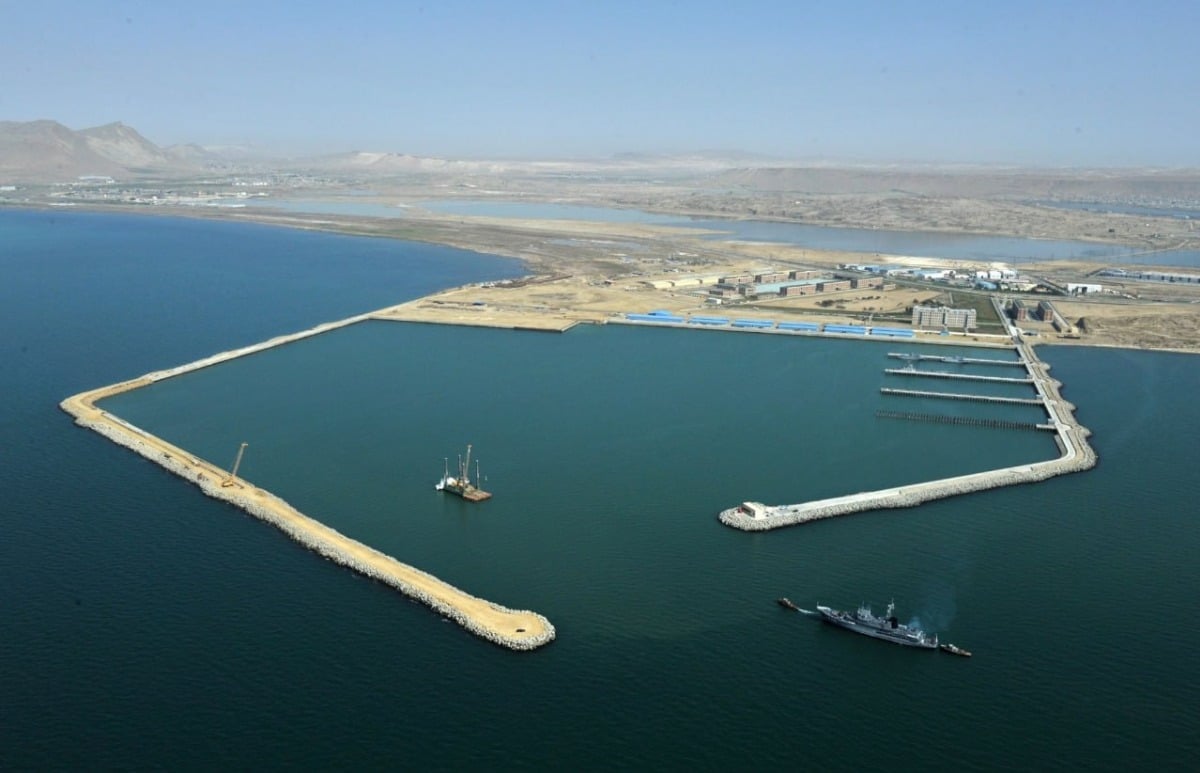
The latest case to trigger this wave of naive optimism involves three defense contractors facing trial for embezzling 500 million rubles—roughly $6 million—intended for the expansion of naval infrastructure supporting the Caspian Flotilla in Kaspiysk, Dagestan. Investigators allege that former Uralvoyenproekt CEO Alexander Katser, company beneficiary Andrey Ansimov, and businessman Maksim Skvortsov used falsified documents to land subcontracts from the state-owned Main Directorate of Special Construction, pocketing advance payments through shell companies while executing bare-minimum cosmetic work to mask the theft.
To the untrained eye, a stalled naval base in a highly strategic region looks like a catastrophic failure of state oversight. In reality, these periodic, highly publicized crackdowns are not evidence of a system breaking down. They are evidence of the system working exactly as designed. The $6 million Caspian Flotilla scandal is not a crisis for Moscow; it is a textbook demonstration of how the state re-centralizes power, flushes out obsolete networks, and enforces a brutal new standard of wartime efficiency. Related insight regarding this has been published by NBC News.
The Lazy Consensus of the Bureaucratic Breakdown
The standard analysis of Russian military corruption treats theft as an administrative bug. Analysts look at the delayed piers, the unbuilt hydraulic engineering structures, and the bankrupt status of Uralvoyenproekt in 2025, and conclude that the state is losing control of its capital allocations. They assume the goal of the Kremlin is the flawless, on-time completion of infrastructure projects according to Western corporate standards.
This assumption misses the point of how money moves in a wartime economy.
In a highly centralized state, defense contracts are never just about building infrastructure; they are mechanism designs for distributing rents to ensure political compliance. For decades, the implicit social contract for the defense elite was simple: deliver a baseline level of military capability, and the state will look the other way when a percentage of the budget vanishes into regional real estate or offshore accounts.
When the state suddenly decides to enforce the rules, it is never a sudden awakening of civic morality. It is a deliberate political recalibration. By arresting Katser, Ansimov, and Skvortsov, the state is signaling an end to the era of loose, decentralized grift. The fact that these individuals are also being tied to an organized network spanning 20 different regions—including occupied Sevastopol—shows that the central authorities are systematically mapping and dismantling legacy networks that survived under the previous defense leadership.
Anatomy of the Caspian Scheme
To understand why this is a restructuring rather than a collapse, look closely at the operational mechanics of the fraud itself.
The state-owned Main Directorate of Special Construction acted as the primary contractor for the Ministry of Defense. They outsourced a critical portion of the coastal infrastructure to Uralvoyenproekt. Between September 2022 and November 2023, the sub-contractor received massive advance payments, which were promptly funneled into two shell companies registered locally in Dagestan.
[Ministry of Defense]
       │
       ▼
[Main Directorate of Special Construction (GUSS)]
       │
       ▼
[Uralvoyenproekt (Katser / Ansimov / Skvortsov)]
       │
       ├─► [Dagestani Shell Company A] ──► Asset Diversion
       └─► [Dagestani Shell Company B] ──► Asset Diversion
This is not sophisticated financial engineering. It is a crude, brute-force diversion of cash that relies entirely on the complicity or deliberate blindness of state inspectors. The work was left unfinished not because the contractors were criminal masterminds, but because they assumed the umbrella of their political patrons would protect them from scrutiny, just as it had for similar projects over the past two decades.
What changed was not the nature of the theft, but the appetite of the state to tolerate it. The launch of civil claims totaling nearly 3.5 billion rubles against Uralvoyenproekt by the state-owned contractor demonstrates a aggressive, litigious push to claw back state capital. The subsequent bankruptcy of the firm in 2025 was not an accidental business failure; it was an intentional asset liquidation triggered by state-directed legal pressure.
The Purge as a Management Tool
I have watched observers misread these dynamics for years. They see high-profile arrests and assume the regime is weak. They fail to see that a purge is the ultimate tool for corporate restructuring in a non-market economy.
Consider the broader context of the defense apparatus over the last 24 months. The ongoing prosecution of legacy figures—such as the 19-year sentence handed to former deputy defense minister Pavel Popov for siphoning funds from the Patriot Park project, or the convictions of top generals like Ivan Popov and Vladimir Shesterov—shows a sweeping institutional cleanup. These are not isolated incidents of accountability; they are part of a coordinated transition from a peacetime kleptocracy to a highly centralized, technocratic command economy.
Under the previous defense leadership of Sergei Shoigu, corruption was decentralized and highly personalized. Loyalties were maintained by allowing regional fiefdoms to skim profits from military housing, barracks, schools, and naval bases. But a protracted war demands strict resource optimization. The state can no longer afford to let middle-tier contractors divert 500 million rubles into Dagestani shell companies without delivering the underlying physical infrastructure.
By prosecuting these contractors, the current technocratic leadership achieves three critical objectives simultaneously:
- Resource Reclamation: The state uses asset forfeiture and bankruptcy proceedings to claw back diverted funds and re-allocate them to state-run entities that are easier to monitor.
- Systemic Discipline: It sends an unambiguous message to the remaining defense industrial base: the margins for theft have shrunk, and delivery on state defense orders is now non-negotiable for personal survival.
- Elite Turnover: It breaks up entrenched regional corruption cartels that operate outside the direct oversight of the central banking and auditing authorities.
Weaponized Inefficiency
There is a counter-intuitive truth that Western analysts routinely ignore: a completely clean, transparent procurement system would actually endanger the regime's internal stability.
If defense procurement were entirely transparent, meritocratic, and governed by strict rule of law, the Kremlin would lose its primary leverage over the economic elite. Corruption creates a permanent state of vulnerability for every actor within the system. Because almost everyone has compromised their hands to some degree to navigate the bureaucratic red tape, the state holds a permanent, actionable file on every contractor, CEO, and general in the country.
Incentive structures under this model operate differently than in standard market economies:
| Metric | Western Defense Procurement | Authoritarian Wartime Procurement |
|---|---|---|
| Primary Goal | Asset Delivery & Cost Efficiency | Regime Security & Absolute Compliance |
| Enforcement Mechanism | Contractual Litigation & Audits | Selective Prosecution & Asset Seizure |
| Risk Management | Diversified Supply Chains | Permanent Legal Vulnerability of Actors |
| Capital Retention | Corporate Profit Margins | Controlled Embezzlement & State Re-allocation |
When a contractor like Uralvoyenproekt fails to meet construction deadlines for a strategically important naval facility, the state does not view it as a failure of contract law. It views it as an opportunity to exercise its permanent leverage. The selective enforcement of anti-corruption laws allows the state to replace inefficient or overly independent actors with hyper-loyal technocrats who understand that their wealth, freedom, and survival depend entirely on meeting the central planning targets.
The Flawed Questions Observers Ask
The public discussion surrounding the Caspian Flotilla scandal is dominated by flawed questions that lead to useless conclusions.
People frequently ask: "How can the Russian military expect to project power if its naval bases are being gutted by internal theft?"
This question assumes that the $6 million missing from the Caspian Flotilla project permanently compromises the naval strategy. It does not. The Caspian Flotilla is a regional green-water force whose primary objective is securing the trade routes linking the Volga River to Iranian ports. While infrastructure delays in Kaspiysk are an operational nuisance, they do not halt the transit of goods or the deployment of existing missile corvettes. The state has already absorbed the cost of this friction. The moment the contractors are replaced by state-directed construction brigades, the project will be finished, likely under tighter, militarized supervision.
Another common inquiry is: "Will these arrests finally deter corruption within the defense ministry?"
The answer is an absolute no, but not for the reasons people think. The goal is not to eradicate corruption entirely; the goal is to calibrate it. The state needs to maintain a system where elites are incentivized by wealth but constrained by fear. Total elimination of corruption would remove the financial grease that keeps the elite aligned with the state's long-term geopolitical objectives. The Kremlin is not building a transparent democracy; it is optimizing a war machine.
The Real Cost of the Caspian Delay
If the traditional view of this scandal is wrong, what is the actual takeaway?
The true vulnerability exposed by the Uralvoyenproekt trial is not that the state is running out of money or that corruption is unchecked. The real vulnerability is the time-lag introduced by the restructuring process itself.
When the state steps in to bankrupt a contractor, seize assets, and initiate criminal proceedings across 20 different regions, it freezes the underlying projects. The infrastructure supporting the Caspian Flotilla did not stall because the money vanished; it stalled because the legal and political warfare required to liquidate the corrupt network took two years to execute. In a fast-moving geopolitical environment, these self-inflicted administrative pauses are the true price the regime pays for its governance model.
Stop looking at the $6 million theft as a sign of weakness. It is the cost of doing business in a state that uses criminal prosecution as a substitute for corporate governance. The contractors are going to a penal colony, their assets are being absorbed by the state, and the naval base will eventually be built by the next group of insiders who are smart enough to steal a little less and deliver a little more. The cartel has simply updated its terms of service.


