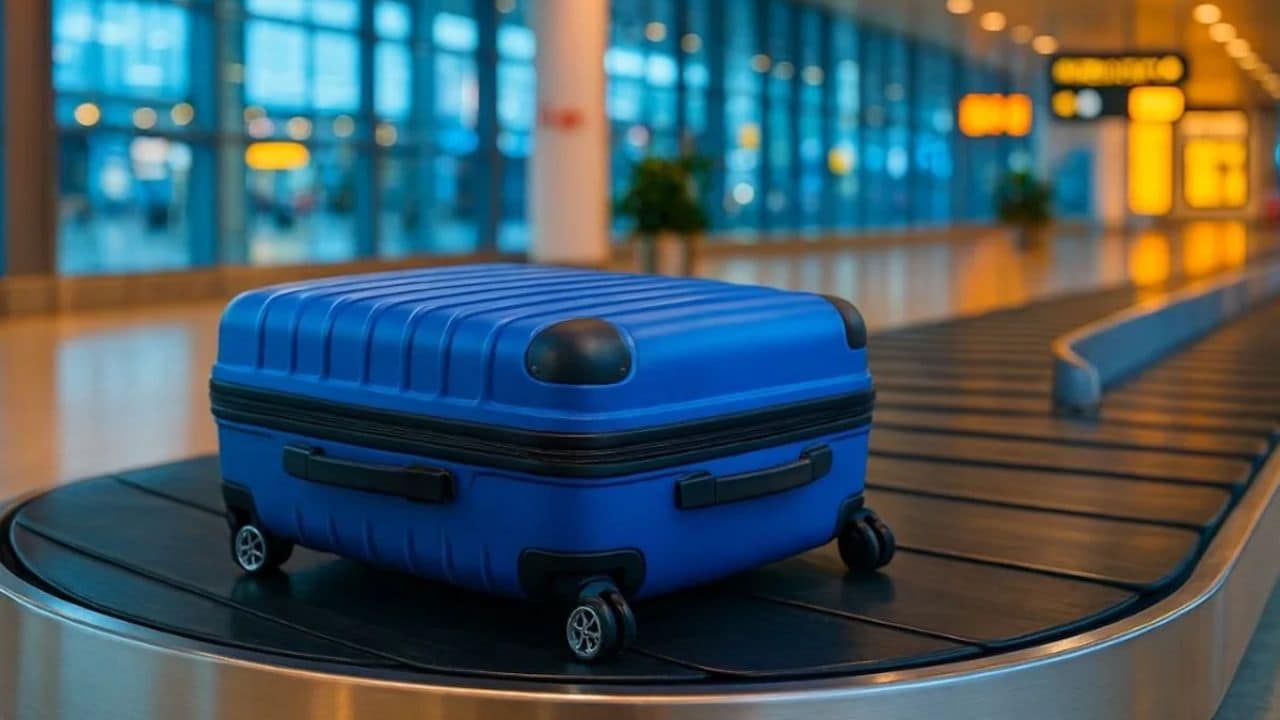
The black rubber slats of the baggage carousel move with a low, rhythmic groan, like an old escalator that has seen too many midnights.
Around it stand forty people. They are leaning forward, knees brushing the metal bumper, eyes locked on the vinyl flap where the luggage emerges. Every time the flap slaps open, a collective jolt of hope ripples through the crowd. A battered red suitcase tumbles out. A man steps forward, claims it, and walks away, his posture instantly lighter. The remaining crowd watches him go with a mixture of envy and renewed anxiety. For a different look, see: this related article.
As the minutes tick past, the intervals between bags grow longer. The crowd thins. Soon, there are only five people left. The machinery keeps groaning. The loop is empty.
To the aviation executives sitting in a glass-walled conference room in Geneva or Atlanta, this scene is a dot on a chart. It is a line item in a quarterly report celebrating a massive logistical victory. According to the latest global aviation data, the rate of baggage mishandling across the world recently plummeted by twenty-three percent. In the language of corporate press releases, this is a triumph of automation, a testament to the deployment of tracking algorithms, and a validation of heavy investments in digital infrastructure. Similar analysis regarding this has been provided by Travel + Leisure.
But if you are one of the five people still standing by the empty conveyor belt at two o’clock in the morning, the phrase "twenty-three percent improvement" feels like a cruel joke.
The industry might be getting better, but its failures still carry a staggering price tag. Even with the recent progress, lost, delayed, and damaged luggage costs the global aviation sector a staggering 6.3 billion dollars annually. That number is too large for the human brain to properly digest. It sounds abstract, like a national deficit or the market capitalization of a mid-sized tech company.
To understand what 6.3 billion dollars actually means, you have to leave the boardrooms and look at what is left behind when the conveyor belt stops moving.
The Subterranean Labyrinth
Consider a hypothetical traveler named Clara. She is not an frequent flyer with an elite status tier that guarantees her luggage is tagged with a bright neon "Priority" sticker. She is an ordinary passenger flying from Cincinnati to Berlin, with a tight ninety-minute connection in Paris. Inside her checked suitcase is a vintage silk dress that belonged to her grandmother, intended for a wedding three days away, alongside everything else she needs for a two-week journey.
When Clara lifts her bag onto the scale at the check-in counter, she hands over custody of her possessions to an invisible empire.
The moment the agent attaches the thermal-printed barcode tag and the bag disappears behind the rubber fringe of the check-in chute, it enters a subterranean world that few passengers ever see. This is the airport’s central nervous system—miles of high-speed conveyor belts, automated sorting gates, and optical scanners working in total darkness beneath the terminal floors.
In a perfect system, the barcode is read by a laser array every time the bag hits a junction. The system knows exactly which pier, which cart, and which aircraft the bag belongs to. When the technology works, it is a beautiful, mechanized ballet.
But the system is fragile.
If Clara’s bag tilts slightly on the belt, obscuring the barcode from the overhead scanner, it is shunted to a manual rejection lane. If the printer at the check-in desk was running low on ink, causing a microscopic smudge on the tracking numbers, the machine cannot read it. It stalls. While Clara is sitting in the terminal sipping a coffee, her dress is sitting in a holding pen because a computer chip somewhere experienced a fraction of a second of indecision.
The real crisis, however, rarely happens at the point of origin. The true black hole of global travel is the transfer hub.
When an airline boasts about a double-digit drop in mishandled luggage, they are usually talking about point-to-point flights. If you fly non-stop from Chicago to Denver, the odds of your bag vanishing are incredibly low. The luggage goes into the belly of the plane, flies across the plains, and comes out on the other side.
The system breaks when we ask it to move at the speed of modern commerce during a connection.
When Clara’s flight lands in Paris, her bag must be unloaded from the cargo hold by a ground crew, placed onto a tug cart, driven across a tarmac slick with rain or choked with exhaust, inducted into a secondary sorting facility, scanned again, and routed to the departing gate for Berlin. All within ninety minutes.
If her incoming flight is delayed by just fifteen minutes due to air traffic control congestion, the window closes. The human beings responsible for moving that bag are suddenly forced to choose between delaying a three-hundred-seat aircraft or leaving Clara’s suitcase behind.
The aircraft almost always leaves.
The Anatomy of Friction
The 6.3 billion dollars that airlines spend on this problem does not vanish into thin air. It is consumed by the friction of fixing mistakes after they happen.
Think about the labor required when a bag goes missing. First, there is the front-line customer service agent who must endure the raw, unedited fury of a passenger who has just realized their vacation or business trip has been compromised. Then come the baggage resolution specialists, workers who spend their entire shifts in windowless offices staring at legacy green-screen database software, cross-referencing lost-and-found descriptions with the global central registry.
- The physical transport: Couriers must be paid to drive individual suitcases from airports to suburban homes, downtown hotels, or remote bed-and-breakfasts, sometimes hundreds of miles away.
- The compensation payouts: Under international treaties like the Montreal Convention, airlines are liable for thousands of dollars per passenger to cover the cost of emergency purchases, toiletries, and replacement clothing.
- The replacement costs: When a bag is permanently lost—defined usually as vanishing for more than twenty-one days—the airline must write a check for the depreciated value of everything inside.
But these line items omit the most significant cost of all, one that cannot be captured on a balance sheet: the permanent erosion of human trust.
When an airline loses a piece of luggage, they aren't just losing nylon and zippers. They are losing the traveler's peace of mind. For the next five, ten, or twenty flights, that passenger will experience a spike in cortisol every time they approach a check-in desk. They will pack lighter, cramming oversized rollers into overhead bins, contributing to the chaotic, aggressive boarding scuffles that delay flights across the globe.
The industry’s push toward carry-on luggage is a direct symptom of this collective trauma. We carry our lives into the cabin not because we want to lift twenty-five pounds of luggage into a cramped compartment over our heads, but because we do not trust the subterranean labyrinth to give it back.
The Ghost in the Machine
The recent twenty-three percent reduction in lost luggage is largely credited to the rollout of Radio Frequency Identification (RFID) tags and real-time tracking apps. Many airlines now allow you to open your phone and see a little green checkmark confirming your bag has been loaded onto the aircraft.
This technology is comforting, but it introduces a new kind of psychological torture.
Consider what happens when the app reveals a truth you cannot change. You are sitting in seat 14B, looking out the window as the plane pushes back from the gate. You open the app, and it informs you that your suitcase is still sitting on the tarmac at terminal 2E. You are trapped in a metal tube traveling at five hundred miles per hour, knowing with absolute certainty that your destination awaits you, but your life is staying behind.
The tech hasn't eliminated the failure; it has simply made the failure transparent.
The fundamental issue is that while the tracking technology has moved into the twenty-first century, the physical infrastructure of our airports remains anchored in the twentieth. The belts are old. The tugs are old. Most importantly, the human beings who handle the luggage are exhausted.
Ground handling is one of the most grueling, underpaid, and high-turnover jobs in the entire aviation ecosystem. It requires lifting hundreds of bags weighing up to seventy pounds each, shift after shift, in freezing blizzards and blistering heat waves, under intense pressure to meet strict turnaround times. When an airline cuts corners on labor, when they outsource ground operations to the lowest bidding third-party contractor, the system begins to bleed money.
A single poorly trained or distracted worker who misreads a cart destination can misroute a hundred bags in a single afternoon, triggering a cascade of delays and compensation claims that wipes out weeks of operational profits.
What Remains
Back at the carousel, the motor finally clicks off. The silence is sudden and heavy.
The loop of black rubber rests still. The final remaining passengers look at each other, a silent acknowledgment of defeat passing between them. They turn away from the belt and walk toward the baggage claim office, where a solitary agent sits behind a desk, flanked by a stack of pre-printed carbon-copy claim forms.
The aviation industry will continue to analyze the data. They will look at the 6.3 billion dollars and find ways to shave off another five percent next year through predictive analytics or AI-driven sorting mechanisms. They will publish charts showing downward trends, and investors will nod approvingly at the incremental efficiencies.
But those charts will never capture the true weight of the empty carousel. They won't record the panic of the businessman who has to deliver a keynote address in twelve hours wearing the sweat-stained jeans he flew in. They won't measure the heartbreak of a daughter whose grandmother's wedding dress is currently sitting on a damp concrete floor in a transit hub three thousand miles away.
We live in an age of hyper-connectivity, where data circles the globe in milliseconds, yet the physical artifacts of our lives remain bound by gravity, mechanics, and human error. Until the industry recognizes that a suitcase is not merely cargo, but a vessel for a person's dignity and security, the cost of the missing bag will always be higher than any corporate ledger suggests.
The customer service office door closes. Outside, on the tarmac, another plane lands, its cargo hold filled with hundreds of identical bags, waiting to enter the dark.