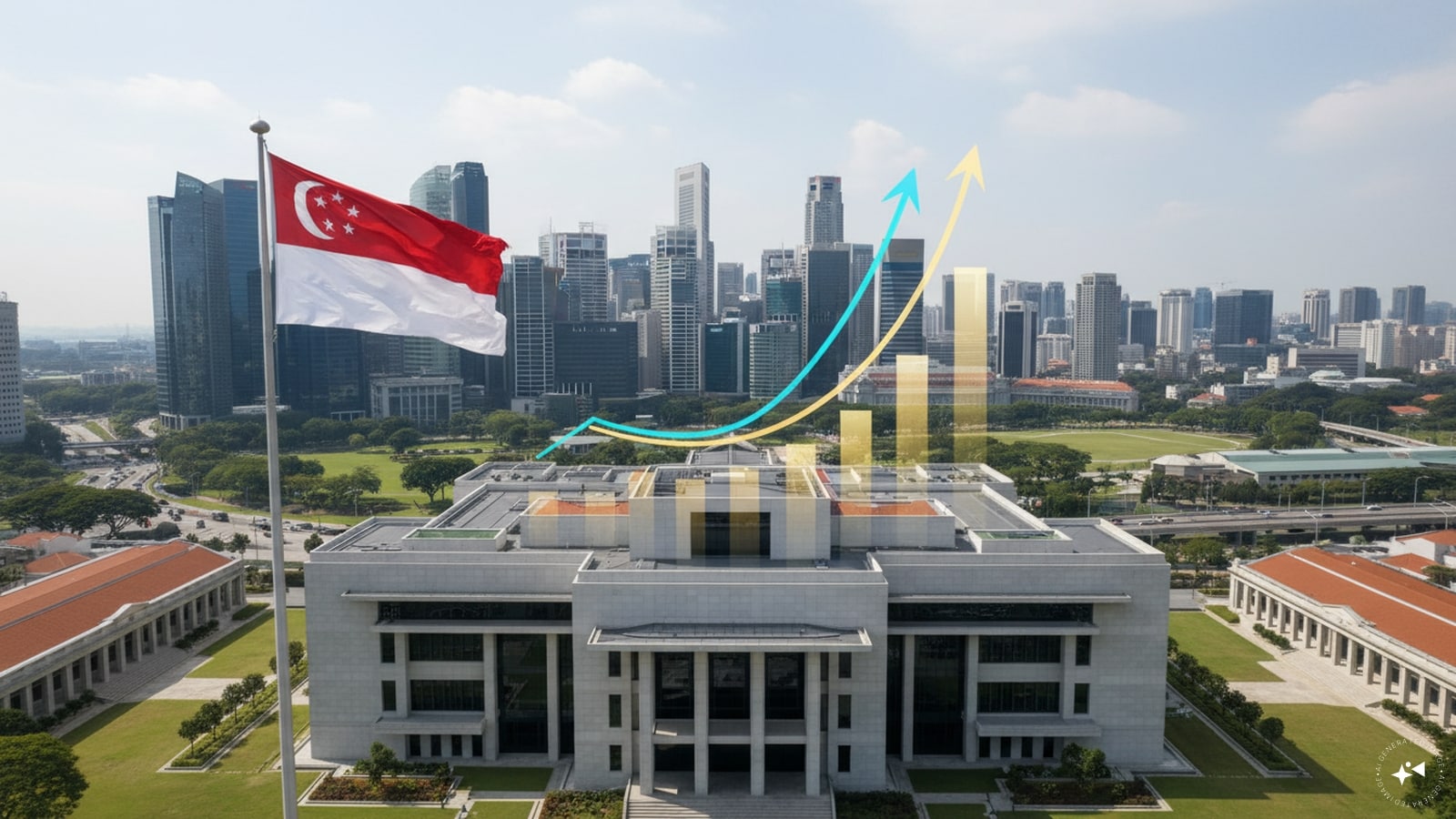
Singapore just did something no other government would dare to do. Prime Minister Lawrence Wong announced a massive pay overhaul that bumps his own benchmark annual salary from SG$2.2 million to SG$3.6 million, alongside sweeping increases for his cabinet. We are talking about a jump exceeding 60 percent for positions that already comfortably sat at the absolute top of the global pay scale.
To put this into perspective, Wong's new paycheck dwarfs what leaders of major G7 nations make. While the US President makes $400,000 annually, Singapore's leader is pulling in roughly $2.8 million. Naturally, this move has ignited fierce debate. When ordinary citizens are dealing with cost-of-living pressures and a median monthly wage sitting around SG$5,775, handing millions to politicians feels jarring. Yet, understanding why Singapore insists on this model requires looking past the sticker shock.
The Logic Behind Million Dollar Ministries
Singapore has a very specific philosophy when it comes to governance. The ruling People's Action Party operates on a pragmatic, corporate-style logic. Pay peanuts, they argue, and you get monkeys. Or worse, you leave the door wide open for corruption.
The rationale rests on two main pillars:
- Talent Attraction: Top-tier corporate CEOs, surgeons, and lawyers routinely rake in millions in the private sector. If the government wants elite minds running the country, public service salaries cannot lag too far behind private market rates.
- Anti-Corruption Shield: By paying ministers like elite executives, the state removes financial temptation. Singapore prides itself on having one of the least corrupt governments on Earth, and keeping public officials financially secure is viewed as a core insurance policy against graft.
Even so, the timing and scale of this adjustment raise eyebrows. Ministerial pay hasn't been revised since 2012, when salaries were actually cut by 36 percent following severe public backlash. Reviews scheduled for later years were delayed due to economic uncertainty, creating a massive backlog between public sector wages and soaring private sector compensation.
How the New Framework Works
The massive headline figures do not mean every minister instantly pockets a 60 percent windfall next month. The structural benchmark has shifted to S$3.6 million for the prime minister and up to S$2.88 million for senior cabinet members, but current office holders will see a phased rollout.
Starting October 15, existing ministers will receive a one-off adjustment of up to 9 percent, depending on individual performance and portfolio weight. Prime Minister Wong himself took a preemptive step to soften the political blow. He announced he will donate his entire salary increase to charity for the duration of his term.
The benchmark itself uses a harsh mathematical yardstick. Singapore indexes political pay against the median income of the top 1,000 citizen earners, applying a 40 percent discount to account for the civic nature of public office. Because private sector wealth in the city-state has skyrocketed over the past decade, the mathematical formula inevitably spat out a massive required adjustment.
The Political Fallout and Public Sentiment
Critics and political observers point out a glaring disconnect. When government leaders earn millions, their lived experience drifts away from the average voter. Even with a strict anti-corruption framework, recent high-profile scandals, such as the sentencing of former transport minister S. Iswaran, prove that high salaries do not completely eliminate human greed or bad behavior.
Wong acknowledged these sensitivities head-on during his parliamentary address, calling the pay issue difficult and emotive. He defended the choice not as a perk for politicians, but as an existential necessity for Singapore's future governance.
Whether other nations look at Singapore's bold gamble and follow suit is doubtful. Most democracies could never survive the political suicide of raising a leader's salary past the multi-million dollar mark. For Singapore, it is simply business as usual—a high-stakes bet that paying top dollar buys infallible execution.