The air inside the cleanroom smells of ozone and absolute quiet.
Wei stands behind a pane of reinforced glass, watching an amber-lit robotic arm slide a silicon wafer across a track. To the untrained eye, it looks like nothing—a thin disc of polished gray, reflecting the sterile ceiling lights. But Wei knows what is hidden beneath that mirror-smooth surface. Billions of microscopic canyons, etched with precision measured in nanometers. Streets so narrow that a single stray speck of dust is a seismic catastrophe, collapsing entire districts of a digital metropolis before it is even born.
For years, the story of modern intelligence has been told as a ghost story. We talked about code as if it existed in a weightless ether, floating invisibly from server farms in Oregon to smartphones in Tokyo, untethered from physics, geography, or matter. Software was the protagonist. Hardware was merely the stage.
That illusion is dying.
Intelligence has mass. It requires electricity, physical copper, cooling towers, and, above all, the stubborn, unyielding reality of silicon.
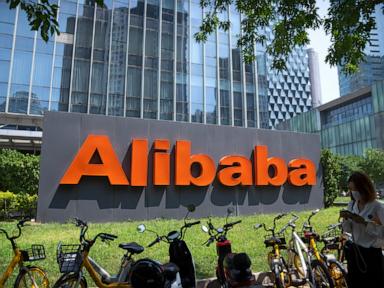
When Alibaba stepped onto the stage to unveil its latest proprietary processor alongside a sweeping, high-stakes expansion of its artificial intelligence architecture, the headlines treated it as routine corporate theater. Another tech giant flexing its financial muscle. Another benchmark beaten by a fraction of a percent. Another press release filled with ambitions of scale.
They missed the point entirely.
This was not a product launch. This was an industrial declaration of independence, written in the language of physics.
To understand why this moment matters, you have to look backward at how we built the modern world. For decades, the architecture of computing was democratic in its uniformity. General-purpose processors—the central processing units that powered everything from personal laptops to colossal cloud servers—were designed to be Jacks-of-all-trades. They could calculate a spreadsheet, render a video game frame, and route an email with equal, plodding competence.
Then came the neural network.
Neural networks do not think like calculators. They do not execute linear instructions one after another. Instead, they operate like vast, interconnected webs of whispered intuition, requiring trillions of simultaneous matrix multiplications. Asking a traditional processor to run a massive language model is like asking a master accountant to count every grain of sand on a beach using an abacus. It can be done, but the cost in time, heat, and energy is staggering.
The bottleneck of the twenty-first century is not imagination. It is bandwidth. It is heat. It is the literal physical limit of how fast electrons can travel through copper before the metal melts under its own resistance.
This is where Wei and thousands of engineers like him enter the narrative. They are not software coders typing late into the night in trendy loft offices. They are materials scientists, thermodynamicists, and micro-architects wrestling with the atomic limits of matter.
Alibaba’s new chip is an answer to that physical constraint. By designing silicon explicitly tailored for the peculiar, voracious computational diet of deep learning, they are effectively building a custom highway system for data that previously had to navigate local backroads.
Consider what happens inside a data center when a user queries an advanced AI model. A prompt is issued. Across millions of parameters, weights are adjusted, probabilities are calculated, and a coherent, nuanced response is synthesized in milliseconds. On legacy hardware, this process generates a thermal inferno. Power grids strain. Batteries drain. Financial costs soar.
A specialized processor changes the geometry of the problem. It reorganizes the silicon real estate, placing memory closer to the processing units, minimizing the distance an electron must travel, and rewriting the rules of efficiency.
Yet, hardware alone is only half the equation.
Building a powerful chip without a corresponding AI model is like building a Ferrari engine and dropping it into an empty chassis. You have raw, explosive potential with nowhere to go. Conversely, building an ambitious AI model without custom silicon is like drafting the blueprint for a cathedral while being forbidden to use stone heavier than chalk.
Alibaba’s simultaneous push into both domains reveals a rare, holistic industrial strategy. They are engineering the muscle and the mind in tandem. Their foundational models—spanning complex reasoning, multimodal perception, and real-time translation—are being co-developed with the very hardware destined to run them.
This vertical integration is rare. It requires deep pockets, immense institutional patience, and an appetite for monumental risk. Silicon fabrication is not software; you cannot patch a physical mask error with an overnight software update. If a microchip design fails, millions of dollars in physical raw material turn into expensive paperweights, and months of development vanish into the ether.
Why take that risk?
Because of borders.
Technology has never truly been global. It has always been tethered to supply chains, geopolitical friction, and the fragile stability of international trade. When access to cutting-edge foreign hardware tightens due to export controls and shifting political winds, a company that relies entirely on external suppliers finds itself standing on quicksand.
For a corporate giant like Alibaba, relying on someone else's silicon is an existential vulnerability. To control the underlying infrastructure of the digital economy is to control your own destiny.
Step back from the cleanroom, away from the billion-dollar fabrication plants and the sliding wafers, and look at how this impacts the ordinary world.
Imagine a doctor in a rural clinic in western China, reviewing a complex medical scan. A specialized diagnostic model, running locally on efficient, low-power edge chips derived from this exact technological lineage, spots an early-stage anomaly that a human eye might miss. The analysis happens instantly, without needing a high-speed fiber-optic connection to a server farm a thousand miles away.
Imagine a logistics network spanning thousands of autonomous electric trucks navigating crowded mountain passes, making split-second routing decisions powered by silicon that consumes a fraction of the energy required just five years ago.
This is where the abstraction ends and reality begins.
The ambition behind these new models and processors is not merely about beating competitors in a quarterly earnings report. It is about embedding intelligence so deeply into the fabric of daily life that it becomes invisible, like electricity or running water.
Critics will point to the immense financial cost. Skeptics will question whether the market demand can justify the astronomical capital expenditure required to design and manufacture advanced microchips. They will cite past bubbles, overextended ambitions, and the sheer volatility of the technology sector.
They are looking at the spreadsheet while the factory floor is being rewritten.
History is unforgiving to those who misjudge the inflection points of industrial power. In the nineteenth century, nations that failed to master steel and steam were relegated to economic vassalage. In the twentieth century, those without access to oil found their sovereignty constrained.
Today, the currency of power is compute.
Back in the cleanroom, the robotic arm places another wafer onto the track. The amber light catches the edge of the silicon disc, casting a brief, prismatic rainbow across the wall. Wei does not smile; his expression is one of quiet, unrelenting focus. He knows that the chip currently spinning beneath the glass is already obsolete compared to what is being drawn on the engineering whiteboards down the hall.
The race does not stop. The physics do not negotiate.
Alibaba has placed its bet on the table, staking its future not on the shifting sands of software trends, but on the unyielding, atomic reality of glass and metal. They have built a new engine for the mind.
Now, the world has to see where it can drive.