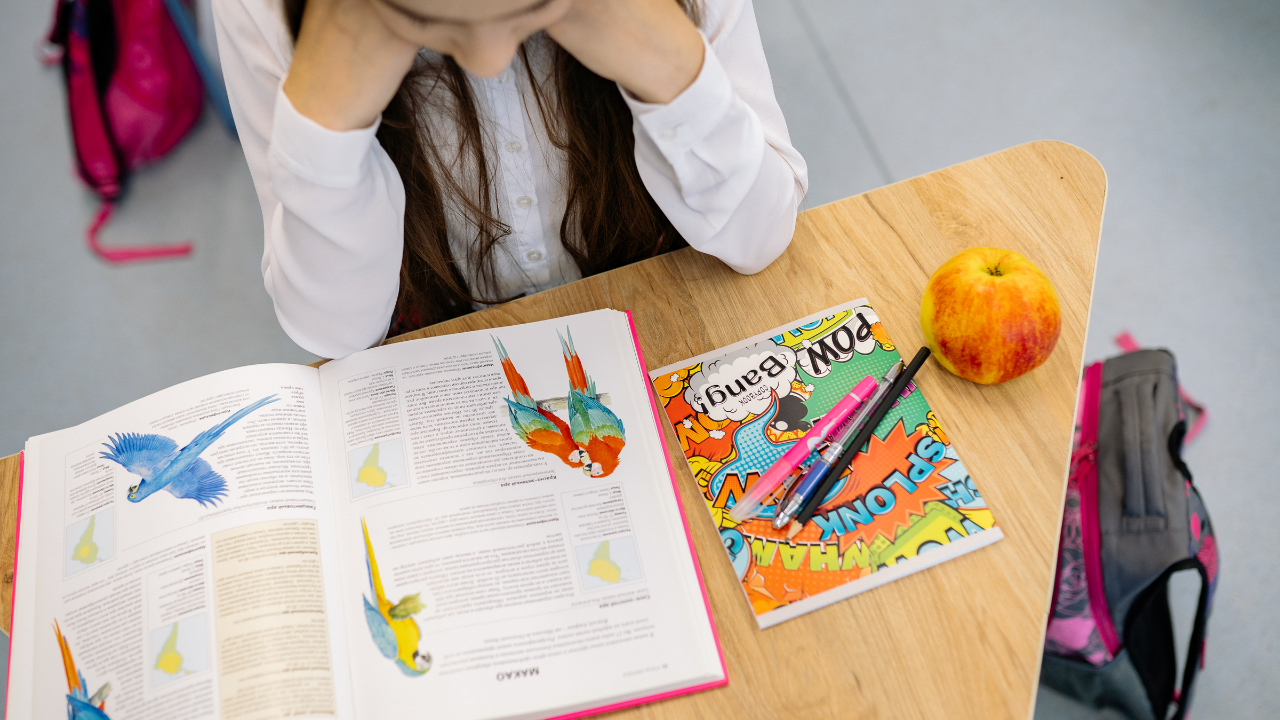
The light in the classroom was blue. Not the soft, golden blue of a Stockholm dusk, but the flickering, aggressive glow of thirty tablets reflecting in thirty pairs of young eyes. For fifteen years, Sweden ran a grand experiment on its own children. We were the pioneers of the "one-to-one" initiative, a bold digital-first policy that swapped heavy backpacks for sleek glass slabs. We told ourselves we were building the future.
We were wrong.
Consider a ten-year-old named Erik. In 2018, Erik didn’t own a single physical textbook. His math was a series of gamified clicks. His history was a scroll of hyperlinked snippets. His handwriting was a clumsy, rarely used skill, like a vestigial organ atrophying in real-time. To his teachers, Erik looked engaged. He was quiet. His eyes were glued to the screen. But when it came time to synthesize a complex narrative or follow a long-form argument, Erik’s mind flitted away. He was a world-class browser, but he had forgotten how to read.
The Great Digital Migration
The shift began in 2009. It wasn't a sudden coup but a slow, optimistic migration. Policymakers looked at the rapid evolution of the internet and panicked. They feared that if children weren't "digital natives" by the age of seven, they would be left behind in a global economy that speaks in code. Sweden, always the social laboratory of Europe, went all in. We removed the requirements for physical books. We prioritized "digital competence" over deep literacy.
The logic seemed sound on paper. Why carry a five-pound geography book when the entire world is accessible via a Google Earth API? Why flip through a dictionary when you can right-click?
But the brain doesn’t work like a hard drive. It is an biological machine that requires tactile feedback to anchor memory. When you read a physical book, your brain maps the information to a physical location. You remember that a specific fact was on the bottom left of a page about halfway through the volume. You feel the weight of the paper shifting from your right hand to your left. This is called "topographical memory."
When you scroll on a screen, that map vanishes. Everything exists in a single, flickering vertical plane. The information becomes liquid. It flows in, and just as easily, it flows out.
The Warning From the PIRLS
By 2023, the data began to scream what teachers had been whispering for years. The Progress in International Reading Literacy Study (PIRLS) showed a sharp decline in Swedish fourth-graders’ reading abilities. Between 2016 and 2021, the scores plummeted from an average of 555 to 544. To a casual observer, eleven points might look like a rounding error. To an educator, it represents a generational crisis.
Sweden’s Karolinska Institute, home to the Nobel Prize in Physiology or Medicine, didn't mince words. They noted that digital tools often impair rather than enhance learning. They pointed to the "distraction economy" baked into every device. A tablet is not just a book; it is a portal to every distraction ever invented. Even with the best firewall in the world, a child knows that a game or a video is only two swipes away. The cognitive load required to not click on something else is energy that should be spent on understanding the French Revolution.
The government finally took notice. Lotta Edholm, the Schools Minister, took a stand that would have been unthinkable a decade ago. She called the hyper-digitalization of schools an "experiment" that had failed. She didn't just suggest a change; she put 685 million kronor ($60 million) on the table for 2024, with another 500 million kronor allocated annually for the following years.
The goal? One book per student, per subject.
The Return of the Scent of Ink
Imagine the scene in a small school in Malmö next semester. The tablets aren't gone—Sweden isn't retreating to the Stone Age—but they have been demoted. They are tools again, not the entire workshop.
A teacher walks down the aisle. She isn't carrying a charging hub. She is carrying a stack of hardcover books. There is a specific sound when a heavy book hits a wooden desk. A thud. It carries weight. It carries permanence. When the students open them, there is the scent of ink and glue.
The shift back to paper is about more than just reading scores. It is about the "invisible stakes" of childhood development. Writing by hand, for instance, involves complex fine motor skills that trigger parts of the brain associated with memory and language processing. When a child grips a pencil and laboriously forms the letter "A," they are physically etching that symbol into their neural circuitry. Typing the letter "A" on a plastic keyboard is a binary action that requires almost no cognitive effort. The brain treats it as disposable.
The Myth of the Digital Native
We fell for a beautiful lie. We believed that because children are good at using technology, they are good at learning from it. We confused "fluency" with "understanding."
A toddler can navigate a Netflix menu before they can tie their shoes, but that doesn't mean they understand the narrative structure of a story. In fact, the ease of technology is precisely the problem. Learning is supposed to be hard. It requires "desirable difficulties." The friction of turning a page, the effort of looking up a word in a physical index, the struggle to focus on a text that doesn't have a "search" function—these are the mental muscles that build a resilient intellect.
By removing all friction, we removed the grip.
Now, other nations are watching Sweden's U-turn with a mixture of relief and anxiety. The UK, the US, and much of Asia followed the Swedish model into the digital wilderness. They are seeing the same spikes in anxiety, the same drops in attention spans, and the same hollowing out of deep literacy. Sweden is simply the first to admit the mistake and pay the bill to fix it.
Beyond the Screen
The $120 million investment isn't just a purchase order for paper. It is a social ransom. We are buying back our children's ability to concentrate. We are reinvesting in the idea that some things should not be fast. Some things should not be "optimized."
Think of the difference between a forest and a photograph of a forest. The photograph is convenient. You can put it in your pocket. You can zoom in on a leaf. But you cannot breathe the air of the photograph. You cannot hear the wind in the needles. You cannot get lost in it.
A screen is a photograph of knowledge. A book is the forest.
The journey back will be long. A generation of teachers has been trained to rely on software. A generation of students has been conditioned to expect instant gratification. The "screens-to-paper" transition won't happen overnight, and it won't be without its critics who claim we are "luddites" or "regressive."
But then, you see a student like Erik. He is sitting under a tree during recess. He isn't hunched over a glowing rectangle, his neck craned at a forty-five-degree angle. He has a book open on his lap. His finger is tracing a line of text. He is still. He is quiet. But for the first time in years, he isn't just staring.
He is reading.
The blue light has faded, replaced by the steady, unblinking white of the page.