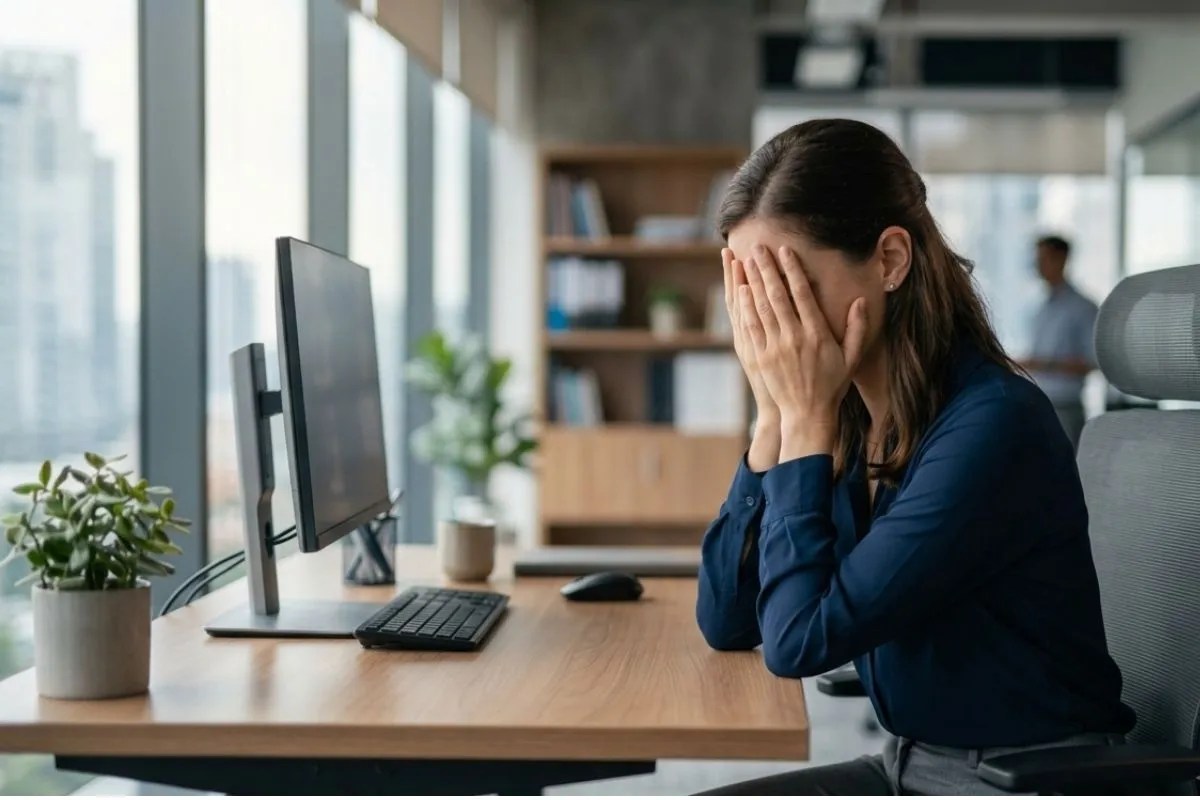
The chair felt comfortable. That was the first trap.
It cradled the lower back with high-density foam. It rolled effortlessly across the low-pile carpet on five twin-wheel casters. It adjusted upward with a pneumatic hiss and locked into place with a reassuring click. For eight hours a day, sometimes ten, this piece of furniture became an extension of the skeleton.
Outside the glass window, the sun completed its slow arc across the sky. Inside, the air hummed with the steady drone of the HVAC system and the clicking of keys.
Time vanished.
That is the insidious thing about sitting. It demands no physical exertion, leaves behind no sweat, and triggers no immediate alarm bells in the nervous system. The muscles go quiet. The heart rate slows down to a resting drift. Breathing becomes shallow and rhythmic. To the brain, this state reads as safety. Rest. Conservation of energy.
Stop.
Consider what happens beneath the skin when the body remains motionless for hours on end.
The large skeletal muscles in the legs, the very engines responsible for burning glucose and clearing fats from the bloodstream, simply switch off. Cellular activity plummets by a staggering margin. Enzymes that normally patrol the blood vessels to vacuum up harmful lipids drop their tools. Circulation crawls. The blood pools slightly in the lower extremities, fighting gravity on its sluggish return trip to the heart.
Medical researchers have a stark term for this: sedentary physiology. It is not merely the absence of exercise. It is an active state of biological decay disguised as productivity.
I remember staring at my own fitness tracker one evening after a grueling twelve-hour stretch of editing. The device flashed a passive-aggressive little vibration, reminding me that I had taken a grand total of eight hundred steps all day. My lower back throbbed with a dull, heavy ache. My legs felt stiff, almost foreign, as I stood up. A sudden wave of lightheadedness washed over me, the blood rushing backward as my cardiovascular system scrambled to remember how to handle an upright human being.
That was the day the numbers in the medical journals stopped being abstract percentages and started feeling personal.
Recent epidemiological data paints a grim picture. Prolonged sitting does not just invite weight gain or poor posture. It alters the fundamental mechanics of cellular health. Studies tracking hundreds of thousands of individuals over decades have revealed a chilling correlation: excessive daily sitting time significantly increases the risk of developing several forms of cancer, most notably colon and breast cancer.
Why? The mechanism is surprisingly mechanical. When movement ceases, insulin resistance climbs. Inflammatory markers surge. Hormones that regulate cell growth and immune surveillance drift out of balance. Over time, chronic low-grade inflammation creates an environment where rogue cellular mutations can evade the body's natural cleanup crews.
The chair is a quiet accomplice.
Society treats the desk job as a badge of honor. We praise the worker who stays planted, focused, glued to the screen through lunch. We measure dedication in hours logged horizontal to a keyboard. Yet, human biology was never engineered for this stillness. For hundreds of thousands of years, survival meant walking, foraging, squatting, shifting, and running. The genome expects motion.
Imagine trying to run a high-performance sports car while keeping the engine idling in the driveway twenty-four hours a day, draining the battery and letting the oil sludge up in the pan. Eventually, something vital seizes.
The temptation, of course, is to think that a punishing one-hour trip to the gym completely undoes the damage of the other eleven hours spent slumped in foam and steel. It does not. Fitness and sedentariness operate on two entirely independent biological tracks. A person can hit every recommended benchmark for vigorous exercise, sweat through heavy deadlifts, log miles on the treadmill, and still suffer the metabolic consequences of sitting uninterrupted for the remainder of the day.
The body requires frequency, not just intensity.
Breaking the cycle does not require abandoning a career or turning a workspace upside down. It demands a fundamental shift in rhythm. Setting a timer to stand every thirty minutes. Walking while taking phone calls. Choosing the stairs not as a fitness challenge, but as a biological necessity. Swapping the traditional desk for a variable-height standing converter, even if it feels awkward at first.
The hourglass keeps turning whether we watch it or not. Every minute spent frozen in place ticks down a small fraction of metabolic health. But unlike real glass, this hourglass can be flipped at any moment simply by standing up, stretching the spine, and taking a single, deliberate step forward.