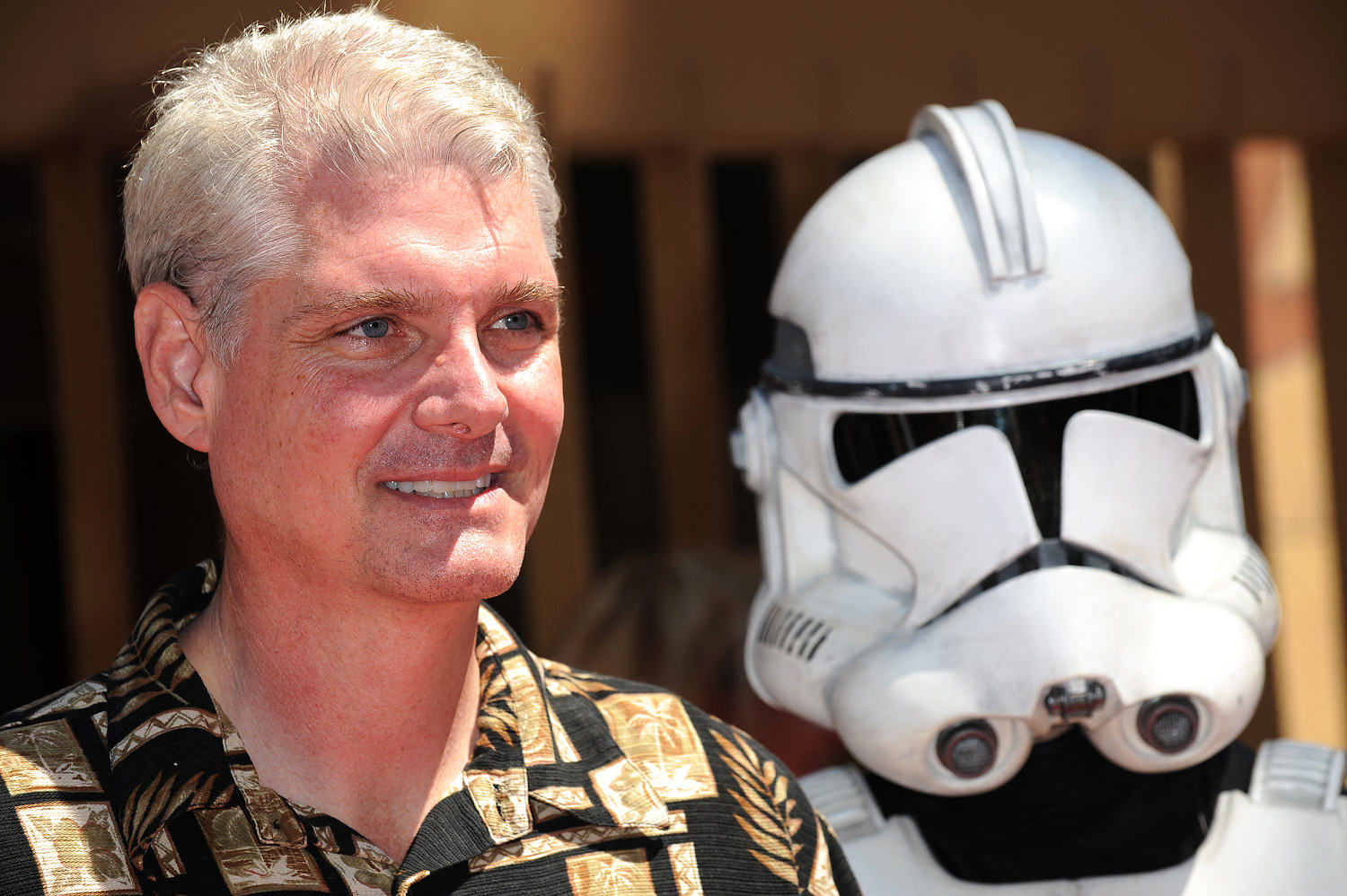
The industry veteran whose vocal flexibility defined a generation of animation, video games, and blockbusters has died. Tom Kane, the prolific voice actor best known for portraying Jedi Master Yoda in Star Wars: The Clone Wars and the patriarchal Professor Utonium in The Powerpuff Girls, passed away on May 18 at a hospital in Kansas City due to complications from a severe stroke he suffered in 2020. He was 64.
The announcement, delivered by his talent agency Galactic Productions, marks the definitive end of an era for a specific fraternity of Hollywood performers. These are the actors who command multi-billion-dollar franchises without ever showing their faces on screen.
Kane’s death follows a brutal four-year battle with aphasia. The 2020 stroke targeted the left side of his brain, decimating his speech center and forcing an abrupt retirement in September 2021. For a man who built a 40-year career on precise vocal control, the diagnosis was particularly cruel.
The Invisible Architects of Modern Hollywood
Voice acting is often treated by major studios as a secondary tier of celebrity. When a major animated film hits theaters, the marketing department almost universally prioritizes live-action A-listers to drive box office numbers. Yet, the actual heavy lifting of long-form television, massive video game franchises, and theme park installations falls squarely on specialists like Kane.
He was not a household name to the casual moviegoer, but his vocal blueprint was omnipresent.
Consider the sheer scale of his portfolio. When George Lucas and Dave Filoni launched Star Wars: The Clone Wars in 2008, they needed someone who could replicate the gravitas of Frank Oz’s Yoda across seven seasons and over a hundred episodes. Kane didn't just mimic the character; he expanded it. He gave the Jedi Master a weary, wartime weight that anchored the entire animated universe. Simultaneously, he served as the series narrator, delivering the urgent, newsreel-style introductions that opened every single episode.
Beyond the galaxy far, far away, Kane occupied entirely different acoustic spaces. In Cartoon Network’s The Powerpuff Girls, he pulled double duty. He voiced the wholesome, scientific moral center of the show, Professor Utonium, while also providing the unsettling, high-pitched falsetto for the villainous, gender-fluid entity known as HIM.
This type of range is not a byproduct of casual talent. It is the result of rigorous, highly specialized mechanical skill. Voice actors must manipulate their vocal cords, diaphragms, and facial muscles to sustain wildly divergent personas for hours inside a recording booth, often without the physical cues or scene partners that live-action performers rely on.
The Physical Toll Behind the Microphone
The stroke that ended Kane's career in 2020 highlights a grim reality about the voiceover industry that outsiders rarely see. It is exhausting, physically demanding labor.
While the general public envisions voice work as standing in a climate-controlled room reading lines from a script, the reality involves massive physical strain. Screaming for video game combat sequences—such as Kane’s work as Takeo Masaki in the Call of Duty franchise—can cause severe vocal cord hemorrhages or nodules. The job requires hours of sustained posture, high-pressure breathing patterns, and intense neurological focus.
When Kane suffered his left-side stroke, it caused immediate right-sided weakness and a near-total disruption of his ability to communicate verbally, read, or spell.
Aphasia does not diminish a person's intellect. It merely severs the link between the brain's thoughts and the physical mechanics required to vocalize them. For Kane, a man who began his professional career at the age of 15, the sudden silence was a profound shift.
The industry watched his subsequent treatment with a mix of awe and sobriety. Even after losing his primary livelihood, Kane made occasional public appearances, including an emotional reunion earlier this year with his Powerpuff Girls co-stars Cathy Cavadini, Tara Strong, and E.G. Daily. Strong later noted the profound emotional weight of hearing Kane’s voice "slowly coming back" during their interactions, a testament to years of grueling speech therapy.
The Economic Reality of the Voice Industry
The passing of a titan like Kane also forces an uncomfortable look at how the entertainment industry compensates and protects its voice talent.
Major studios have increasingly leaned on artificial intelligence and voice synthesis to replicate talent, a trend that sparked historic union strikes across SAG-AFTRA. Performers like Kane spend decades building a distinct vocal signature. When health crises strike, or when an actor passes away, the temptation for studios to rely on digital archives rather than hiring living human actors remains a massive point of contention.
Kane’s career spanned the golden transition from analog animation to the digital boom of the 2000s. He survived the shifting tides of the industry because his reliability was legendary. If a director needed Admiral Ackbar for Star Wars: The Last Jedi following the death of original actor Erik Bauersfeld, Kane was the definitive choice. If Disney needed a booming narrator for their theme park attractions, Kane delivered.
His peers have reacted with a level of grief that reflects his standing within the community. Mark Hamill expressed that he was "devastated" by the news, noting that "there will never be another one quite like him." The Powerpuff Girls creator Craig McCracken praised Kane’s genuine warmth and professionalism, qualities that made him a foundational element of the network's early success.
Beyond the microphone, Kane and his wife, Cindy Roberts, constructed a massive personal legacy, raising nine children—three biological and six welcomed through adoption and foster care.
The legacy of a voice actor is unique. Live-action stars leave behind an image that ages chronologically on film. Voice actors leave behind an ethereal, timeless presence. Long after the news of his passing fades, a child somewhere will sit down, turn on a television, and hear a warm, authoritative father figure tell three superpowered little girls how much he loves them. The voice remains entirely untouched by time.