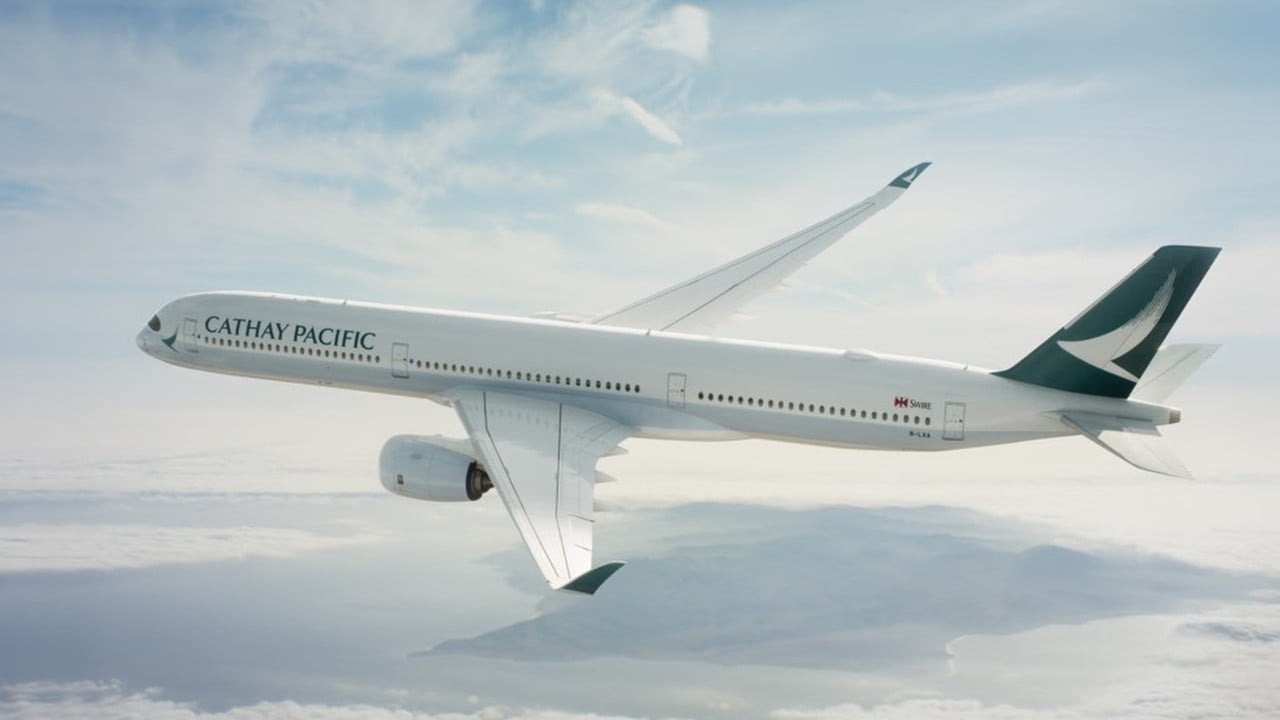
On July 4, 2026, a Cathay Pacific Airbus A350 operating as flight CX257 from Hong Kong to London Heathrow vanished from local civilian radio frequencies while cruising over Eastern Europe. The widebody jet, carrying up to 334 passengers, maintained its correct altitude and airspeed. It did not drift from its pre-approved flight path. Yet, for nine critical minutes, the crew failed to respond to Romanian air traffic controllers. This silence over a highly sensitive geopolitical corridor immediately triggered a NATO Quick Reaction Alert. Hungarian Gripen fighter jets roared off the tarmac from Kecskemét Air Base to execute a visual intercept at supersonic speeds.
While the airline later downplayed the event as a brief communication interruption, the incident exposes a systemic vulnerability in commercial aviation. Cockpit communication breakdowns over European airspace are escalating. They are not caused by malicious intent, but by a combination of high-altitude radio blind spots, rigid post-Cold War military protocols, and the insidious nature of pilot frequency errors. For a closer look into similar topics, we recommend: this related article.
Nine Minutes to Midnight over Europe
When flight CX257 crossed into Romanian airspace at 1:42 PM, civilian controllers expected a routine handoff. Ground control repeatedly attempted to establish radio contact with the Airbus A350. They used standard primary and secondary frequencies. They tried the international distress frequency. Nothing but static returned.
In Western Europe, an unresponsive airliner might be given a wider grace period while controllers coordinate via landlines. In Eastern Europe, the margins are razor-thin. Due to ongoing regional conflicts and heightened security measures along NATO's eastern flank, any unidentified or non-responsive aircraft is treated as a potential rogue asset. For broader details on the matter, in-depth analysis is available on BBC News.
Nine minutes after the initial silence, the Hungarian Air Force scrambled two JAS-39 Gripen fighters. The military response was blindingly fast. Air defense systems do not guess whether a pilot simply input the wrong digit into a radio panel or if something far more sinister is occurring in the cabin. The fighter jets intercepted the airliner near the Hungarian border, pulling alongside the cockpit to deliver a stark visual warning. The physical presence of armed military jets outside the cabin windows immediately forced the flight crew to correct their communication breakdown.
The Anatomy of a Frequency Lockout
To understand how a highly automated, ultra-modern aircraft like the Airbus A350 goes dark, one must examine the mechanics of high-frequency airspace handoffs. Modern commercial flights rely heavily on Very High Frequency (VHF) line-of-sight radios for tactical communication with Air Traffic Control (ATC). As an airliner travels across Europe at 500 knots, it transitions through dozens of distinct sectors, each managed by a different regional control center.
Pilots are required to manually dial in the next frequency given to them by the departing sector controller. A single digit typed incorrectly into the Radio Management Panel (RMP) can isolate a cockpit entirely. If a pilot dials 124.525 instead of 124.225, they enter a state known in the industry as being on the wrong frequency.
[Departing ATC Sector] ---> Gives New Frequency ---> [Pilot Mishears or Mistypes]
                                                            |
                                                            v
[Arriving ATC Sector] <--- No Contact (9 Mins) <--- [Cockpit Isolated]
                                                            |
                                                            v
                                                  [NATO QRA Triggered]
Once a crew is on the wrong frequency, the new sector controllers cannot reach them. The previous sector controllers have already moved on to other traffic. The pilots believe they are simply flying through a quiet sector, waiting for a call that will never come. This psychological trap is compounded by long-range flights where radio chatter naturally thins out.
A secondary factor is the phenomenon of sleeping on the frequency. Long-haul flight crews operating multi-leg journeys across multiple time zones experience profound circadian disruptions. When an aircraft is cruising smoothly on autopilot during the middle of the day, the lack of immediate stimulation can lead to cognitive tunneling. The crew is awake, but their auditory attention drops. They fail to notice the lack of background chatter.
Why Guard Frequency Fails to Prevent Scrambles
Aviation regulations mandate that all commercial aircraft monitor the international emergency frequency, 121.5 MHz, commonly known as Guard. In theory, if an aircraft misses a handoff, controllers can broadcast on Guard to jolt the pilots back to reality.
The system breaks down in practice. Guard frequency is notorious for unauthorized transmissions, accidental microphone clicks, and step-overs, where two signals block each other out. Many pilots temporarily turn down the volume on their secondary radio to escape the persistent static or intermittent chatter, intending to turn it back up later. They forget.
When Romania tried to reach flight CX257 on Guard, the cockpit remained silent. This failure left NATO with no choice. A non-responsive aircraft that ignores the emergency frequency over Eastern Europe fulfills the exact criteria for an active security threat.
The Cost of Military Intervention
Scrambling a pair of supersonic fighter jets is an expensive, high-risk operational procedure. A single hour of flight time for a JAS-39 Gripen costs thousands of dollars in fuel and maintenance. The broader risk lies in the potential for catastrophic misunderstanding.
When military jets intercept a civilian airliner, they perform specific maneuvers to get the pilots' attention. These include rocking their wings, flashing lights, or crossing ahead of the airliner's nose. If a civilian pilot panics or misinterprets these aggressive maneuvers as a hostile act, an abrupt evasive maneuver could cause severe injuries to passengers in the cabin or trigger a mid-air collision.
Standard Intercept Protocol:
1. Military jet approaches from the rear left quadrant.
2. Stabilizes alongside the civilian cockpit.
3. Rocks wings to command: "Follow me."
4. Civilian crew acknowledges by rocking wings and tuning to emergency frequencies.
Fortunately, the Cathay Pacific crew recognized the Gripens immediately, corrected their radio configuration, and re-established contact with civil authorities. The fighters peeled away, and the flight landed on time at Heathrow.
Automation Cannot Cure Human Disconnection
The aviation industry frequently touts satellite-based text communication systems, such as Controller-Pilot Data Link Communications (CPDLC), as the ultimate solution to radio dropouts. CPDLC allows controllers and pilots to send text messages instead of speaking over static-heavy voice channels.
This technology is not universally implemented across every European sector. Airspace infrastructure remains a patchwork of legacy voice systems and modern digital networks. Even where CPDLC is available, human operators must still actively monitor the system. If a crew is distracted or experiencing cognitive fatigue, a text message on a lower display screen can go unnoticed just as easily as a voice call.
Relying entirely on fighter jet scrambles as a safety net for basic communication errors is an unsustainable model for modern air traffic management. As European skies grow more crowded and geopolitical tensions remain elevated, the window for civilian error shrinks. The industry must move away from manual frequency management and implement automated cross-checks that flag an unacknowledged handoff within two minutes, long before armed military assets are forced to leave the ground.
The incident on July 4 was handled properly by the military, and the passengers arrived safely. It serves as a reminder that the most advanced avionics in the world are still entirely dependent on two human beings maintaining a clear, uninterrupted audio connection with the earth below.