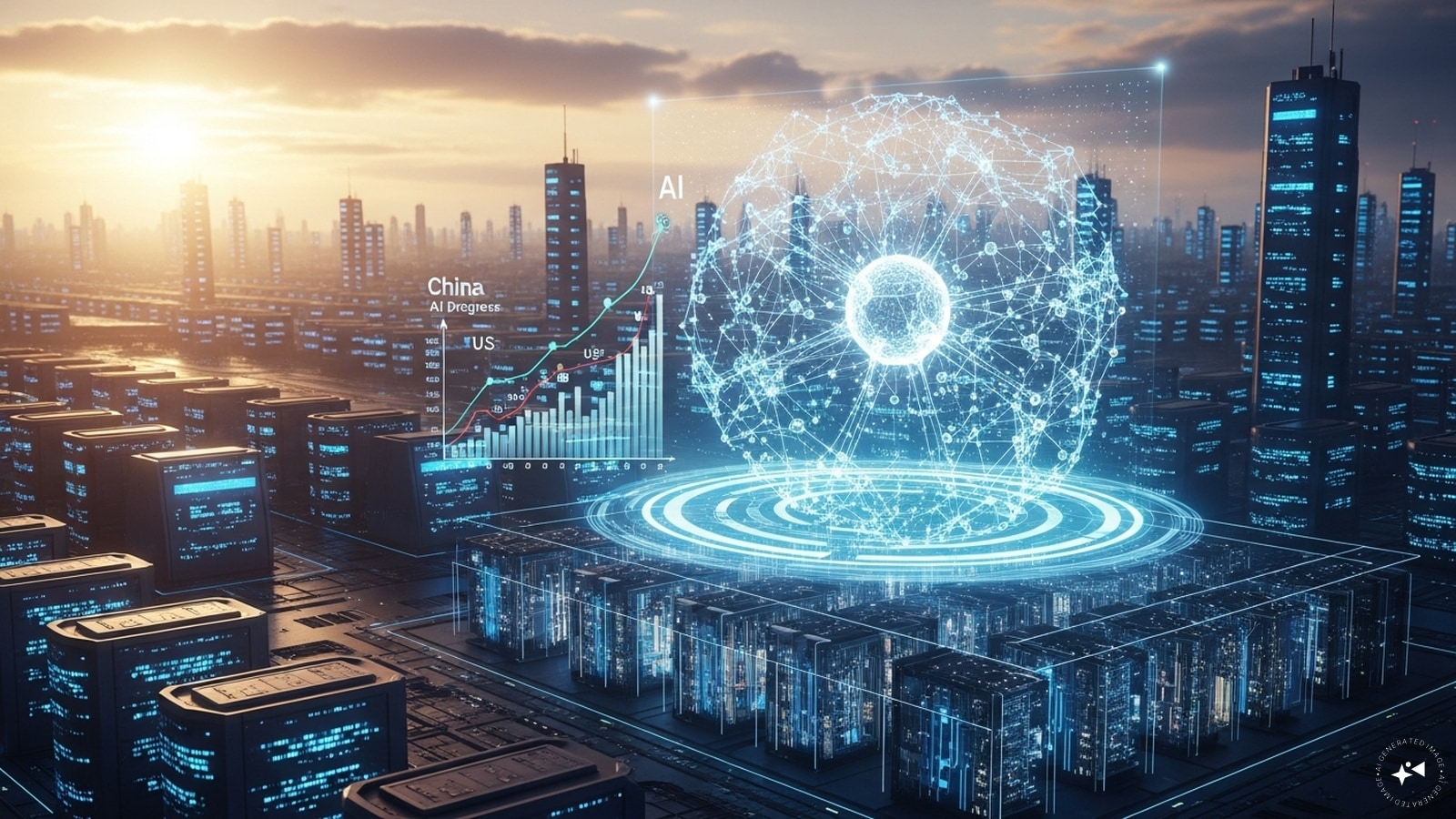
The air in the Shanghai conference hall carries a subtle, metallic chill, typical of spaces engineered to keep supercomputers from sweating.
Consider a technician named Elena. She does not exist, but thousands like her do, sitting in high-rise offices from St. Petersburg to Shenzhen, staring at lines of code that will soon decide who gets a loan, whose face triggers a security gate, and how a drone selects its target. Elena does not think about geopolitics when she debugs a machine learning script. She thinks about optimization.
But outside her window, the definition of "optimization" is being rewritten.
For years, the invisible rules governing how artificial intelligence interacts with humanity have been quietly drafted in places like Silicon Valley, Geneva, and Brussels. The Western consensus—built on a specific cocktail of individual privacy, intellectual property rights, and democratic oversight—was treated as the default template for the world.
That default has expired.
The Shanghai Symphony
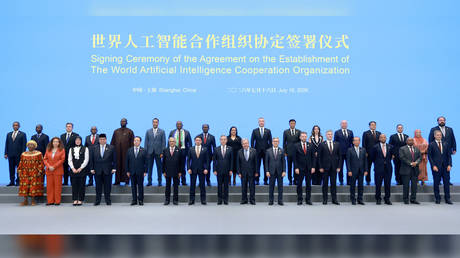
In July 2026, representatives from 29 nations gathered in Shanghai to sign an agreement establishing the World Artificial Intelligence Cooperation Organization. Spearheaded by Beijing and heavily backed by Moscow, this new intergovernmental body is not just a competitor to Western regulatory bodies; it is an entirely different philosophical operating system.
During the summit, Chinese President Xi Jinping spoke of an AI future that resembles a "symphony of global cooperation" rather than a "solo performance". It is a beautiful metaphor. It evokes images of harmony, shared effort, and mutual respect.
Underneath the orchestral prose lies a fierce, pragmatic reality.
For countries in the Global South, the Western model of AI governance feels less like a protective shield and more like an exclusive club. Advanced US-led export curbs on high-end semiconductors have squeezed access to the physical bedrock of AI development. When Washington restricts the flow of chips, it does not just slow down technological progress; it tells developing nations that their role in the digital revolution is to be consumers, not creators.
Beijing and Moscow are offering a different deal. They are presenting a model built on "sovereign equality" and "civilizational diversity".
To understand what this means, we must translate the diplomatic vocabulary into everyday human consequences. In this new framework, "sovereign equality" means that no external body—no human rights organization, no international court, no foreign government—gets to tell a nation how it can or cannot use AI to manage its own population. "Civilizational diversity" translates to a simple rule: your local values, whether authoritarian or democratic, are your own business.
The Allure of the Open Source
Imagine running a municipal department in a rapidly growing metropolis in Southeast Asia or Latin America. You need to manage traffic, predict power grid failures, and monitor public safety.
You have two choices.
You can try to license proprietary, expensive, closed-source models from Western tech giants. These models come with strict user agreements, high recurring costs, and a heavy dose of Western ethical lecturing on how you must handle data.
Or, you can look to the emerging alternatives. Affordable, highly capable open-source models like China's DeepSeek are flooding the market. They are accessible. They do not come with lecturing. And they are backed by promises of infrastructure investment.
This is how dominance is established in the modern era. It is not done with tanks; it is done with standards, APIs, and training seminars. China’s commitment to providing 5,000 AI training opportunities to developing countries over the next five years is not charity. It is the cultivation of a generation of global engineers who will grow up speaking a specific technological language.
If you train a country’s engineers on your platforms, use your hardware, and adopt your security protocols, you have secured an alliance that is far more durable than any military treaty. You have woven your code into the very fabric of their daily governance.
The Split Screen of the Future
It is easy to look at this division and feel a sense of dread. The internet, once envisioned as a singular, borderless town square, is fracturing. We are witnessing the birth of a bifurcated digital world.
On one side of the screen is a system that prioritizes individual autonomy, open debate, and limits on state power—even if those ideals are often messy, inconsistent, and compromised by corporate greed.
On the other side is a system that prioritizes stability, collective order, and state authority, powered by deep-packet inspection, predictive surveillance, and algorithms optimized for control.
Neither side is purely altruistic. Both are reaching for the levers of the most powerful technology humanity has ever created to preserve and expand their own influence.
The danger is not just that we will have two different internets. The danger is that we will have two different definitions of what it means to be human in the age of thinking machines. In one world, the algorithm serves the citizen. In the other, the citizen is data to be optimized by the state.
As the signatures dry on the agreements in Shanghai, the architects of this new digital architecture are quietly laying the foundations. They are not waiting for global consensus. They are building their own, block by block, line by line, leaving the rest of the world to decide which system they are willing to live under.
The code we write today becomes the gravity we must live with tomorrow.