The coffee in the paper cup goes cold long before the shift ends.
Around 3:00 AM on a Tuesday, the air cargo ramp at Miami International Airport is not a place of sleek corporate triumph. It is loud. It smells of hot jet fuel, ozone, and wet asphalt. Diesel engines rattle against the humid Florida night. Men and women in high-visibility vests move with the practiced, mechanical grace of long-haul veterans, guiding heavy metal containers toward the gaping maws of Boeing freighters. To the casual observer watching from the perimeter fence, it looks like an ordinary midnight ballet of global commerce.
Packages move. Planes fly. Next-day delivery becomes tomorrow morning's reality on a doorstep in Ohio or Seattle.
Then, the sky breaks.
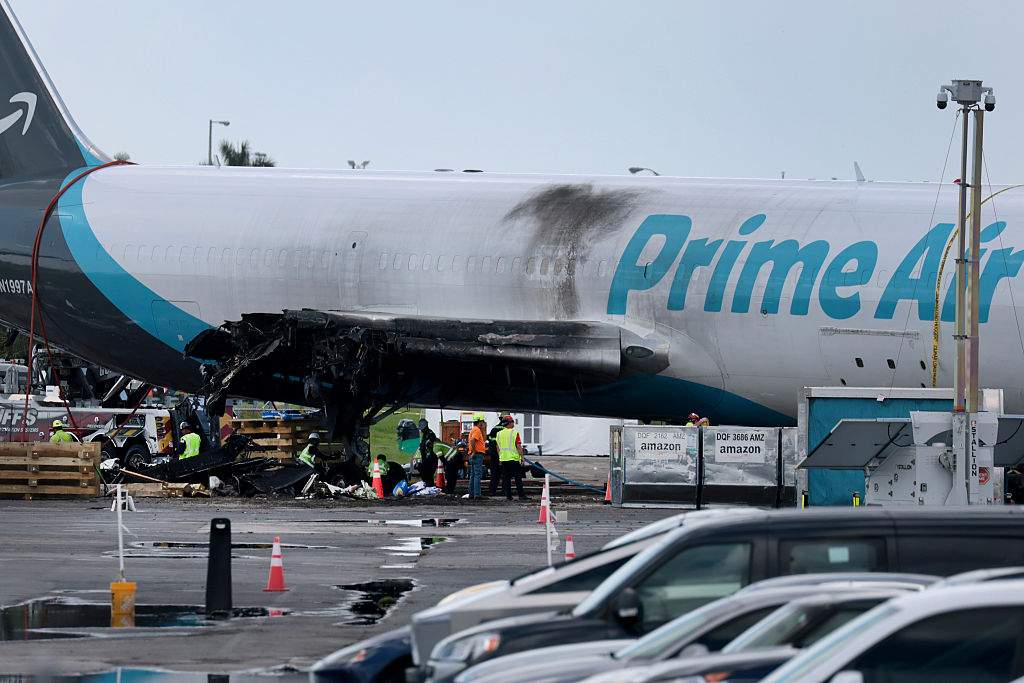
On a rainy night in February 2025, an Atlas Air Boeing 767 operating for Amazon Air climbed into the darkness out of Miami and experienced what federal investigators later described as an unmitigated emergency. Within minutes, the aircraft—heavy with cargo and bound for Luis Muñoz Marín International Airport in San Juan, Puerto Rico—slammed into a swampy area near general aviation airspace. Three lives vanished in an instant. Three families woke up to a ringing phone that would change the geometry of their existence forever.
And halfway across the country, inside the gleaming, algorithm-driven nerve centers of corporate logistics, a different kind of quiet settled in.
A pause.
The Machine That Cannot Stop
To understand why Amazon hitting the brakes on its cargo airline operations matters, you have to look past the stock ticker and the quarterly earnings reports. You have to look at the sheer, terrifying momentum of modern convenience.
We live inside an expectation. Click a button at midnight; retrieve a cardboard box at noon. Behind that minor miracle sits a sprawling, stitched-together ecosystem of leased aircraft, contract pilots, third-party carriers, and pressure-cooked turnarounds. For years, the retail giant built its own wings. By leasing Boeing 767s and 737s, plastering the Prime smile across tails, and orchestrating a private logistics fleet, the company stopped relying entirely on FedEx and UPS. They became their own airline.
Speed was the religion. Efficiency was the liturgy.
But aviation is a harsh master. It does not care about Prime Day. It does not care about your two-day shipping guarantee. Gravity remains stubbornly unimpressed by software optimizations.
When the Miami tragedy occurred, it forced a brutal, flashing-red reality check onto an industry that had scaled faster than its own shadow. The NTSB investigation began peeling back the layers of flight hours, pilot fatigue, maintenance logs, and the frantic tempo of contract cargo operations. For an enterprise built on relentless velocity, the only responsible answer to a fatal catastrophe was an abrupt, jarring halt.
Operations paused. The cargo stayed on the tarmac.
What Happens When the Conveyor Belt Falters
Imagine sitting in a logistics control room in Renton or Nashville when the notification hits. The screens don't flash red like in a Hollywood movie; they just update. A row of flight numbers turns grey.
Grounded.
In the immediate aftermath of the Miami crash, the ripple effects were subtle yet profound. Third-party partner airlines flying under Amazon's banner faced intense scrutiny. Pilots, union representatives, and safety advocates stepped forward to voice concerns that had long been drowned out by the roar of turbofans. The core question was stark: Are we pushing the machinery of overnight delivery past the limits of human endurance?
Cargo flying is notoriously grueling. Unlike passenger airlines that fly predictable routes with structured layovers, cargo operations often run on vampire shifts. Pilots fly out at dusk, land at dawn, sleep through the glaring heat of the day, and repeat. It is lonely, disorienting work. When a corporate titan builds an internal airline to bypass traditional carriers, the internal pressure to maintain dispatch reliability can become overwhelming.
When Amazon pressed pause, it wasn't just an operational timeout. It was a rare admission that speed has a ceiling, and that pushing past that ceiling carries a cost paid in blood rather than dollars.
The Cost of Convenience
We rarely think about the human labor buried beneath our packages. When a box lands on the porch, we see the tape, the label, the convenience. We do not see the de-icing truck working in a freezing sleet at 4:00 AM. We do not see the cockpit crew running pre-flight checklists on a 25-year-old converted freighter.
The tragedy in Miami stripped away the glossy veneer of the e-commerce miracle. It reminded us that every digital click has a physical anchor in the real world. Real people fly those planes. Real families grieve when things go wrong.
When operations resumed eventually, they did so under a heavier, more somber cloud. The procedures changed. The oversight tightened. But the underlying tension remains unresolved, humming quietly beneath the surface of our hyper-connected economy.
We want everything, everywhere, immediately. But the sky demands patience. And sometimes, it takes a tragedy to remind us that when we rush too close to the sun, the wings are made of paper after all.