The phone doesn’t ring. That is the first thing you notice. In the beginning, the silence is just a glitch, a missed connection, a battery drained by a long day of sightseeing in a foreign city. You tell yourself they are busy. You imagine them sitting in a sun-drenched courtyard in Shiraz, sipping tea infused with saffron, laughing about the spotty Wi-Fi. But then the hours turn into days. The days stretch into a week. The silence shifts from a minor annoyance into a physical weight that sits squarely on your chest.
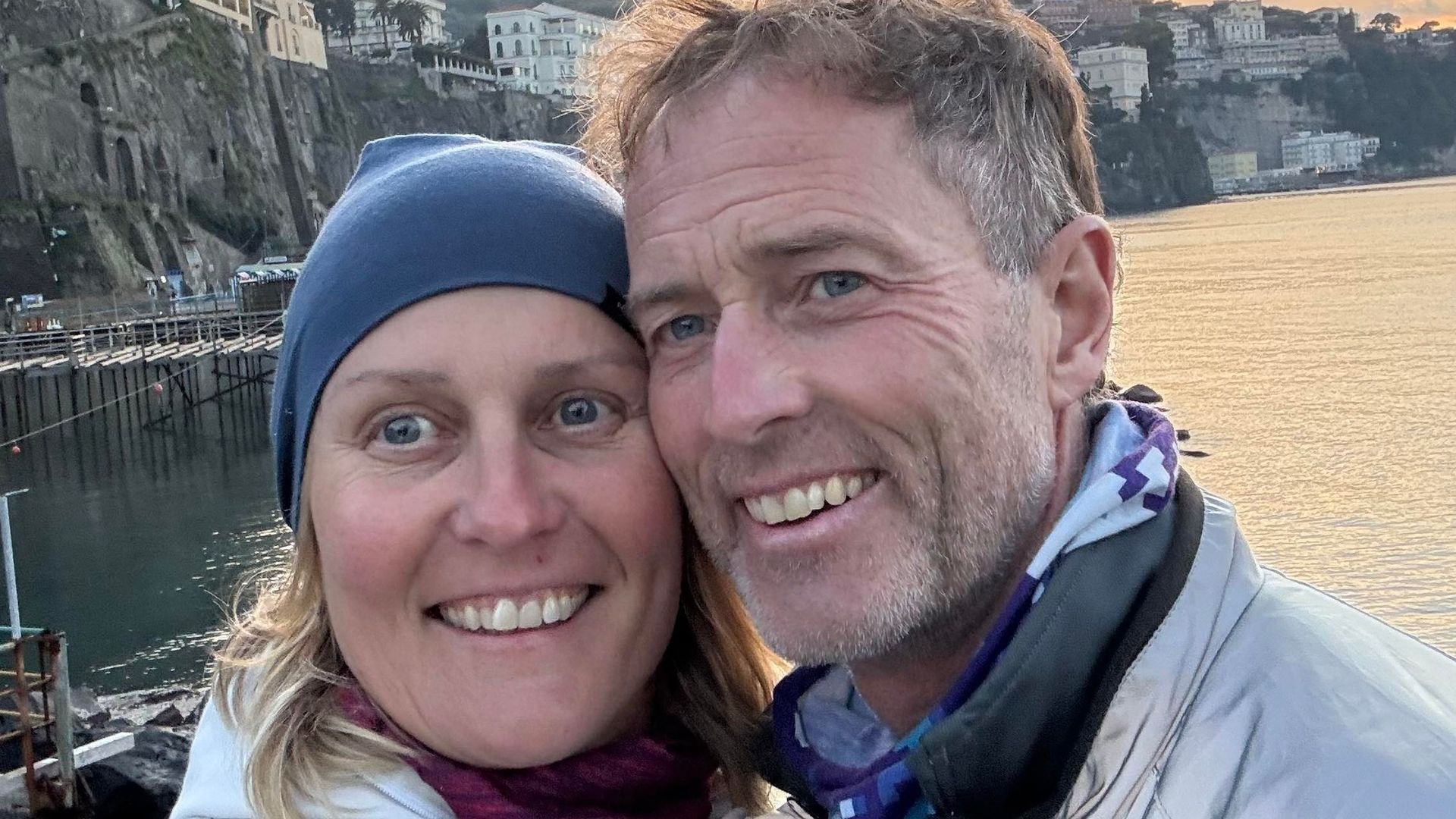
This is the reality for the families of those caught in the gears of international diplomacy. For the loved ones of the British couple currently held within the walls of an Iranian prison, the map of the world has shrunk to the size of a single cell.
Iran is a country of breathtaking beauty and ancient hospitality, a place where the history of human civilization is etched into every stone. Yet, for some, the gates of the country do not lead back to the airport. They lead to Evin. They lead to interrogation rooms. They lead to a void where the rules of the outside world simply cease to function.
The Geography of Disappearance
When we talk about geopolitical tensions, we often use grand, sweeping language. We speak of "bilateral relations," "sanctions," and "diplomatic leverage." These words are cold. They are bloodless. They obscure the fact that at the center of every diplomatic standoff is a human being who probably just wanted to see the ruins of Persepolis or visit a friend.
Consider the mechanics of a vanishing. One moment, you are a traveler with a passport and a return ticket. The next, you are a "subject." You are a bargaining chip in a game where you don't know the stakes and you certainly don't know the score. The British couple at the heart of this recent crisis didn't stumble into a war zone. They weren't soldiers. They were people moving through the world with the assumption that their citizenship acted as a shield.
It turns out the shield is thin.
The Iranian legal system operates on a logic that feels alien to those raised on the principles of habeas corpus. Charges are often vague. Access to legal counsel is a luxury rarely afforded to those accused of "security offenses." For the family back in the UK, the struggle becomes a desperate quest for information. They contact the Foreign Office. They talk to NGOs. They refresh news feeds until their eyes ache. Every time the phone rings, there is a jolt of electricity—a hope that it might be a voice from Tehran—followed by the crushing realization that it is just another telemarketer or a well-meaning friend with no news to give.
The Cost of the Invisible Wall
Why does this happen? To understand the "why," you have to look at the history of "hostage diplomacy." It is a grim, cynical practice. When a nation feels backed into a corner by international pressure or economic sanctions, it looks for points of pressure. Human lives are the ultimate pressure point.
If you lock up a citizen of a powerful nation, you force that nation to the table. You create a headline that the home government cannot ignore. You turn a private citizen’s life into a public commodity. It is a strategy built on the exploitation of empathy. The captors know that the British public cares about its own. They know that a mother or a father pleading on the evening news creates a political problem that must be solved.
The irony is that the more the families scream for justice, the more valuable the "asset" becomes to the captors. It is a cruel paradox. Silence feels like abandonment, but noise increases the price of the ransom—whether that ransom is paid in cash, frozen assets, or the release of prisoners held in the West.
Life Inside the Quiet
Imagine the daily rhythm of a cell. There is the sound of the heavy metal door. The specific jangle of the guard’s keys. The smell of damp stone and the thin, metallic taste of the water. Time loses its linear quality. Without a watch or a window, Wednesday looks exactly like Sunday. You measure the passage of months by the growth of your hair or the fading of a bruise.
Reports from former detainees describe a psychological warfare that is often more damaging than the physical conditions. You are told your country has forgotten you. You are told your spouse has moved on. You are told that if you just sign a confession—any confession—you can go home. The "truth" becomes whatever your interrogator says it is.
The British couple is currently navigating this labyrinth. We do not know if they are together. In many cases, couples are separated, their isolation used as a tool to break their resolve. The fear isn't just about what is happening; it is about the uncertainty of how long it will last. Five days? Five years? The lack of a "sentence" or a clear legal path forward is a form of torture in itself.
The Diplomatic Tightrope
Back in London, the government walks a line so thin it is almost invisible. If they act too aggressively, they risk the safety of the detainees. If they act too slowly, they are accused of weakness and betrayal.
The Foreign, Commonwealth & Development Office (FCDO) often advises against all travel to certain regions, yet people still go. Some go for work, some for family, some for the sheer love of travel. When things go wrong, there is often a quiet undercurrent of victim-blaming in the comments sections of news sites: What did they expect? Why would anyone go there?
This reaction misses the point. The right to travel, to explore, and to connect with other cultures is a fundamental human drive. When a state targets travelers, it isn't just an attack on those individuals; it is an attack on the very idea of a global community. It reinforces borders. It builds walls of fear.
The reality of being "consularly active" on a case like this involves months of back-channel negotiations that never make the papers. It involves "quiet diplomacy." But for a family who hasn't heard a loved one's voice in weeks, "quiet" is the last thing they want. They want shouting. They want action. They want the earth to move.
The Human Residue
What remains when the cameras move on to the next crisis?
The families of the detained live in a state of suspended animation. They keep the bedroom exactly as it was. They save mail that will likely never be read. They become experts in Iranian penal code and the specific geography of Tehran’s northern suburbs. They learn the names of prison governors and the dates of Iranian holidays, looking for any window where a pardon might be granted.
The trauma doesn't end if and when the plane finally touches down at Heathrow. The person who comes back is rarely the same person who left. There is the hyper-vigilance, the guilt of survival, and the strange, haunting silence that follows them home. They have spent months or years as a symbol, a headline, and a chip. Relearning how to just be a person—a husband, a wife, a citizen—is a long, agonizing process.
Right now, somewhere in a facility managed by the Revolutionary Guard, two people are sitting in the dark. They are listening for a sound that isn't a footstep in the hallway. They are wondering if the world still knows they exist.
The silence is the loudest thing in the room. It echoes across the miles, from the concrete cells of Tehran to the quiet streets of a British town where a porch light stays on, night after night, waiting for a car that hasn't arrived yet. The stakes aren't just about a couple in a jail cell. They are about whether we live in a world where a passport is a promise or just a piece of paper that can be torn up at any moment.
Every day without a phone call is a day where that promise feels more like a lie.