Stone does not care about titles. Concrete does not remember a former prime minister. In the damp chill of a high-security cell, time loses its sharp edges and blurs into a monotonous drip, a solitary rhythm measured only by the guard's heavy boots shifting on the corridor outside.
Cells are built to erase people. They are designed to take a man who once commanded a nation of millions, who filled cricket stadiums with cheering crowds, and reduce him to a number, a meal tray slid through a slot, a ghost behind iron bars.
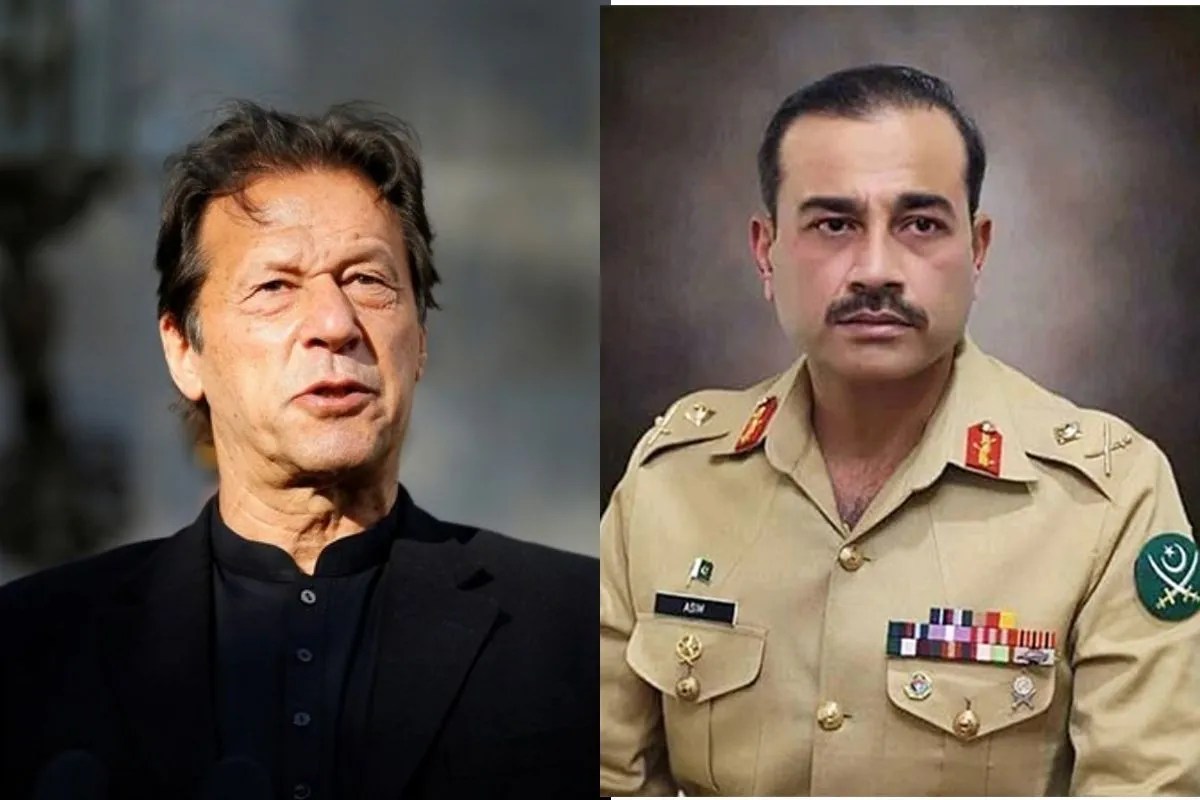
Imran Khan knows this silence intimately.
Thousands of miles away, beyond the borders and the barbed wire, two young men sit in a quiet room. They are sons. They are also exiles of a sort, watching their father’s life slowly evaporate behind reinforced glass. When they look at the news screens flashing from Islamabad, they do not see geopolitical strategy or constitutional maneuvering. They see a cage. They see a father aging by seasons in isolation, denied proper light, denied the basic dignity of human contact.
And then, the quiet breaks. Their fury spills over into the open air.
Kasim and Suleman did not choose this public stage. They grew up largely away from the deafening roar of Pakistani politics, shielded from the daily grind of rallies and tear gas. But silence became impossible. When reports leaked from the prison—whispers of deteriorating health, restricted visits, and a psychological siege meant to break a defiant spirit—the filial bond tore through diplomatic restraint.
Their accusation was direct, heavy, and aimed straight at the top. They pointed their finger directly at Army Chief General Asim Munir.
The sons spoke of systematic cruelty. They spoke of a deliberate attempt to break a man who refuses to yield. In their words, the prison is not merely a correctional facility; it is a slow-motion tragedy playing out in the dark, orchestrated by men in uniform who control the levers of the state.
To understand why this matters, we have to look past the dramatic headlines and examine the architecture of power in Pakistan. Politics here has never been a gentle debate of policies. It is a high-stakes collision between civilian populism and the entrenched might of the military establishment—an institution that has shaped, toppled, or supervised almost every government in the country’s history.
Imran Khan’s trajectory is the ultimate embodiment of this clash. He rose to power on a wave of anti-establishment rhetoric, promising a "Naya Pakistan" free of dynastic corruption. For a time, the generals and the cricketer-turned-politician danced an uneasy tango. But power in Islamabad is a zero-sum game. When the alliance fractured, the fall was catastrophic. Ousted by a vote of no confidence, besieged by a mountain of legal cases ranging from corruption to state secrets, Khan did not fade into quiet retirement. He doubled down. He mobilized millions. He turned his legal battles into a crusade.
And the state responded with the oldest playbook in the book: total containment.
Yet, containment has a strange side effect. It turns a politician into a martyr.
Inside the courtroom makeshift-prison, behind locked doors where journalists are rarely permitted, the man remains defiant. His supporters whisper stories of his routine—reading, exercising, refusing to cut a deal that would exile him from his own country. To his loyalists, every day he spends locked away is proof of the system's bankruptcy. To his detractors, he is a populist demagogue who sowed the wind and is now reaping the whirlwind.
Truth, as always, is contested terrain. The government insists due process is being followed. They point to courts, judges, and statutory procedures. They argue that no one is above the law, least of all a former prime minister accused of subverting state stability.
But procedure without transparency looks a lot like persecution.
When visits from family and lawyers are canceled arbitrarily, when medical teams of choice are barred, when information trickles out like water from a dry stone—suspicion replaces law. The public stops asking if the charges are valid and starts asking about basic humanity.
This is where the sons' outcry changes the chemistry of the narrative.
Politics is an abstraction until you introduce a human face. Bureaucrats can debate clauses and sub-clauses until midnight, but they cannot easily brush aside the raw grief of sons demanding to know if their father will survive the year. By personalizing the struggle, Kasim and Suleman shifted the discourse from dry constitutional theory to an ethical dilemma.
Consider what happens when a state locks up its most popular dissident. Does it achieve stability? Or does it simply build a pressure cooker, sealing the valves tighter with every passing month?
History offers a stern warning. Martyrs are remarkably difficult to govern from a distance. Their absence speaks louder than their speeches ever did. Every empty chair at a political rally, every barred cell door, becomes a monument to what the regime fears most: an idea that refuses to die in captivity.
General Munir and the military leadership sit at the center of this storm. They hold the keys, the authority, and the institutional memory of a state accustomed to having its way. They operate under the belief that containment equals control, that if you turn the volume down low enough, the crowd will eventually go home.
They might be miscalculating.
The anger of sons knows no strategic calculus. It does not negotiate. It does not compromise for a diplomatic exit strategy. It demands justice, and failing that, it demands witness.
Outside the prison walls, supporters gather in clusters, watching the horizon. They hold up posters with faded ink. They whisper updates that may or may not be true. The air is thick with anticipation and a low-burning resentment that refuses to cool down.
Imran Khan sits in his cell, reading by the dim light of a single bulb. He knows the odds. He knows the weight of the steel around him. But he also knows that every day he remains inside, the walls of the regime's legitimacy grow a little thinner, cracked by the very silence they tried to impose upon him.
The sun sets over the Margalla Hills, casting long, bruised shadows across the capital. Somewhere in the dark, a phone rings, carrying a message from London to Islamabad, from sons who will not be quiet, to generals who wish they could turn off the sound.
The night is deep. But the cell is not empty. It is crowded with ghosts, memories, and a stubborn, ticking clock that neither side knows how to stop.