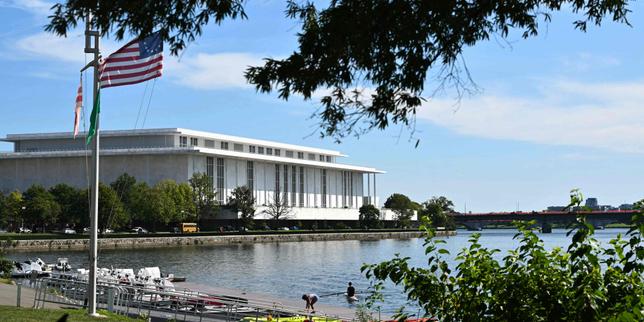
The headlines are weeping over mortar and marble. A federal judge blocks a branding dispute, the board slams the heavy oak doors, and the cultural commentariat loses its collective mind over the immediate closure of the Kennedy Center.
The lazy consensus says this is a tragedy of political vandalism, a dark day for the performing arts, and proof that institutional ego has finally cannibalized our civic sanctuaries.
That narrative is complete nonsense.
I have watched arts funding boards burn eight-figure subsidies on bloated administrative overhead while local independent stages begged for fifty grand to keep the lights on. I have seen prestige institutions turn into mausoleums for aging donor classes, terrified of risk, allergic to friction, and completely divorced from the actual pulse of contemporary creation.
Closing the Kennedy Center doors isn't a cultural collapse. It is an eviction notice for a tenant that stopped paying rent in relevance decades ago.
The Myth Of The Indispensable Monument
Let us strip away the sentimentality. What does a national performing arts center actually do when it operates at peak bureaucracy? It absorbs enormous amounts of capital—both public and private—to curate safe, sanitized prestige for people who can afford three-figure ticket prices and valet parking.
We treat these concrete temples as if culture would evaporate without them. That is historical illiteracy.
Shakespeare didn't need a federally subsidized proscenium arch to shake up Elizabethan England; he needed a cheap wooden O and a restless audience. Punk didn't crawl out of a boardroom; it erupted from sticky basement floors. Real cultural momentum has always bypassed the cathedral and thrived in the market square. When an institutional monolith like the Kennedy Center grinds to a halt, it doesn't kill art. It redirects oxygen back to the ecosystem.
For years, critics have pointed to falling ticket sales among younger demographics and shrugged, blaming TikTok attention spans or the economic squeeze. No. People aren't rejecting live performance; they are rejecting museums of performance. They are tired of paying Broadway prices to watch fossilized revivals of shows their grandparents saw.
When you freeze an institution in amber to protect a brand name or appease a political legacy, you turn art into taxidermy.
The Politics Of The Plaque
Let’s address the elephant in the room, or rather, the name on the facade. The legal battles over whether a political figure's moniker belongs on the limestone miss the entire point of why anyone cares.
This was never about architectural integrity. It was about turf war. It was about legacy protection versus political retaliation, played out with taxpayers as the captive audience. When culture becomes a permanent proxy war for executive ego, the art ceases to matter. The building becomes a giant billboard for partisan scoreboard-watching.
If an institution's survival depends on whose name is engraved above the box office, it has already lost its soul. Culture that survives on political patronage is just propaganda with a velvet rope.
Imagine a scenario where every major metropolitan arts venue had to survive on voluntary box office revenue and grassroots patronage for a single fiscal year. Half of them would collapse by spring. And within six months, a radically leaner, hungrier, more inventive generation of spaces would rise from the ashes. They wouldn't rely on endowment income derived from pharmaceutical portfolios or defense contractors. They would rely on making things people actually care about.
The Real Cost Of Institutional Bloat
Defenders of the status quo love to wave around community outreach programs and educational matinees as proof of civic utility. But look at the balance sheets. The cost-per-seat ratio for these institutional outreach efforts is often grotesque. You could fund twenty independent community theater workshops for the price of one weekend gala in the grand foyer.
We have confused scale with significance. Because a building occupies twelve acres on the Potomac, we assume its output carries twelve acres of cultural weight. In reality, the most vital American music, theater, and dance of the last twenty years happened in lofts in Brooklyn, warehouses in Chicago, and DIY spaces in Austin—places that never saw a federal grant or a board of trustees in black-tie.
When the doors close, the administrative bloat vanishes. The PR machines go silent. And the artists? The ones who were actually making work worth talking about? They were already ignoring the main stage anyway.
Stop Trying To Save The Dinosaur
The panic over this closure reveals a deep-seated paternalism among cultural elites. They genuinely believe that without a centralized, state-adjacent palace of high culture, the citizenry will instantly devolve into a wasteland of unrefined noise.
It is time to let go of the industrial-art complex.
Let the endowment dry up. Let the marble sit quiet. Let the curators find out what it means to hustle for an audience instead of waiting for a congressional appropriation or a billionaire’s bequest.
If the venue reopens tomorrow under a new name, with a new board, and the same old operating model, nothing will have changed except the stationery. If it stays dark, it creates a vacuum—and nature, especially creative nature, abhors a vacuum.
Stop mourning the real estate. Start watching where the artists go when the building locks its doors. That is where the future is being built, and it doesn't need a VIP lounge.