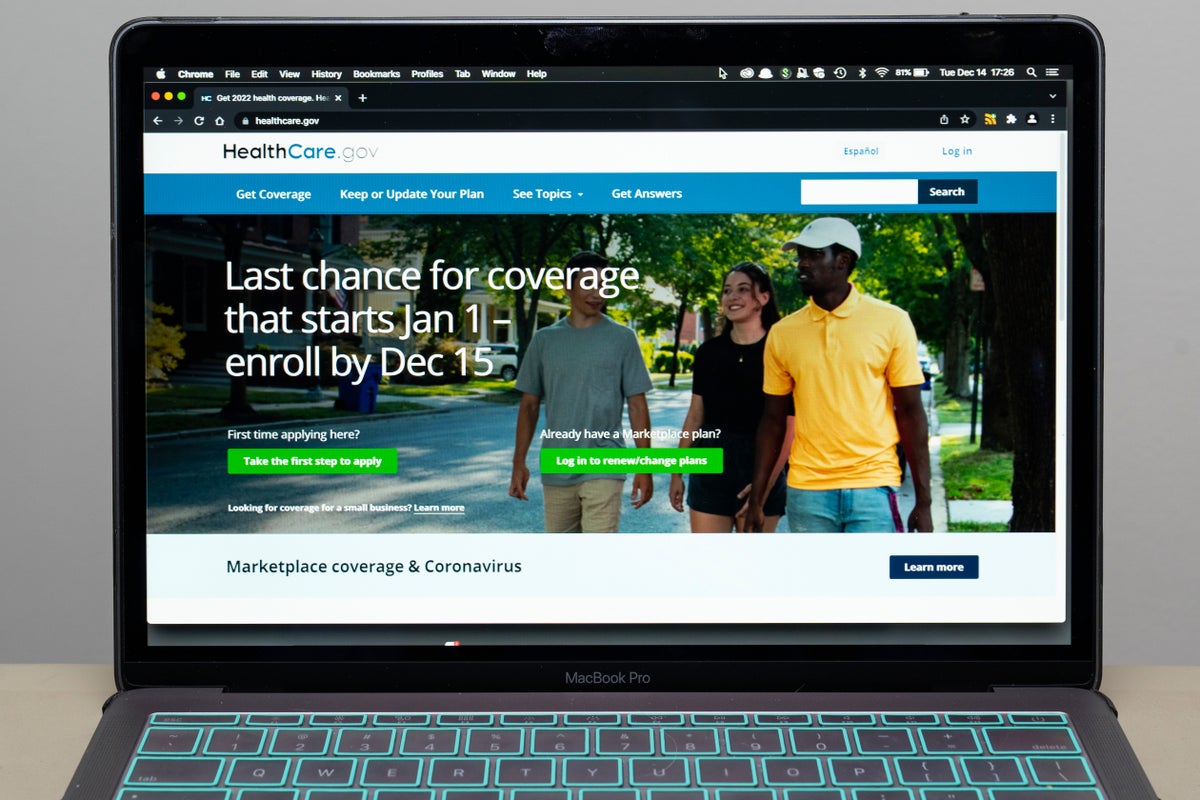
The mainstream media is panic-mongering over the latest federal data showing a drop in Affordable Care Act (ACA) exchange enrollments. They look at a downward-sloping line on a chart and see a crisis. They call it a failure of the safety net, a systemic collapse, or a sign that the individual market is in jeopardy.
They are looking at the wrong metric.
A drop in Obamacare rolls isn't a sign of failure. It is a sign of a correcting labor market and an evaporating chunk of inefficient, federally subsidized waste. For years, I have advised healthcare startups and institutional investors on where capital actually flows in this industry, and the obsession with raw enrollment numbers is the biggest blind spot in health policy.
The lazy consensus assumes more people on government-subsidized exchanges equals a healthier economy. The opposite is true. When ACA enrollment shrinks, it usually means the private sector is doing its job.
The Flawed Premise of the Enrollment Panic
Every analyst weeping over shrinking exchange numbers misses a foundational macroeconomic reality: the ACA individual market is designed to be a transition ramp, not a permanent destination for the American workforce.
When the economy stabilizes and private hiring ticks up, people move off individual exchanges and onto employer-sponsored insurance (ESI). This is exactly how the system was engineered to function. Employer-sponsored plans offer broader networks, better risk pooling, and higher actuarial values than the typical silver or bronze exchange plan.
Crying over fewer people on Obamacare is like a university president crying because graduation rates are too high and the dorms are emptying out. The goal is to move people through the system, not to park them on a government ledger forever.
The Real Data the Media Ignores
Let's look at the mechanics of exchange attrition. When you look at the states experiencing the sharpest declines in ACA enrollment, you find a direct correlation with two distinct factors:
- Medicaid Redetermination Normalization: Following the expiration of pandemic-era continuous enrollment provisions, states began cleaning up their Medicaid rosters. While some individuals transitioned to the ACA exchanges, a massive percentage returned to traditional commercial coverage as regular employment churn stabilized.
- The Rise of Alternative ICHRA Models: Forward-thinking enterprises are adopting Individual Coverage Health Reimbursement Arrangements (ICHRAs). This allows employers to fund defined contributions for employees to buy their own plan. When these workers buy off-exchange or via structured corporate platforms, they frequently drop out of the standard federal enrollment metrics, skewing the public data.
The headline numbers are a mirage. The market is not shrinking; it is evolving.
The Brutal Reality of Exchange Subsidies
We need to talk about what standard ACA plans actually look like for the middle class. The "success" of the exchanges has been propped up artificially by premium tax credits. When those credits shift or when incomes rise slightly above the subsidy thresholds, consumers are hit with a brutal reality check.
An unsubsidized silver plan carries a massive deductible and a narrow, restrictive network that excludes top-tier regional hospital systems.
A Common Misconception: "People are dropping out of Obamacare because they can no longer afford health insurance."
The Correction: People are dropping out because they realized that paying a $600 monthly premium for a plan with an $8,500 deductible is not actual health coverage—it is catastrophic bankruptcy insurance marketed as a wellness product. They are choosing alternative risk arrangements, direct primary care, or taking jobs specifically for the benefit packages.
If a product requires permanent, massive federal price-supports just to keep its customer base from fleeing, the product has a design flaw. The contraction of the market forces insurers to actually compete on price and network quality rather than relying on a captive audience of subsidized buyers.
Dissecting the Public's Flawed Questions
If you look at what people ask about these dropping numbers, the fundamental premises are completely inverted.
"Are people becoming uninsured when they leave the ACA?"
Some are, but the vast majority are shifting to employer groups or alternative structures. The assumption that the ACA is the only line of defense against being uninsured ignores the massive footprint of commercial group health. Group coverage still insures roughly 150 million Americans—dwarfing the individual market. A contraction in the individual market is frequently an expansion in the more stable group market.
"Will premiums skyrocket for the people left behind?"
The traditional insurance death spiral argument dictates that when healthy people leave a risk pool, premiums spike for the sick who remain. But the ACA has built-in risk adjustment mechanisms that redistribute funds from insurers with healthier enrollees to those with sicker ones. A smaller, more concentrated market does not automatically mean a collapsing market; it means a market that is pricing risk accurately instead of masking it with volume.
The Downside of My Stance
To be completely transparent, this market correction does create friction points. For individuals caught in the middle—those earning just enough to lose subsidies but not enough to work for a company offering high-quality ESI—the individual market becomes a financial desert.
When enrollment drops, insurance carriers often respond by narrowing their networks even further to preserve margins. You might still have a plan, but your access to specific specialists will shrink to a microscopically small list. This is the collateral damage of a market finding its true floor.
Stop Funding the Mirage
If you are an executive in the healthcare space, an employer, or a policymaker, you need to alter your strategy immediately. Stop using federal ACA enrollment data as a proxy for the health of the consumer.
- Employers: Stop assuming your workers want standard group plans or that they can just go find a good deal on the exchange. Implement ICHRA frameworks that give them defined contributions to navigate the market with real dollars, which forces carriers to offer competitive, non-exchange products.
- Insurers: Stop designing plans for the subsidized baseline. The gravy train of infinite federal expansion is hitting a wall. Start building high-value, narrow-network products tailored to specific geographic employers rather than hoping for a federal bailout to cover a bloated risk pool.
- Consumers: Stop evaluating health plans based on the premium alone. Look at the total cost of care. If your exchange plan costs $0 due to subsidies but prevents you from seeing a competent doctor without a six-month wait, you are functionally uninsured.
The shrinking of the Obamacare rolls is a feature, not a bug. It is the sound of an over-subsidized, bloated market deflating back to its actual economic utility. The sooner we stop romanticizing raw enrollment numbers, the sooner we can build a healthcare infrastructure that survives on economic value instead of legislative life support.