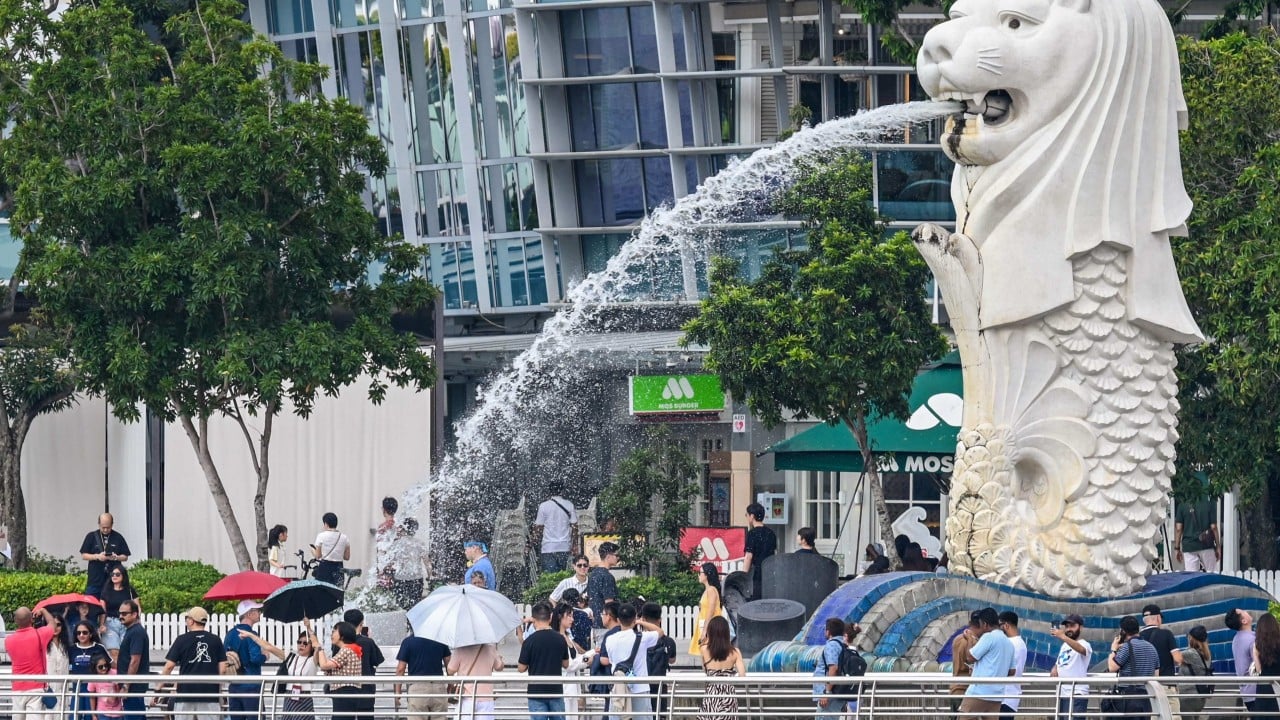
Asia-Pacific now commands over a third of the world’s top financial hubs, a quiet migration of capital and operational footprint that Western institutions continue to underestimate. This is not a temporary cyclical bounce. Real estate data, regional employment shifts, and corporate treasury re-allocations show that cities like Singapore, Tokyo, Sydney, and Hong Kong are no longer just regional satellite offices. They are the new centers of gravity. While traditional Western capitals grapple with regulatory fatigue and office vacancies, these Eastern hubs are absorbing the bulk of global infrastructure spending and wealth management flows.
Understanding this shift requires looking past simple regional pride. It is a structural transformation driven by local liquidity pool depth and rapid regulatory modernization.
The Myth of Western Centralization
For decades, the global financial playbook was simple. London and New York wrote the rules, managed the risk, and held the deep pools of capital. Regional hubs in Asia were viewed essentially as processing centers or distribution nodes for Western financial products.
That framework is dead. The concentration of top-tier financial centers in the Asia-Pacific region reflects a fundamental decoupling from old colonial capital routes. Local markets are generating their own domestic liquidity at a pace that renders Wall Street oversight secondary.
Consider the physical reality of financial centers. Commercial real estate absorption rates tell the true story of institutional commitment. While premium office towers in Manhattan and the City of London face restructuring and historic vacancy rates, prime financial districts in Singapore and Tokyo are seeing constrained supply and rising rents. Multinational banks are not just maintaining footprints here; they are moving core decision-making executives, risk managers, and proprietary trading desks to the region permanently.
This transition goes beyond real estate metrics. It is a response to where global wealth is actually accumulating. Private banking assets under management in Asia are growing faster than in any other jurisdiction. Sovereign wealth funds across the region are no longer passive investors in Western private equity; they are dictating terms, anchoring massive local listings, and building internal asset management capabilities that bypass traditional Western intermediaries.
The Singapore Tokyo Bifurcation
The rise of the region is often discussed as a monolith. This is a mistake that blinds analysts to the specific competitive dynamics at play. The growth is concentrated in distinct hubs that serve completely different financial ecosystems.
The Wealth Safe Haven
Singapore has positioned itself as the undisputed capital for private wealth and corporate treasury operations in the Eastern hemisphere. Its success does not stem from deregulation. It comes from a highly predictable legal framework and proactive regulatory alignment with family offices.
The monetary authority there treats financial policy as an economic development tool rather than a purely punitive mechanism. By creating clear tax structures for variable capital companies, they attracted billions in wealth that previously sat in Switzerland or the Cayman Islands. It is an operational reality: wealth desires stability and predictability above all else.
The Institutional Titan
Tokyo presents an entirely different mechanism of growth. For years, the Japanese capital was dismissed by foreign funds due to language barriers, complex tax codes, and a perceived lack of agility. That perspective is dangerously outdated.
Corporate governance reforms initiated over the last decade have finally reached a tipping point. Japanese companies are unlocking massive balance sheet value through dividend hikes and share buybacks, turning the Tokyo Stock Exchange into an institutional magnet. At the same time, the government has established special business zones designed specifically to attract foreign asset managers by offering administrative services entirely in English and simplifying entry requirements. Tokyo is leveraging its massive domestic savings pool to reclaim its status as a primary global capital market.
The Resilience of the Hong Kong Pipeline
No discussion of regional financial hubs can ignore the intense scrutiny surrounding Hong Kong. Critics have spent years predicting its irrelevance, pointing to geopolitical friction and structural changes. Those predictions miss how international capital flows actually work.
Hong Kong remains an irreplaceable mechanism for the global financial system. It serves as the primary bridge between mainland China’s immense domestic wealth and international markets. The unique "Connect" schemes—allowing cross-border trading in stocks, bonds, and wealth management products—cannot be replicated easily by other jurisdictions.
+-------------------------------------------------------------+
|               GLOBAL CAPITAL FLOW CHANNELS                  |
+-------------------------------------------------------------+
|                                                             |
|   [International Investors]     [Mainland Chinese Capital]  |
|               │                             │               |
|               ▼                             ▼               |
|       ┌───────────────┐             ┌───────────────┐       |
|       │  Stock / Bond │             │ Wealth Connect│       |
|       │    Connect    │             │    Schemes    │       |
|       └───────┬───────┘             └───────┬───────┘       |
|               │                             │               |
|               └───────► [HONG KONG] ◄───────┘               |
|                          (The Bridge)                       |
|                               │                             |
|                               ▼                             |
|                  [Global Financial System]                  |
+-------------------------------------------------------------+
The data shows that international investment banks maintain massive capital allocations in the city. Why? Because the legal system for commercial contracts remains distinct, clear, and highly efficient for resolving cross-border disputes. It is a functional node that the global financial machine requires to interact with the world's second-largest economy. The nature of its business has shifted from a general regional headquarters to a specialized, hyper-efficient capital pipeline, but its scale remains formidable.
The Overlooked Infrastructure Frontier
Beyond the major headlines of wealth management and stock exchanges lies the critical infrastructure of finance: clearing houses, data centers, and subsea cable networks. This is where the long-term dominance of the Asia-Pacific region is being cemented.
Financial centers do not exist in a vacuum; they exist where the data moves fastest. Significant investments in regional financial infrastructure have transformed how cross-border payments are settled. Real-time gross settlement systems across Southeast Asia are now interconnected, allowing for instant retail and wholesale fund transfers without routing through traditional Western correspondent banks.
This reduces transaction friction and significantly lowers systemic risk. It also means the region is building an independent financial architecture. This architecture is increasingly immune to external economic shocks or policy decisions made in Washington or Brussels. Western institutions that fail to integrate directly into these localized networks risk being priced out of the market entirely.
Talent Relocation and the New Brain Drain
A financial center is only as good as the minds operating its trading desks and compliance departments. Historically, the best and brightest from universities in Sydney, Mumbai, and Singapore migrated to London or Wall Street to build their careers. That talent pipeline has reversed direction.
Strict immigration policies, rising costs of living, and political instability in Western nations have made traditional financial capitals far less attractive. Meanwhile, regional hubs offer competitive tax rates, safe urban environments, and, most importantly, direct exposure to high-growth markets.
The quality of local talent within these markets has also matured. Regional universities are producing quantitative analysts, financial engineers, and risk experts who understand local market nuances better than any imported Western executive ever could. This eliminates the old reliance on expatriate managers and creates a self-sustaining ecosystem of local leadership.
The Sovereign Debt and Currency Realignment
The underlying driver of this macroeconomic shift is the changing nature of sovereign debt and currency reserves. For decades, the US dollar and the Euro were the unquestioned anchors of global treasury portfolios. While they still dominate global trade, central banks throughout Asia are actively diversifying their holdings.
Local currency bond markets have grown significantly in depth and liquidity. Foreign institutional investors are allocating larger percentages of their fixed-income portfolios to government and corporate debt issued in Singapore dollars, Australian dollars, and Japanese yen. This institutional shift stabilizes local markets during periods of global volatility and provides a domestic cushion that did not exist during previous economic crises.
This deepening of the debt markets allows regional corporations to raise massive amounts of capital locally. They no longer need to undergo expensive, regulatory-heavy listings or bond issuances in New York or London. The entire capital formation lifecycle—from venture capital seed rounds to massive initial public offerings and corporate bond issuance—now takes place entirely within the region.
The Vulnerabilities Western Analysts Focus On
Western commentary often focuses heavily on risks within Asia-Pacific finance, primarily pointing to real estate debt and regulatory fragmentation. These are legitimate areas of concern, but they are frequently misdiagnosed.
The fragmentation of regulations across different jurisdictions does present a compliance challenge for multinational firms. Managing operations across Singapore's common-law framework, Japan's civil law system, and Hong Kong's specialized legal structure requires significant resources.
However, this diversity is also a structural strength. Unlike Europe, where a single regulatory decision in Brussels can impact the entire continent, the financial centers of Asia operate independently. If one hub faces economic headwinds or policy missteps, capital can easily reallocate to another node within the same geographic region. This internal redundancy protects the broader regional ecosystem from systemic collapse.
The Immediate Imperative for Global Boards
The reality facing international financial institutions is stark. Treating Asia-Pacific operations as a regional growth play or a secondary line item on an annual report is an obsolete strategy. The capital pools, infrastructure, and regulatory structures are already in place to challenge Western dominance permanently.
The metric of success is no longer how effectively a firm transfers Western financial products into Eastern markets. The real test is how deeply an institution integrates into the local infrastructure, talent pools, and regulatory environments of these rising hubs. The balance of financial power has moved, and those who treat it as a future possibility rather than a present reality are already losing ground.