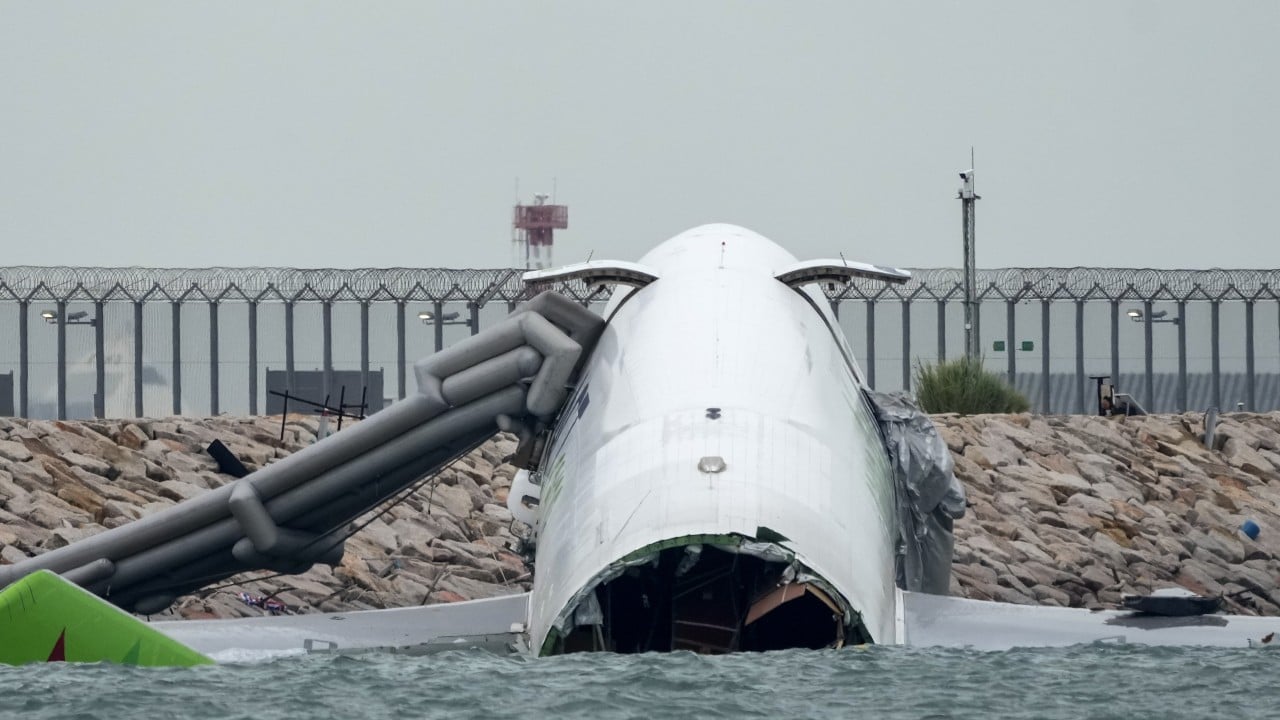
A cargo aircraft does not simply fall out of the sky without leaving an intricate paper trail of mechanical strain, human hesitation, and regulatory blind spots. When investigators focus intensely on cockpit control movement following a fatal cargo plane runway crash, they are chasing the most volatile variable in modern aviation. The physical manipulation of throttles, control columns, and rudder pedals during critical phases of flight holds the immediate key to disaster or survival. Yet, treating control inputs as the sole culprit is a dangerous oversimplification that ignores the systemic pressures governing commercial freight operations.
Commercial freight operates in a parallel universe compared to passenger aviation. Old airframes patched together for cargo conversion, exhausted flight crews pushing statutory duty limits, and tight turnaround schedules create an invisible hazard profile. When an accident occurs on a runway during takeoff or landing, the instinct of safety boards is to look straight at the pilot's hands. Did they pull back too soon? Did they retard the throttles in panic? Did a control surface jam, or did human input override an automated recovery system?
To understand the investigation, one must look at how flight data recorders and cockpit voice recorders capture these moments. Modern digital flight data recorders track hundreds of parameters per second. Every micro-movement of the control column leaves a digital footprint. When crash investigators examine these parameters, they are reconstructing a silent dialogue between human physiology and hydraulic resistance. If a control movement is abrupt, it often signals an instinctive reaction to an unannounced emergency, such as a sudden asymmetric thrust loss or an uncommanded pitch-up. If the movement is absent or delayed, the inquiry shifts toward spatial disorientation, fatigue, or interface design flaws that hid critical system states from the crew.
Consider the physical reality of a heavy cargo transport rolling down a wet runway at maximum takeoff weight. Momentum is a relentless adversary. If an engine fails at V1 speed—the critical decision point where stopping is no longer guaranteed—the pilot must execute a precise, measured rudder input to maintain directional control. A fraction of a second of hesitation or an overcorrection can send a multi-ton aircraft veering off the concrete. Investigators peeling back the layers of a cockpit control movement probe are essentially asking whether the human brain could reasonably process the chaotic sensory inputs delivered in those final seconds.
The regulatory framework governing cargo operations requires urgent scrutiny. Freight carriers frequently operate under different economic pressures and oversight intensities than major passenger airlines. Experienced captains often find themselves flying demanding night shifts with minimal ground support, navigating high-density airports under marginal weather conditions. When fatigue compounds with an unexpected mechanical anomaly, the margin for error vanishes entirely. Focusing entirely on what the pilot did with the yoke obscures the foundational question of why they were placed in an unrecoverable scenario in the first place.
Flight deck ergonomics and automation dependency further complicate these investigations. Modern transport category aircraft rely heavily on auto-flight systems and envelope protection logic. When an automation anomaly occurs, the transition from passive monitoring to manual control is notoriously difficult. If the control inputs recorded in the final moments appear erratic, it frequently reflects a confused pilot wrestling with flight management computers that are failing to communicate their operational mode clearly. The investigation must dissect not just the physical position of the controls, but the software logic and sensor feeds that preceded those movements.
As safety boards sift through the fragmented metal and charred wiring of the wreckage, the analysis of cockpit control movement will provide vital technical clues. But finding the truth demands looking past the immediate mechanical actions in the flight deck. It requires confronting the operational realities of an industry that routinely asks exhausted crews to perform high-stakes acrobatics on the margins of safety, long before the wheels ever leave the ground.


