The smoke that rose over Golders Green in March did not smell like a geopolitical crisis. It smelled like burning rubber, melted plastic, and the sickening tang of accelerating gasoline. When four medical ambulances belonging to the Hatzola Jewish charity exploded into flames, the shockwaves shattered the windows of nearby brick homes. For the people living on that north London street, it was not an abstract dispatch from a distant conflict. It was an immediate terror.
We have a habit of viewing international diplomacy as a series of sterile press releases exchanged between distant capitals. Leaders meet in wood-paneled rooms. Treaties are signed. Flags are positioned carefully for the cameras. But foreign policy does not stay inside the embassy walls. It trickles down, leaks out, and eventually finds its way onto the asphalt of quiet neighborhoods.
Consider the calculation of a proxy war. A state thousands of miles away decides to project its power. It does not send troops in uniform. Instead, it operates through a shifting network of ghost organizations and hired criminals who carry out the physical acts of violence. The Islamic Movement of Companions of the Right (IMCR)—a group that suddenly materialized online earlier this year—quickly claimed responsibility for seven separate attacks across Britain, including the ambulance fires and assaults on Persian-language media hubs.
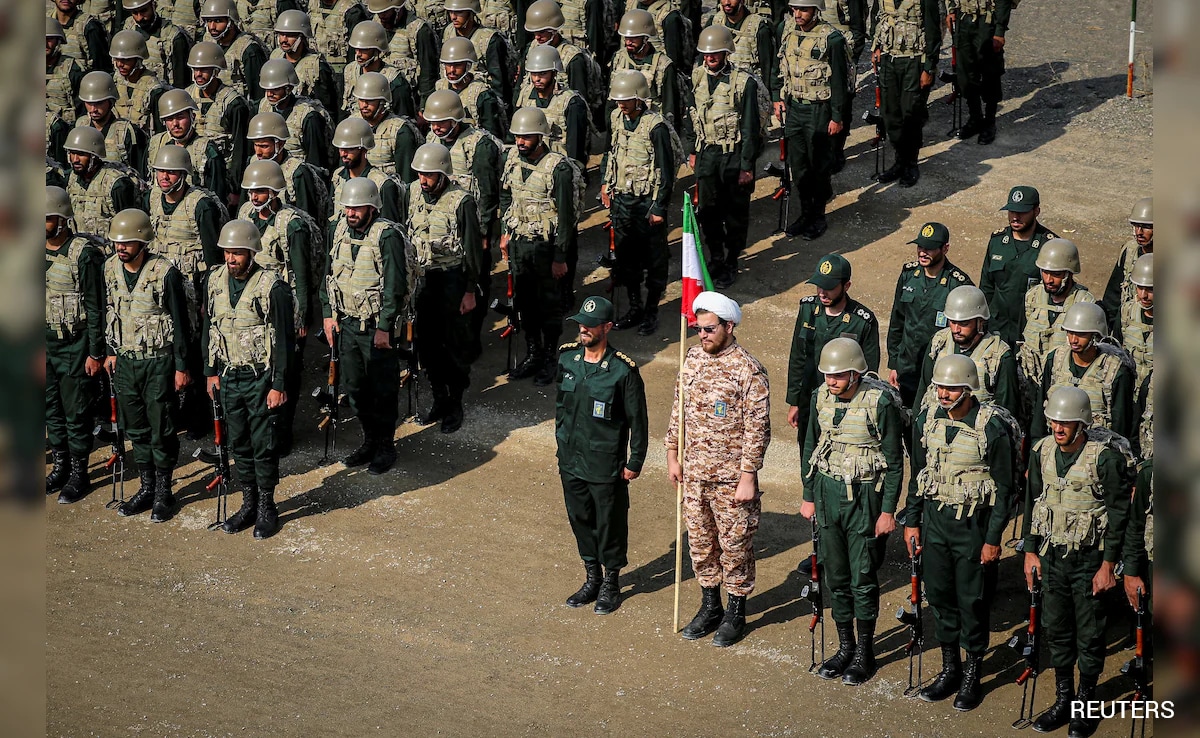
British intelligence officials soon drew a straight line from these local fires back to the Quds Force, the elite overseas operations arm of Iran’s Islamic Revolutionary Guard Corps (IRGC).
The response from Downing Street was swift. Prime Minister Keir Starmer announced a sweeping ban under the newly enacted National Security Act. The law effectively outlaws any form of support, funding, or assistance for the IRGC, the IMCR, and Russia’s GRU Volunteer Corps. Anyone caught providing aid to these groups now faces up to 14 years in a British prison. For those caught executing sabotage or arson on their behalf, the penalty is life.
Tehran reacted with predictable fury. The Iranian Foreign Ministry issued a blistering condemnation, labeling the British legislation a "hostile act" that is unjustified, irresponsible, and a direct violation of international law. They summoned the British ambassador to register their outrage.
From a diplomatic standpoint, the anger makes sense. The IRGC is not an isolated militia; it is a foundational pillar of the Iranian state apparatus, answering directly to the Supreme Leader. Banning it in the UK is a massive escalation that threatens to freeze whatever fragile lines of communication remained between the two nations.
But look closer at how these modern networks operate. The real danger isn't always an ideological zealot slipping through airport security. Often, it is much more mundane.
Intelligence reports reveal that hostile states are increasingly outsourcing their violence to local criminal networks. They find vulnerable people online, offer cash, and hand over coordinates. A petty thief becomes an operative. A local arsonist becomes a tool of foreign intelligence. By designating the IRGC under state threats legislation, British prosecutors no longer have to painstakingly prove a direct, unbroken chain of command back to a government building in Tehran. They only need to prove that the individual was working to benefit the banned organization. The legal shield has been stripped away.
The atmosphere in London has shifted. A few weeks ago, two men were jailed for the brutal stabbing of Pouria Zeraati, a journalist for the dissident television channel Iran International, outside his home. The judge explicitly noted the attack was ordered at the behest of the Iranian state.
Security is never truly measured in the text of a statute. It is felt in the simple freedom of a journalist walking to his car without looking over his shoulder, or a community volunteer parking an ambulance without checking the undercarriage for a device.
The diplomatic back-and-forth will dominate the headlines for days. Ambassadors will argue, statements will be parsed, and geopolitical analysts will debate the long-term impact on Middle Eastern relations. But out on the pavements of London, the stakes remain entirely human. The city is trying to scrub the soot off its streets and reclaim the quiet safety that a distant government tried to burn away.

