The dirt road outside Mbandaka does not rumble; it swallows. When the rain falls in the western reaches of the Democratic Republic of the Congo, the orange clay turns into a thick, gripping paste that can trap a four-wheel-drive truck for days.
Imagine trying to outrun a killer on foot through that mud. If you found value in this post, you might want to check out: this related article.
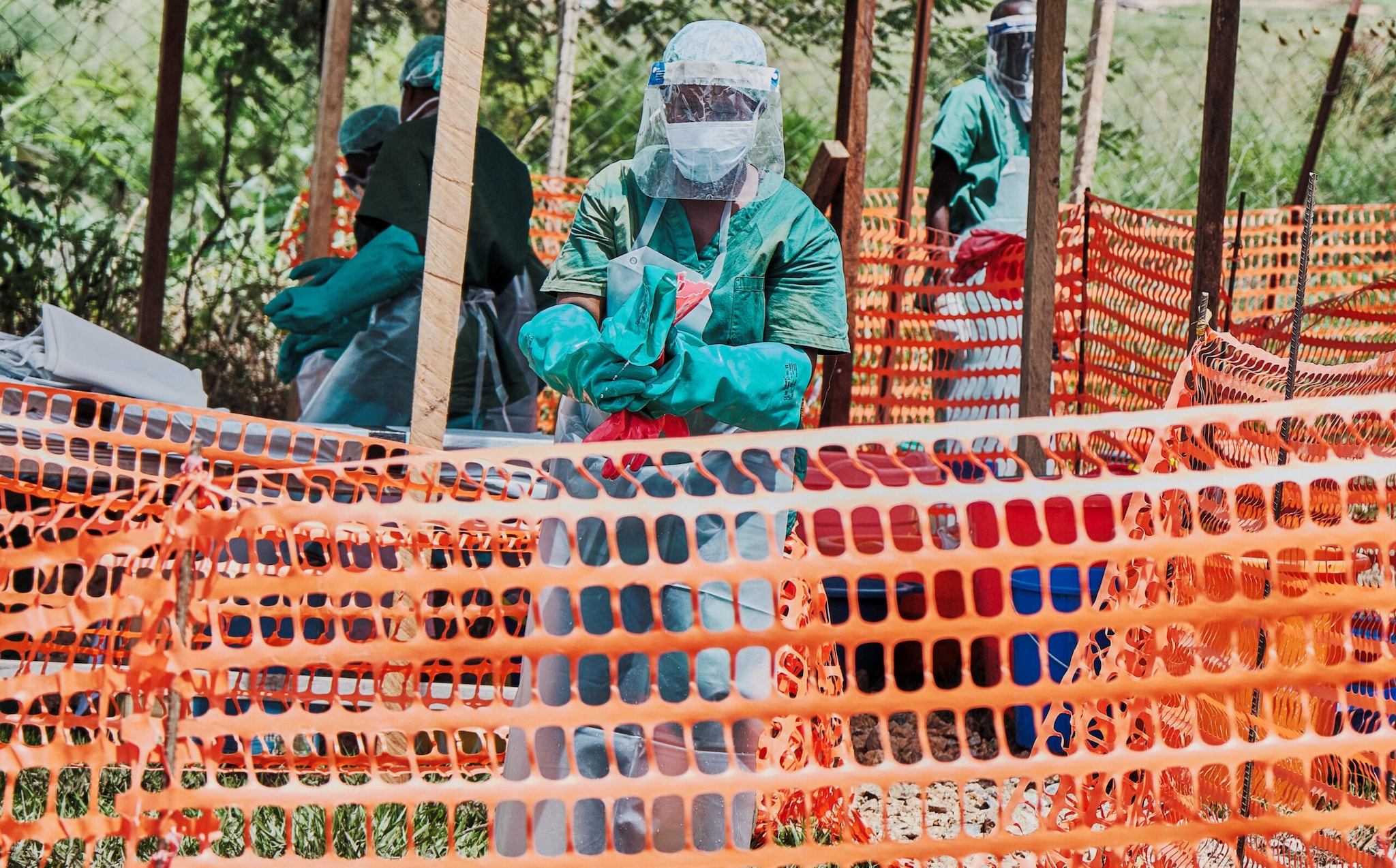
That is the reality facing epidemiologists right now. News reports from the ground offer cold, sterile headlines about widening footprints and racing against time. They speak of numbers—dozens of cases here, a handful of fatalities there. But numbers are an abstraction. They do not capture the sound of a plastic tarp rustling in an isolation ward, or the specific, heavy silence that settles over a village when the traditional greetings stop because people are suddenly afraid to touch each other’s hands.
The current Ebola outbreak in the Congo is expanding. That is the clinical fact. The truth, however, is much more terrifying: we are tracking an invisible enemy with broken radar. For another angle on this event, see the recent update from Psychology Today.
The Friction of the Terrain
To understand why this virus is outpacing the world’s best scientific minds, you have to look at the map through the eyes of a local health worker. Let us call him Jean. He is a hypothetical composite of the dozens of surveillance officers currently risking their lives on the ground, but his daily routine is entirely real.
Jean wakes up at dawn. He handles a motorcycle that has been repaired with twine and wire more times than he can count. His mission is to track down a single woman who attended a funeral in a remote village three days ago and has since disappeared into the dense canopy of the Equateur province.
The funeral is the ignition point. In many traditional ceremonies, mourning involves washing and preparing the body of the deceased. When Ebola is the cause of death, the viral load in the body is at its absolute peak. A single touch can pass the pathogen to a dozen relatives.
Jean drives until the road ends. Then he walks. He carries a cooler containing blood samples preserved in ice packs that are rapidly melting in the tropical heat. If he finds the woman, he must convince a terrified, skeptical community to let him draw her blood. If he fails, she returns to her family, the virus replicates undetected, and the footprint expands by another fifty miles.
This is not a failure of medicine. We have highly effective vaccines now. We have experimental treatments that boast impressive survival rates when administered early. The crisis is a failure of friction. The virus moves at the speed of human flight and panic; the defense moves at the speed of a man walking through mud.
The Deficit of Trust
Public health officials often talk about "surveillance gaps" and "containment strategies." These terms obscure the psychological warfare happening in these villages.
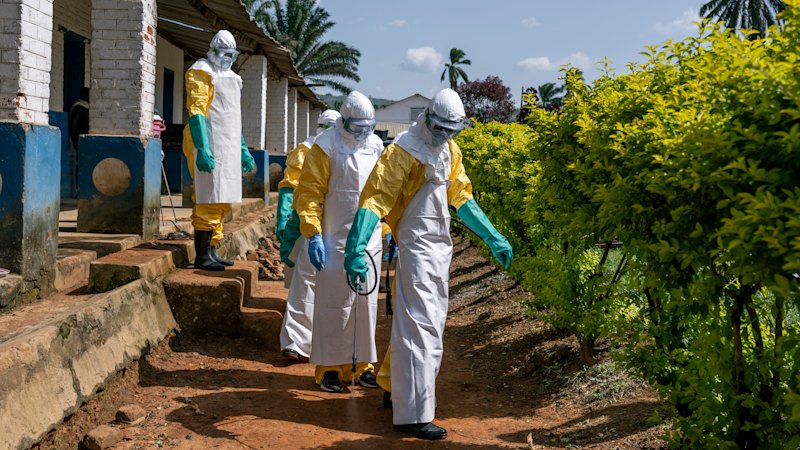
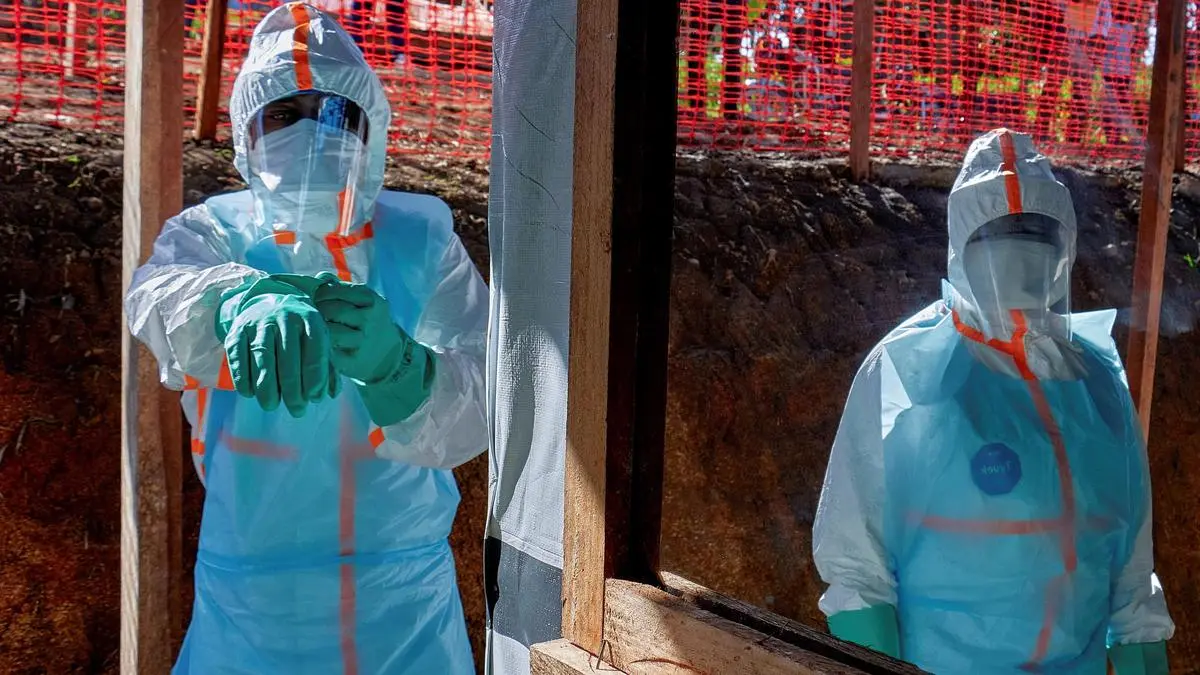
During previous outbreaks, international teams arrived in white SUVs, wearing terrifying, pressurized space suits. They took away the sick, who often died alone in sterile tents, away from their ancestors. To a villager in a remote community, the response looked entirely destructive. Rumors spread. Some believed the aid workers brought the disease. Others believed the isolation centers were harvesting organs.
When trust breaks down, science becomes useless.
Consider what happens next: a man develops a fever. He knows that if he goes to the clinic, he will be isolated. His family will be quarantined, unable to farm or hunt, facing immediate starvation. So, he hides. He takes paracetamol to break the fever, boards a crowded wooden canoe on the Congo River, and travels to a major urban market to sell his goods.
By the time he collapses, he has exposed hundreds of people along the river network.
The official statistics will record him as a single data point. They will say the epidemic has reached a new zone. What they will omit is the sheer weight of the economic desperation that drove him onto that boat in the first place. You cannot isolate a disease when isolation means the economic death of a family.
The Limit of Our Vision
Right now, the international community is trying to gauge the true scale of the epidemic. The honest answer from the field is that nobody knows how large it truly is.
We are relying on passive surveillance. That means we only know about the cases that show up at a clinic or die visibly enough to trigger a report. In a region where malaria, typhoid, and cholera are completely commonplace, an early-stage Ebola infection looks identical to everyday illness. A mother assumes her child has a standard fever. By the time the hemorrhagic symptoms appear, it is often too late for the child, and the rest of the household is already infected.
The math of an outbreak is brutal. If the transmission rate stays even slightly above one—meaning each sick person infects more than one other person—the curve bends upward into disaster. To drop that number below one, you need absolute clarity. You need to know exactly who is sick, who they talked to, and where they went.
Right now, the data is full of black holes. Whole villages are cut off by militia violence or sheer geographic isolation. Health teams cannot enter safely. In those zones, the virus burns through families in total darkness, completely uncounted by the World Health Organization graphs.
The Connected World
It is easy for someone sitting in a comfortable apartment in London or New York to read about Equateur province and view it as a distant, tragic curiosity. That view is a luxury of the past.
The Congo River is a superhighway. It feeds into Kinshasa, a mega-city of over fifteen million people. From Kinshasa, flights leave daily for Paris, Brussels, and Johannesburg. The distance between a mud-bound village in the central African rainforest and a major international airport hub is exactly the time it takes for an incubated virus to show its first symptoms.
The race in the Congo is not a localized humanitarian effort. It is a defense of the global collective health.
True security will not be achieved by pouring millions of dollars into emergency response only after the bodies start piling up. It happens by building up local clinics so they have working thermometers and clean gloves on a random Tuesday in three years when there is no crisis. It happens by paying local community leaders to be the eyes and ears of the health system, treating them as partners rather than subjects of an intervention.
The rain continues to fall in Mbandaka. Somewhere in the forest, a family is making a choice right now whether to report a dying relative or bury them in secret beneath the palm trees. Their decision, driven by fear or faith or simple poverty, will alter the trajectory of this entire event. The true scale of the epidemic is not written in the lab reports; it is being decided in those quiet, desperate rooms where the world is waiting to see if anyone is truly listening.