Walls do not just keep people out; they keep the truth in.
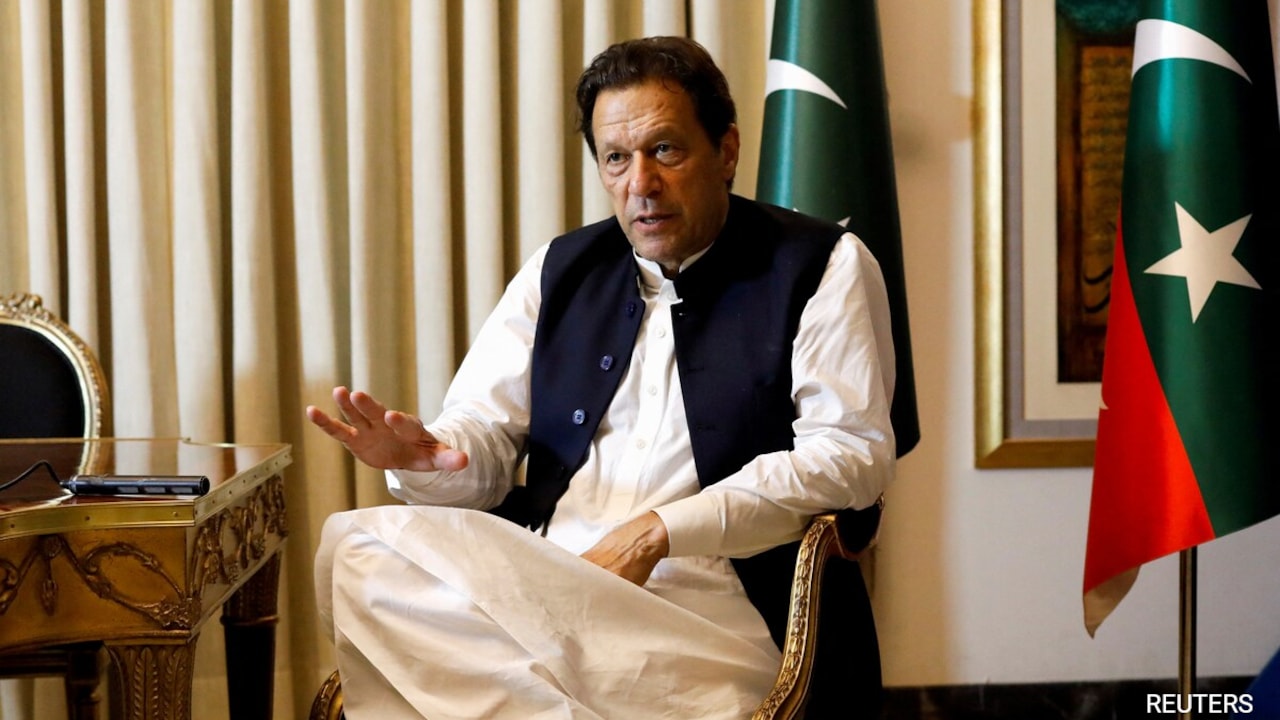
Imagine stone thick enough to swallow sound. Imagine steel bars rusted by humidity and time. Inside a high-security enclosure, far from the chaotic pulse of the streets of Islamabad or Lahore, a solitary figure sits. Imran Khan, former prime minister, former cricket captain, a man whose very name once drew millions into the streets, now exists in a state of carefully managed isolation. You might also find this similar story interesting: Hydraulic Failure of the Twin Cities Urban Flooding and Drainage Deficits.
And then, a quiet panic ripples through the legal corridors.
It is not about an acquittal. It is not about the grand political chess matches played across television screens and parliamentary floors. It is about something startlingly fragile. An eye. As extensively documented in recent reports by The New York Times, the effects are worth noting.
Jail authorities step before the court, their voices measured, offering assurances that sound both rehearsed and desperate. The eye condition, they claim, is almost normal.
Almost.
That single word hangs in the courtroom air like a shroud. In the architecture of authoritarian control, "almost" is a linguistic shield. It is a buffer against accountability. It suggests that things could be worse, as if proximity to catastrophe should be counted as a mercy.
To understand why a medical update about a single eye can rattle a nation, one must understand the weight of symbols. Imran Khan is not merely an aging politician confined by legal rulings. He is an idea. For millions of supporters, his physical body represents the endurance of their own political defiance. When that body falters, the anxiety is not just personal; it is systemic.
Consider what happens when a government detains a charismatic leader. The state inherits a profound burden. It must ensure that the prisoner does not become a martyr. Every cough, every ache, and every whispered rumor of neglect is magnified a thousandfold by a public starved for transparency.
Weeks prior, whispers began to leak. Solitary confinement takes a toll that goes beyond the psychological. Deprived of adequate sunlight, forced into sterile routines, and subjected to the quiet violence of prolonged isolation, the human body begins to protest. Reports surfaced regarding medical concerns, specifically targeting his vision—a swelling, an irritation, a deterioration that demanded urgent specialist intervention rather than the casual dismissals of prison physicians.
The defense roared. Families demanded access. Independent doctors pushed for evaluations. The pressure mounted until the authorities had no choice but to speak.
Enter the courtroom filing.
The officials stood before the bench and delivered their bureaucratic poetry. They spoke of check-ups, of eye drops, of conditions that were stabilizing, improving, returning to a baseline of health. Almost normal.
One can picture the scene. The lawyers in their black robes, leaning forward, weighing syllables the way a chemist weighs powder. The judges, caught between executive pressure and the undeniable duty of judicial oversight. And behind it all, the phantom presence of the prisoner himself, absent from the room yet dominating every breath taken within it.
Why does vision matter so much in this context?
Vision is agency. It is the ability to read documents, to see the face of a visitor, to bear witness to the world that continues to spin outside the concrete perimeter. To threaten a man's sight—even through passive neglect—is to chip away at his autonomy. It is a slow, silent erosion.
The authorities know this. They know that if anything catastrophic were to happen to Khan's health while in their custody, the political fallout would be catastrophic. Hence the preemptive reassurance. Hence the insistence that everything is fine. Almost fine.
Yet, trust is a currency that Pakistan's judicial and penal systems spent long ago. When institutions lack credibility, even a routine medical bulletin is interrogated like a cipher. Did the specialists actually examine him? Were proper diagnostic tools used? Or is this merely a defensive legal maneuver designed to stave off public outrage?
We have seen this script before in history. Whenever power locks away its chief rival, the narrative splits into two parallel universes. In the official universe, the prisoner is treated with scrupulous fairness, receiving world-class care and enjoying comfortable accommodations. In the unofficial universe—fueled by rumor, WhatsApp voice notes, and quiet desperation—the prisoner is wasting away, broken by malice and indifference.
The truth, as it usually does, likely limps somewhere in the middle. The prison system is notoriously harsh, bureaucratic, and ill-equipped for high-profile political detainees. Medical care is often reactive rather than preventative. When an ailment flares up, it is managed through the lens of political risk management rather than medical ethics.
So the eye condition improves, or so they say. The inflammation recedes under the influence of prescribed drops. The crisis is averted on paper.
But the larger crisis remains entirely unsolved.
A nation cannot heal while its political architecture is built on mutual suspicion. Every court hearing regarding a medical check-up is a symptom of a deeper fracture. It exposes a system where even basic human empathy has been transactionalized. We are left watching a drama played out in micro-units—a single eye, a single medical report, a single judge's ruling—while the fate of a country's democratic soul hangs in the balance.
Outside the courtroom, the streets remain quiet, but it is the quiet before a storm or the quiet of exhaustion. People go about their daily struggles with inflation, electricity bills, and the daily grind of survival. They glance at the headlines, register the phrase almost normal, and shake their heads.
They know that in politics, as in health, almost normal is a fragile thing. It can shatter at the slightest pressure.
The cell door remains locked. The guards stand post. Inside, a man blinks against the dim light, adjusting to a world he no longer controls. And outside, a watching nation waits to see if the light will hold, or if the shadows will finally take everything.


