The corridors of power in Tehran do not echo with raised voices. They whisper. They hum with the quiet, terrifying friction of absolute stakes. When a structure built over decades begins to fracture, the loudest sounds are often the ones that are entirely missing. Silence becomes a political statement.
A son missing his father’s final rites is a tragedy in any ordinary family. In the high-stakes theater of geopolitical survival, it is a seismic shift.
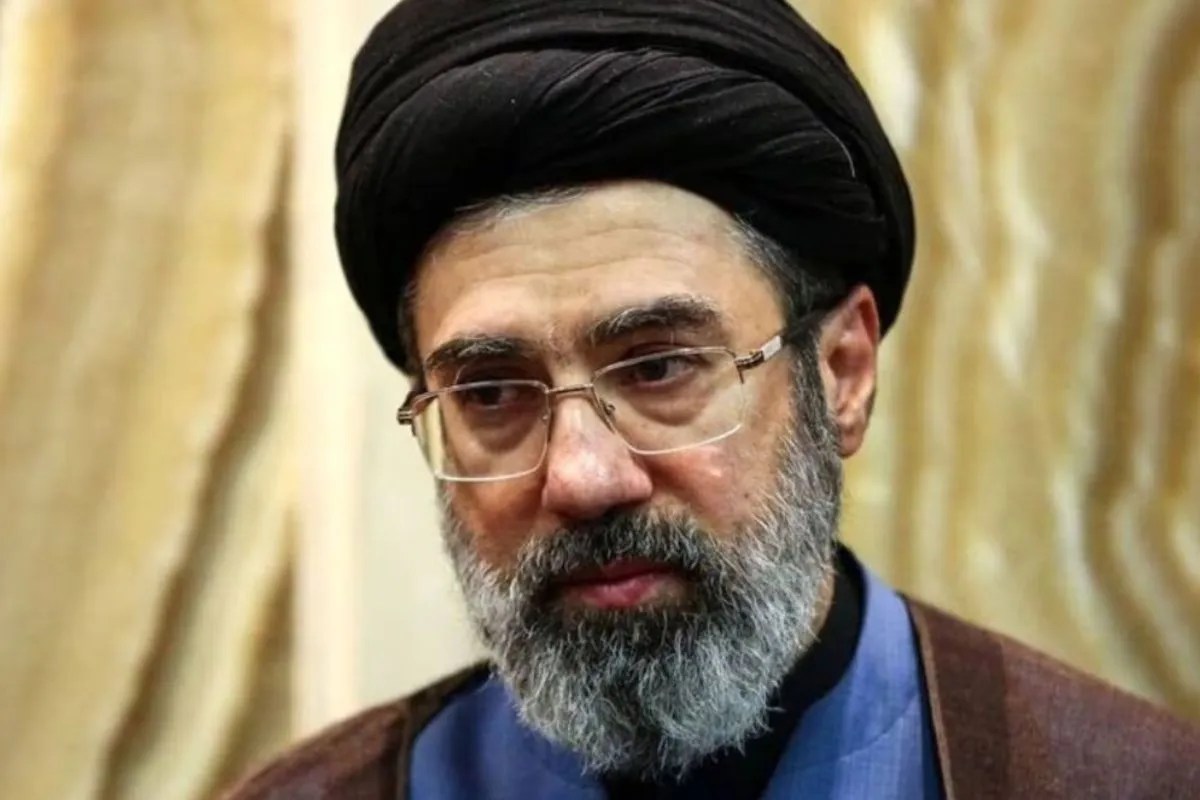
Reports filtering through the heavy fog of state monitoring revealed a striking reality: Mojtaba Khamenei would not be attending his father's funeral. To understand why a man poised at the very edge of ultimate authority would choose absence over presence, one must look past the dry headlines. One must look into the calculus of survival.
Power is a heavy fabric. It smothers those who wear it carelessly. For years, the whisper network across the Middle East pointed to Mojtaba as the natural heir, the quiet operator working behind the velvet curtains of the theological state. He was the figure managing the security apparatus, the one trusted with the deepest secrets of an embattled regime. Yet, when the moment of ultimate symbolic transition arrived, the seat reserved for the son sat empty.
Consider the optics of an empire in transition. A funeral is not merely an occasion for grief; it is a live broadcast of continuity. It tells the public, the rivals, and the international community exactly who holds the reins next. By stepping out of the frame, Mojtaba did not signal weakness. He signaled an acute awareness of the targets painted on his back.
The streets of the capital remained tense. Security forces lined the squares, their eyes scanning the crowds not just for dissidents, but for any sign of internal fracture. In these regimes, the greatest threat rarely comes from the outside. It comes from the person standing right next to you on the balcony.
Imagine standing in a room where every glance is a calculation. A hypothetical observer within the state apparatus would see a fractured elite trying to project absolute unity to the world while scrambling for position behind closed doors. For Mojtaba, appearing in public at a moment of maximum vulnerability meant exposing himself to the variable winds of a changing guard. A single stray incident, an unexpected protest, or a move by rival factions within the military elite could turn a ritual of mourning into a trap.
Isolation is the currency of the powerful. The decision to stay away highlights a profound truth about modern authoritarian systems: the closer you are to the sun, the faster you burn. By choosing invisibility, the younger Khamenei preserved his position as an enigma. He remained a player on the chessboard rather than a target on the field.
History shows us that succession is rarely a straight line. It is a labyrinth of compromise, threats, and sudden disappearances. The dry facts of the announcement failed to capture the sheer psychological weight of this choice. It is a decision made in bunkers, weighed against the loyalty of generals and the unpredictable anger of a population weary of economic strangulation and social control.
The tension across the region did not dissipate with the conclusion of the ceremonies. Instead, the absence of the expected heir left a vacuum of information, a space where speculation breeds instability. Rumors became currency.
The real story isn't about a missed ceremony. It is about the calculus of what comes next. When the public rituals fade and the foreign delegations leave, the real struggle begins in the dark. The empty chair at the funeral was not a sign of abdication. It was the opening move in a much longer, much more dangerous game of survival.