The morning fog in Maine does not roll in; it settles. It clings to the spruce needles, dampens the gravel driveways, and wraps the small towns in a quiet so thick you can hear the crows flapping their wings long before you see them. It is a state built on the dignity of silence and hard work. People here know their neighbors by the sound of their truck engines. They know who is struggling by the stack of firewood left untouched in November.
Then came the gunfire.
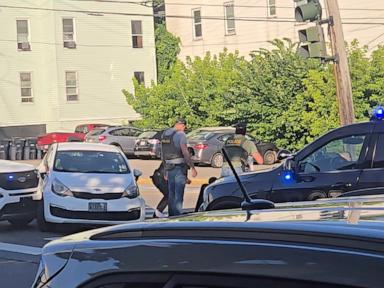
It happened on a stretch of asphalt that should have been empty, in a town where the loudest sound on a Tuesday is usually the wind off the bay. A confrontation. A flash of federal authority. A body on the ground. When the echo of those shots finally cleared, a man was dead, a community was shattered, and the state of Maine found itself staring directly into the eyes of a federal apparatus that operates under its own set of rules.
This was not a tragedy born in a vacuum. It was the predictable spark of a dry-tinder system that has been smoldering along our northern border for decades. In the days that followed, Maine’s governor did something rare for a political leader accustomed to measured, diplomatic press releases. She looked at the wreckage, looked at the federal agency responsible, and told Congress that the time for polite oversight was over.
It is time to reform, or completely dismantle, Immigration and Customs Enforcement.
The Invisible Border That Swallowed a State
To understand why a fatal shooting in Maine has ignited a political firestorm, you have to understand a legal fiction that shapes the lives of nearly everyone who calls this state home.
Under federal regulations, the "border zone" is not a line on a map. It is a giant, invisible band that extends 100 miles inland from any international boundary or coastline. Because Maine is bounded by Canada to the north and east, and the Atlantic Ocean to the south, this 100-mile zone does not just touch the edges of the state. It consumes it.
Nearly every single person living in Maine lives within this zone.
Within this shadow, the Fourth Amendment—the constitutional shield that protects you from random searches and arbitrary detention—is quietly stripped of its power. Federal agents do not need a warrant to board a bus in Bangor. They do not need probable cause to pull over a contractor’s van in Machias. They operate with a level of authority that local police chiefs can only dream of, wielding a mandate that feels entirely alien to the communities they patrol.
Consider a hypothetical family, though their circumstances are repeated daily across the state. Let us call them the Garcias. They have run a small farm stand for eight years. They pay their taxes. They contribute to the local school fundraisers. But every time a marked federal SUV idles at the intersection near their home, the air in their kitchen grows thin. The children stop talking. The father grips the edge of the counter. This is not because they have committed a crime, but because they know that within this 100-mile zone, their rights are subject to the whim of an agency that has spent years operating with near-total immunity.
When federal enforcement actions turn lethal, the fragility of this existence is exposed. A routine encounter becomes a tragedy. The local police, who spend years building trust with immigrant communities to ensure victims of domestic violence or theft feel safe coming forward, watch that trust evaporate in a single afternoon.
The Breaking Point of Local Trust
For years, state officials tried to work within the margins. They wrote letters. They held meetings. They asked for transparency.
But the fatal shooting changed the calculus.
Maine’s governor recognized a fundamental truth: you cannot build a safe community when a massive, unaccountable federal force can disrupt it at any moment without warning or local coordination. The Governor's appeal to Congress was not just a policy position; it was an act of frustration from a leader who realized her own citizens were no longer safe from the very agencies sworn to protect the nation.
The argument for abolishing or deeply restructuring ICE is often painted by critics as partisan theater. But in the woods of Maine, the perspective is different. This is about local control. It is about the basic human right to walk down a street in your hometown without being forced to prove your humanity to an armed federal agent who does not know the name of your town's selectman.
Consider the reality of how these enforcement actions play out. Local police departments spend decades establishing protocols, training officers in de-escalation, and integrating into the social fabric of their towns. They know who needs a hand and who needs a stern warning.
ICE agents operate under a completely different incentive structure. They are evaluated on numbers, detentions, and removals. They do not stay to help rebuild the community after a raid. They do not attend the town meetings to answer for the terror left in their wake. They simply move on to the next town, leaving local authorities to sweep up the broken pieces of community trust.
A System Beyond Repair
The question Congress must now face is whether an agency with this history can ever truly be reformed.
Some argue for better training, body cameras, and stricter guidelines. They believe that with the right administrative tweaks, the agency can be housebroken. But many who have watched this system closely believe the rot is structural.
When an agency is built on the premise that millions of people living among us are inherent threats to be hunted, no amount of sensitivity training will change the outcome. The culture of the agency is written into its DNA. It is a culture of insulation, where agents are shielded from public scrutiny and protected by a labyrinth of federal immunities.
The Governor’s call to action is a recognition that some structures are too broken to be salvaged. When a house has a cracked foundation, dry rot in the beams, and a roof that leaks with every storm, you do not keep patching the drywall. You tear it down and build something that actually serves the people living inside it.
Reforming or abolishing ICE is not about open borders; it is about restoring the rule of law. It is about ensuring that federal law enforcement is held to the same standards of accountability, decency, and constitutional restraint as the local deputy sheriff who patrols the county road.
The Silence That Must Be Earned
The road ahead is long, blocked by partisan gridlock and the powerful inertia of the federal bureaucracy. Congress moves slowly, if it moves at all. But in Maine, the conversation has permanently shifted. The illusion that federal immigration policy is a distant issue, confined to the deserts of the Southwest, has been shattered forever.
In the small towns along the Kennebec and the Penobscot, the fog still rolls in every morning. The crows still call from the pine branches. But the silence now feels different. It is no longer the comfortable silence of a community that believes it is safe from the storms of the wider world. It is a tense, watchful silence.
A state has been forced to confront the shadow that lives within its borders. And until that shadow is lifted, until the fundamental rights of every person walking these dirt roads are restored, that silence will remain unbroken by anything resembling peace.